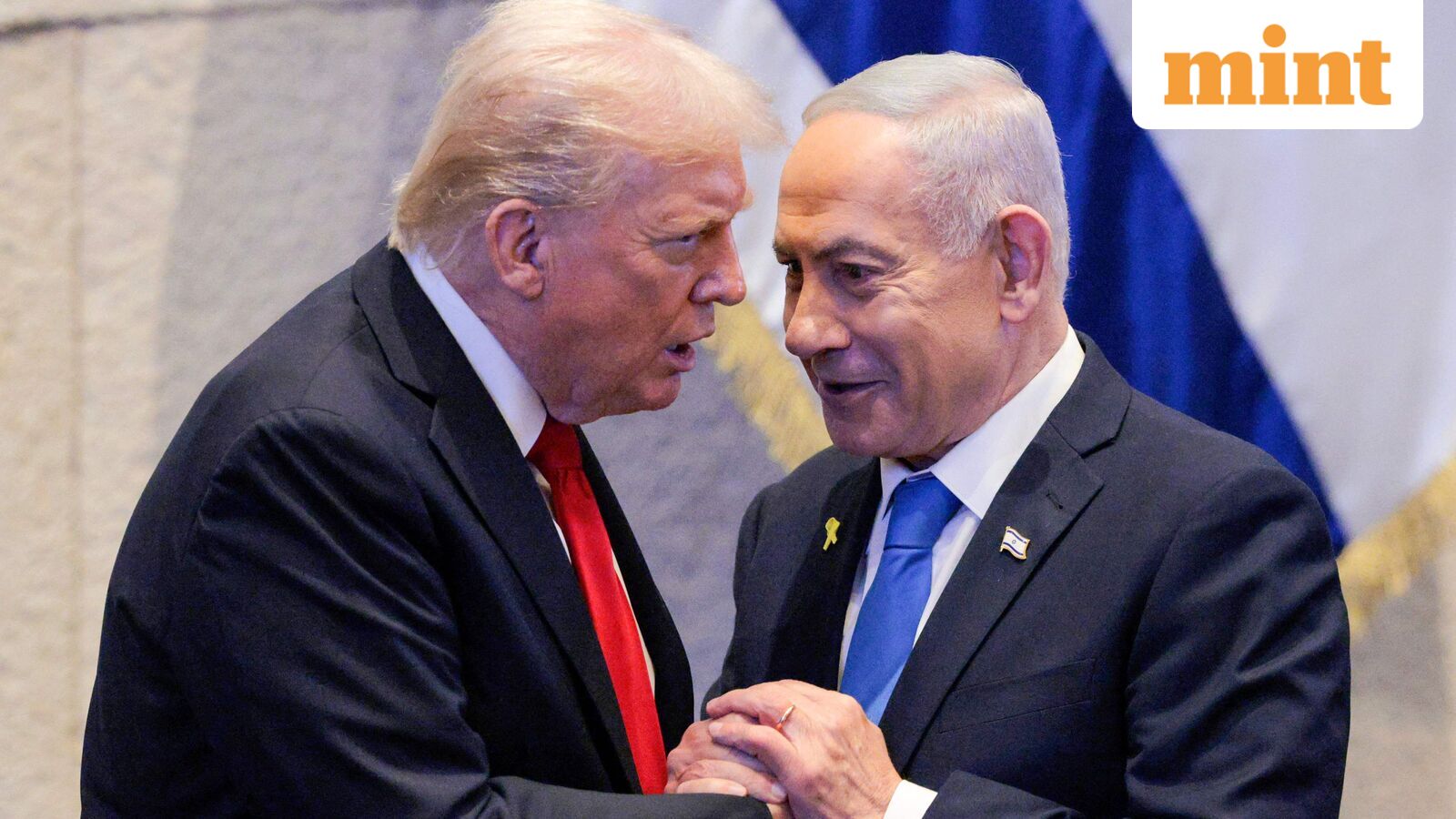
Israeli Prime Minister Benjamin Netanyahu said on Wednesday that any decision to resume full-scale military action against Iran rests with President Donald Trump, not with Israel. The statement, delivered in a CNBC interview, comes after Trump confirmed a tense exchange with Netanyahu earlier this week and as a fresh wave of attacks hits US allies in the Gulf.
Netanyahu described the current situation as a "tactical game" rather than a genuine ceasefire. "Iran surely knows what [Trump] has said, that if necessary, there will be a full-scale return to military action," Netanyahu said. He added that both Israeli and US forces are ready, and that Iran should understand it is "playing with fire."
The remarks downplayed any rift with Trump, whom Netanyahu called a "great friend." He acknowledged "tactical disagreements" and said the two leaders "agree on the main things."
The Trump-Netanyahu Call That Changed the Narrative
Trump confirmed in an interview published Wednesday that he had a heated conversation with Netanyahu on Monday. According to Axios, which cited US officials, Trump told Netanyahu: "You're f**king crazy. You'd be in prison if it weren't for me. I'm saving your ass. Everybody hates you now. Everybody hates Israel because of this."
Trump said he was "perturbed" by the situation in Lebanon when he spoke to Netanyahu. The escalation in Lebanon prompted Tehran to suspend peace talks with Washington. Trump maintained that he has a "very good relationship" with Netanyahu and that they have "done well together."
Risk to watch: When a sitting US president tells a close ally he is "saving your ass," the ally's public deference signals that Washington holds the escalation trigger. Markets should price the US decision as the single variable that matters.
What the Exchange Reveals About Decision-Making
The public confirmation of a profanity-laced call between two close allies is unusual. It signals that the US president is applying direct pressure on Netanyahu to avoid actions that could widen the conflict. The reported threat – that bombing Beirut would further isolate Israel – suggests Trump sees a strategic interest in containing the theater, not expanding it.
Netanyahu's public deference to Trump on the question of full-scale action against Iran reinforces this dynamic. The Israeli prime minister is effectively stating that he will not escalate without a green light from Washington, even as he insists Israel is ready to fight.
The Ceasefire That Is Not Holding
Since the ceasefire took effect on 8 April, periodic attacks have continued. The most severe incident occurred overnight, when a barrage of about 30 projectiles hit Kuwait. Three strikes struck Kuwait International Airport and a nearby military installation, according to a source familiar with the matter.
A passenger building at the airport was hit by an Iranian drone strike, killing an Indian national and injuring several others. Iran accused Bahrain and Kuwait of allowing the US to use their territory to launch attacks on an Iranian tanker and island.
Kuwait, a staunch US ally that hosts thousands of American troops, has become a key target since the ceasefire. It has suffered half a dozen attacks in the past two months, according to reports.
The Mechanism: How the Ceasefire Is Breaking Down
The ceasefire was never a formal treaty. It was a tactical pause that both sides have used to reposition. Iran's willingness to strike a civilian airport in a US ally's capital suggests it sees value in raising the cost of US support for Israel and for the ceasefire framework itself.
For markets, the pattern matters more than any single attack. Each strike that hits a US ally raises the probability of a US military response. Each US response risks derailing the peace talks that Tehran suspended after the Lebanon escalation.
Key facts from the latest escalation:
- 30 projectiles overnight, the most severe attack since ceasefire
- Three strikes hit Kuwait Airport and a military installation
- Indian national killed, several others injured
- Half a dozen attacks on Kuwait in the past two months
Who Is Exposed to the Escalation Risk
Energy and Shipping
The Gulf region accounts for about 20% of global oil transit through the Strait of Hormuz. A return to full-scale US-Iran military action would almost certainly disrupt tanker traffic. Oil prices would spike on supply disruption risk, and shipping insurance premiums would rise sharply.
Defense Contractors
US defense primes with exposure to Middle Eastern theater operations – Lockheed Martin, RTX, Northrop Grumman – would benefit from accelerated munitions replenishment and missile defense system orders. Israeli defense firms such as Elbit Systems and Israel Aerospace Industries would see direct demand increases.
Regional Equity and Bond Markets
Gulf Cooperation Council equity markets, particularly Kuwait, Bahrain, and UAE exchanges, would face selling pressure if attacks continue. Sovereign bond spreads for Gulf states would widen on perceived security risk. Kuwait's sovereign credit profile is the most directly exposed given the airport strike.
What Would Reduce the Risk
- A resumption of US-Iran peace talks. Tehran suspended them after the Lebanon escalation, a return to negotiations would signal that both sides prefer diplomacy.
- A public commitment from Trump that he will not authorize full-scale action. Netanyahu has already deferred the decision to Trump. If Trump signals restraint, the escalation path loses its trigger.
- A de-escalation in Lebanon. The original catalyst for the current crisis was Israel's escalation there. A pullback would remove Iran's stated reason for suspending talks.
What Would Make It Worse
- Another attack on a US ally's civilian infrastructure. The Kuwait airport strike already crossed a threshold. A second such attack would increase pressure on Trump to respond.
- A direct US-Iran military engagement. The overnight exchange of strikes between the US and Iran is the closest the two sides have come to open conflict since the ceasefire. A second round would make full-scale action more likely.
- Netanyahu acting without Trump's approval. The Israeli prime minister's public deference to Trump suggests he understands the risk of unilateral action. If he calculates differently, the situation escalates fast.
The Decision Timeline
Trump now holds the key decision. Netanyahu has publicly framed the choice as the president's. Iran is testing the limits of the ceasefire by striking US allies. The next 48 to 72 hours will determine whether the US responds with a proportional strike or escalates to the full-scale action that Netanyahu referenced.
For traders, the watchlist items are: any official US statement on the Kuwait attack, any resumption of peace talks, and any movement of US naval assets in the Gulf. A quiet 72 hours would reduce the probability of escalation. Another attack would increase it sharply.
Key insight: The overnight barrage of 30 projectiles marks the most severe breach of the 8 April ceasefire. Each fresh strike erodes the diplomatic framework and moves the probability needle toward a US decision on full-scale action.