Stocks● Neutral
Why NEET Delays Are Fueling a Surge in TN Engineering Admissions
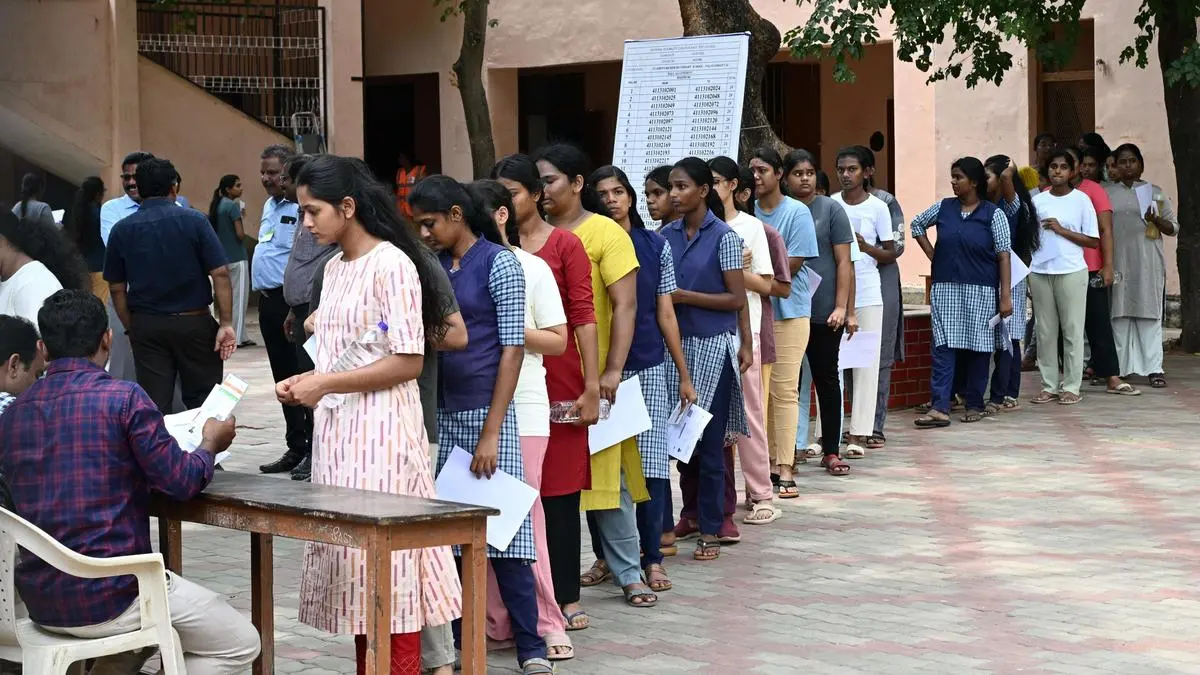
NEET cancellation drives medical aspirants to TN engineering admissions. Applications hit 2.5 lakh in 26 days. Deadline June 2. Demand may exceed 2.5 lakh seats. Watch final enrollment and AICTE approval.
Continue with
The uncertainty around this year’s NEET exam – triggered by alleged irregularities and the subsequent cancellation of tests – is redirecting medical aspirants toward engineering courses in Tamil Nadu. Within 26 days of online registration opening on May 3, the Tamil Nadu Engineering Admissions (TNEA) portal received over 2.5 lakh applications, according to a senior official from the Directorate of Technical Education (DOTE). The official expects the count to reach 3 lakh before the June 2 deadline.
The shift is direct and measurable. NEET delays have stalled medical counselling, leaving students with an uncertain timeline. Engineering admissions in Tamil Nadu operate on a different model: TNEA uses only Class 12 marks, no entrance exam, and runs a fully online single-window counselling process managed by Anna University. That simplicity, combined with the regulatory mess around NEET, makes engineering a natural fallback.
The 2.5 Lakh Application Surge in 26 Days
The numbers behind the rush
Tamil Nadu has about 2.5 lakh engineering seats spread across more than 400 colleges affiliated with Anna University. The current application count already matches the total available seats. If the trajectory holds, applications will exceed supply – meaning some students will be left without a placement in their preferred institution.
| Event | Date |
|---|---|
| Online registration opens | May 3 |
| Application deadline | June 2 |
| Random number release | June 5 |
| Merit list publication | June 29 |
| Counselling dates | Post AICTE approval |
The structural pull
Three factors explain the surge in a compressed window:
- Elimination of entrance exam friction: TNEA relies solely on higher secondary marks, removing the need for separate test preparation. Students already holding strong Class 12 scores can apply immediately.
- Regulatory clarity: NEET’s status is contested; engineering admissions have a fixed timeline. Certainty is a scarce commodity in Indian medical admissions right now.
- Substitute demand: Medical and engineering are the two most competitive professional streams for Tamil Nadu’s top academic performers. When one channel jams, the other absorbs the overflow.
Practical rule: regulatory disruption in one field often redirects demand to a close substitute. The magnitude here – 2.5 lakh applications in 26 days – shows the elasticity is real.
How TNEA Removes Entrance Exam Friction
TNEA is a single-window counselling process conducted entirely online. No separate exam, no coaching requirement. Students register based on their higher secondary marks, and the system generates a merit list. The DOTE official confirmed that the engineering admission schedule will not be affected by the medical delay. Random numbers will be released on June 5, the merit list on June 29, and counselling dates will follow All India Council for Technical Education (AICTE) approval.
This structure gives medical aspirants a low-friction off-ramp. They can secure an engineering seat before NEET’s next steps become clear. The cost of waiting for NEET – losing the engineering deadline – is now higher than the cost of switching.