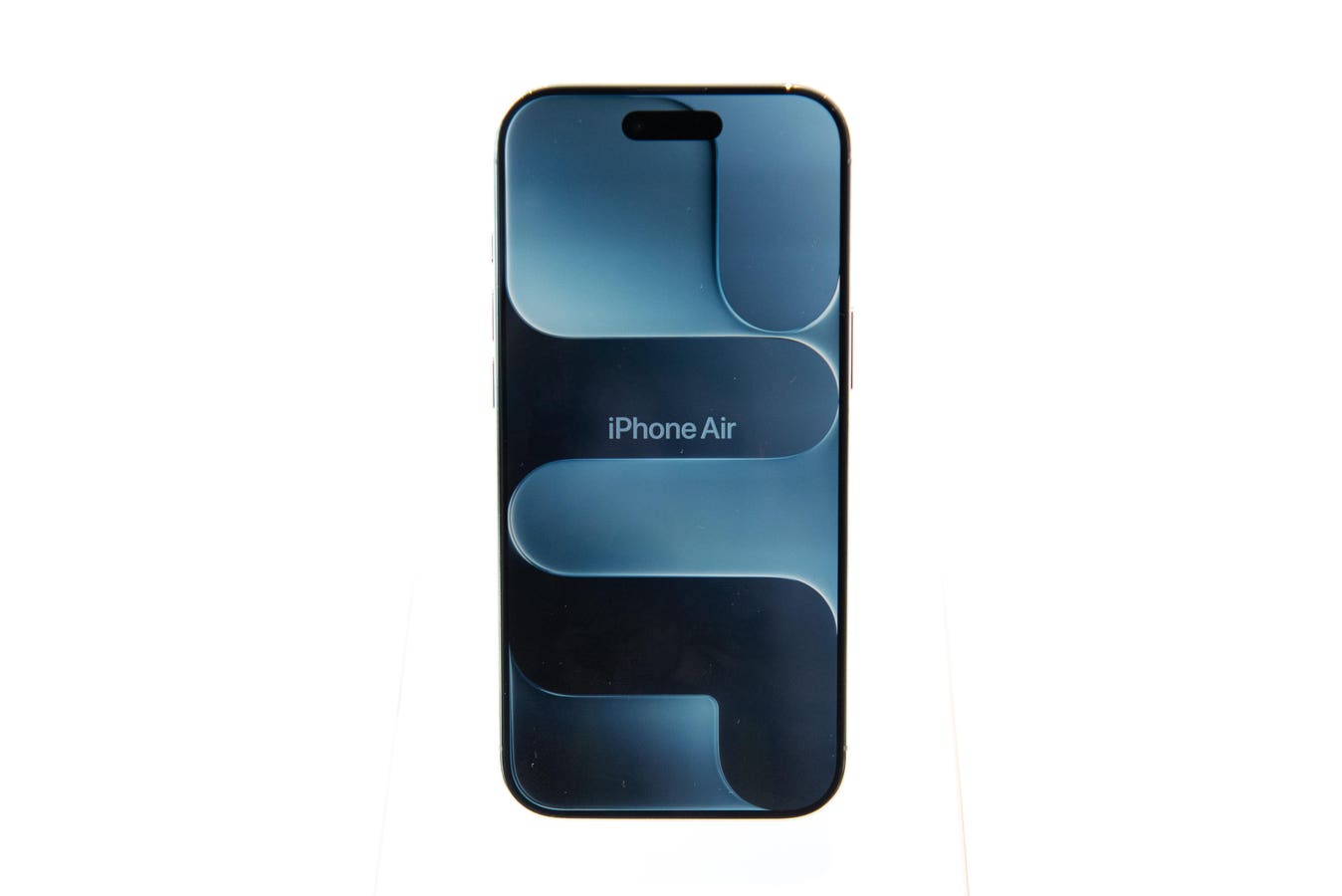
iPhone Air’s $150 Best Buy Cut: The Only Unlocked Discount in the Lineup
Best Buy has dropped the price of a new unlocked iPhone Air by $150, bringing it to $849.99. That is one of the lowest prices since the model launched at $999 last September. An earlier Best Buy deal applied $200 off, making the current discount slightly smaller but still deep relative to Apple’s usual pricing discipline.
The discount stands out for what it does not apply to. Every other iPhone 17 model remains available new and unlocked only from Apple at full price. The iPhone Air is the sole member of the lineup that third-party retailers are moving at a meaningful markdown. That isolation signals inventory stress specific to the Air, not a broader Apple price war.
Best Buy’s Inventory Calculus
The $849.99 price from Best Buy is a channel-level decision, not an Apple MSRP cut. Third-party retailers carry the financial risk of unsold units. When a retailer offers a discount of this magnitude on a flagship product that is only nine months old, it implies that the carrying cost exceeds the margin it can recoup at full price. The earlier $200 discount suggests that even steeper cuts have been necessary to clear shelves.
Demand Failure: Single Camera, Weak Battery, and 44.3% Depreciation in 10 Weeks
Apple itself acknowledged the weak reception by cutting production of the iPhone Air after demand came in well below expectations. Research from Counterpoint showed iPhone Air shipments running at low single-digit percentages in China while the standard iPhone 17 drove growth. Within ten weeks of launch the Air lost an average 44.3% of its original retail value, the steepest depreciation of any iPhone model since 2022, according to SellCell. Amazon listed the phone as “frequently returned.”
Buyer complaints consistently returned to three points:
- A single camera sensor
- Below-average battery life
- The $999 launch price
The feature set did not match the premium positioning. The production cut and the discounting are two sides of the same coin – the model is not resonating with the market Apple intended for it.
Depreciation Drags on the Used Market
A flagship phone that loses nearly half its value in ten weeks depresses residual values for the entire used market. That affects upgrade cycles and trade-in economics across the iPhone ecosystem. Retailers discounting the Air at $849.99 reinforces the low-value perception, creating a self-perpetuating cycle: aggressive pricing signals weak demand, which further depresses future demand.
Memory Chip Crisis Compresses Headroom for Smartphone Discounts
The timing of the iPhone Air discount matters because it overlaps with a memory chip crisis squeezing the entire smartphone industry. The global shortage is driven by AI data centers consuming available DRAM and NAND supply, raising the cost of making every smartphone. That cost pressure makes genuine discounts rarer in 2026 than they were in 2025.
| Device | 2025 Deal Structure | 2026 Deal Structure (Current) |
|---|
| iPhone Air | Launch at $999, no third-party discount | Best Buy $200 off earlier, now $150 off to $849.99 |
| Samsung Galaxy S26 Ultra | $230 off, plus 3 months Samsung Care Plus, extra 5% with code APP5 | Started at $200 off, later raised to $250 off; no Care Plus, no code |
| Trade-In Value (Galaxy S22 Ultra) | Not specified | Improved from $260 to $350 in days |
AI Data Centers Absorb DRAM and NAND Supply
Memory is a major component cost in any premium phone. When hyperscale AI operators buy up supply, phone manufacturers face higher per-unit expenses. They cannot easily pass those costs to consumers in a soft demand environment, so promotional budgets shrink. The $849.99 iPhone Air discount is an exception that proves the rule: retailers are willing to take losses on a weak product, across the board the depth of deals has narrowed.
Samsung’s Memorial Day Offers Show the Same Tension
Samsung’s Memorial Day offers demonstrate the same shift. At this point last year, Samsung knocked $230 off the Galaxy S25 Ultra with no trade-in required, plus three free months of Samsung Care Plus and an extra 5% off with a promo code. This year’s equivalent Galaxy S26 Ultra deal started at $200 off without the Care Plus trial or the extra code. Samsung later increased the discount to $250 off – better, still not matching last year’s package.
Trade-in values have also improved recently. The Galaxy S22 Ultra climbed from $260 to $350 in a matter of days. The pattern is clear: manufacturers and retailers are concentrating their best incentives around a few public holidays each year. Even then the terms are less generous than they were a year ago.
Key insight: The memory chip crisis has compressed the headroom for discounts, pushing aggressive promotions into narrower windows. For companies like Samsung that discount frequently, the margin squeeze forces them to save the deepest cuts for peak shopping periods.
What This Means for Apple’s Product Segmentation and Pricing Strategy
The iPhone Air’s struggles force a decision point for Apple’s 2026 product planning. If the current generation cannot sustain a $999 price, the next version will likely launch at a lower MSRP or with upgraded features to justify the premium. A repeat of the same spec compromise at the same price would invite the same channel discounting.
Will Apple Cut List Price on the Next Air?
The production cut suggests Apple knows the Air’s volume trajectory is too low. The question is whether the company will reposition the product as a mid-tier option or eliminate it in favor of a different form factor. The absence of new unlocked discounts on other iPhone 17 models indicates that Apple is willing to let price stand on the standard and Pro lines. The Air is the outlier.
Holiday Timing as a Price Signal for Traders
For traders and channel analysts, the key metric is not just the size of the discount the frequency of discounts. If third-party retailers return to $150 or deeper cuts outside of holiday periods, that would indicate the inventory hangover is worse than expected. If deals remain concentrated around Memorial Day, Black Friday, and Amazon Prime Day, that aligns with the broader industry pattern of compressing promotions into peak windows.
For consumers, the advice from the source article is clear: hold out for public holidays. For investors watching the sector, the iPhone Air discount is a microcosm of a market caught between rising input costs and tepid demand for mid-premium features. Apple’s ability to manage the Air’s pricing without damaging brand perception will be a test of its product segmentation discipline. Samsung’s holiday response shows the same tension at work across the Android side of the industry.
Sector Read-Through: Retailers Absorbing Margin Pressure, Holiday Windows Narrow
The read-through for the broader sector: rising memory costs are reducing the margin available for discounts, weak demand for certain models forces retailers to offer them anyway. That tension favors manufacturers with flexible SKU planning and loyal customer bases. The iPhone Air is a stress test for Apple’s premium pricing strategy. The Memorial Day data point suggests the test is not passing.
Bottom line for traders: Retailers are absorbing margin on weak models, the trend suggests holiday windows are the only period with meaningful discounts. The memory chip crisis ensures these offers will remain leaner than in 2025. Investors should track channel discount frequency as the primary signal of inventory health, especially for models like the iPhone Air that rely on third-party sales.
For more on how this fits into broader stock market analysis and the latest on Apple (AAPL) profile, AlphaScala continues to monitor catalyst-driven sector shifts.