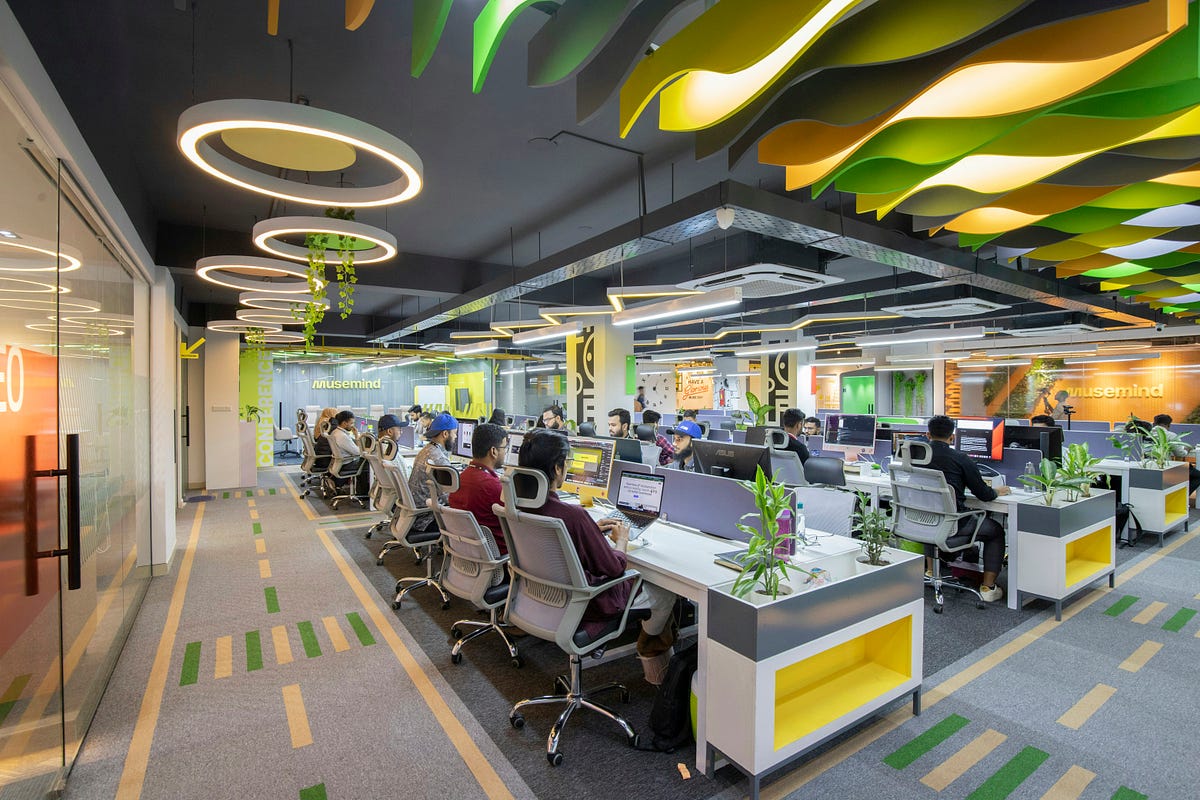
85% of employees consider leaving over poor workspace; replacing a mid-senior tech pro costs ₹20 lakh. Indian tech firms now treat office design as retention math.
A workspace study found that 85% of employees would consider leaving over a poor environment. Surveys don't perfectly predict resignations. The consistent appearance of workspace complaints in exit interview data from large Indian IT firms suggests the correlation is real.
Replacing a mid-senior professional in India's tech sector costs 1.5 to 2 times annual compensation when recruitment fees, productivity ramp, and team morale impact are included. For a mid-level engineer earning ₹15 lakh annually, that means a replacement cost of ₹22–30 lakh. The ₹20 lakh figure used in simple models is on the low end.
The complaints that surface in exit data are operational, not aesthetic. Nobody quits because of a bad colour scheme. The issues accumulate.
In Bangalore, an office on the Outer Ring Road is 65 to 90 minutes from major residential areas during morning peak. For an employee with children, three hours of daily transit consumes personal time that does not come back. Hybrid policies requiring three or four days in office, with no spoke options closer to where people live, hit this group hardest.
Open-plan offices without acoustic management produce background noise that makes concentration difficult and video calls from the desk impractical. Most Indian offices built before 2022 fall into this category. It is a design failure, not a cost issue.
Inconsistent air conditioning during summer months (April–June) correlates with measurably lower employee satisfaction scores. Basic comfort is not a luxury.
Mid-career professionals with five to ten years of experience increasingly cite the presence of a good canteen, gym access, or wellness space as a factor in employment evaluation.
Here is a simple model for a 100-person technology team in Bangalore with 20% annual attrition. Assumes a replacement cost of ₹20 lakh per person, conservative for mid-senior roles. Annual replacement cost: 20 departures × ₹20 lakh = ₹4 crore. Cut attrition to 15% by improving workspace quality. That saves ₹1 crore in replacement costs alone. Add productivity gains from the Human Spaces Report: workspaces with natural light and greenery deliver 6% higher productivity and 15% higher wellbeing scores. On an 85-person retained team, that 6% productivity lift is equivalent to 5 additional full-time employees worth of output – without hiring.
The second-order effect is harder to quantify. When strong performers see respected colleagues leave, they update their own assessment of the organisation's quality. That accelerates departures.
The link between workspace quality and retention is documented, directional, and quantifiable. For the full research breakdown of the workspace-retention connection – including specific data on which physical environment factors matter most to Indian professionals – this stock market analysis provides the context for how workspace decisions affect company valuations. Companies that treat office design as a retention cost rather than a capital expense are leaving money on the table.
The math is straightforward. Indian tech companies facing 20% annual churn can reduce that by a quarter with targeted workspace investments – and pocket the difference. The Human Spaces data provides a benchmark. Companies that ignore it are paying the replacement cost anyway.
Prepared with AlphaScala research tooling and grounded in primary market data: live prices, fundamentals, SEC filings, hedge-fund holdings, and insider activity. Each story is checked against AlphaScala publishing rules before release. Educational coverage, not personalized advice.