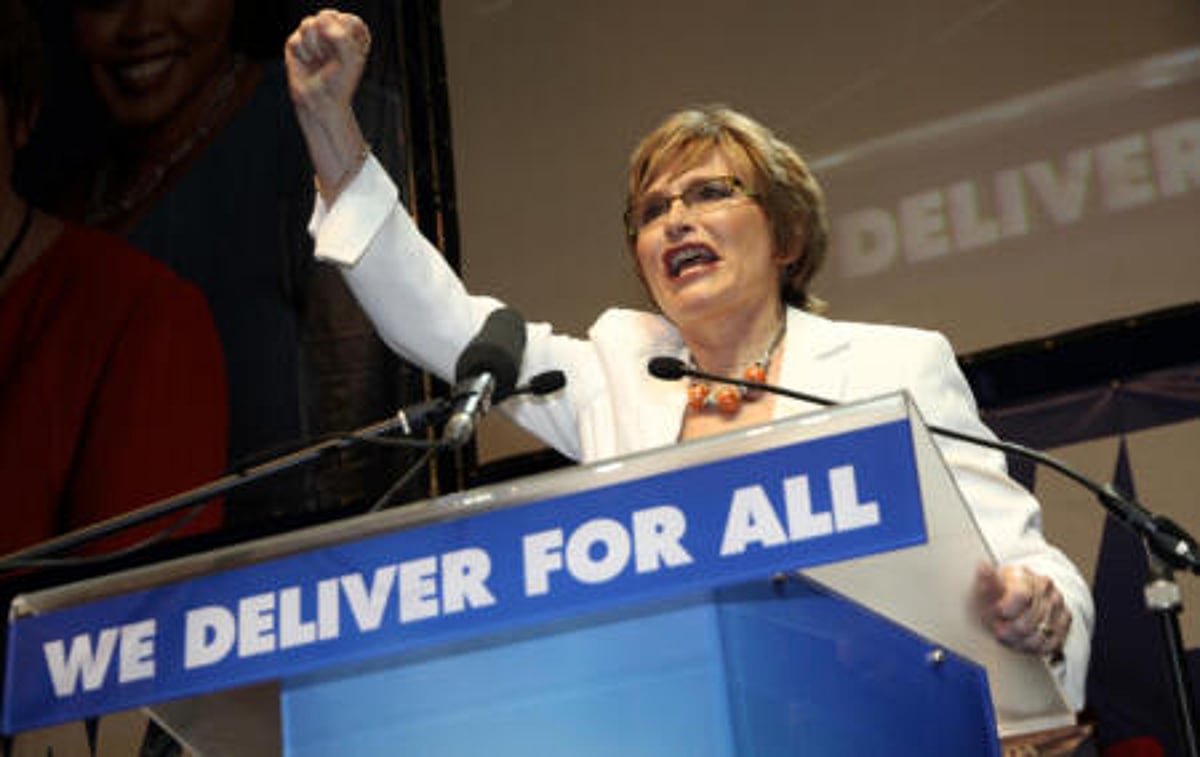
Viv Vermaak's profile examines the double standard that keeps Helen Zille central to the DA's identity. The angel or witch dilemma is not a media trope but a real constraint on the party's 2026 election strategy.
A new profile by Viv Vermaak examines Helen Zille through the lens of a recurring dilemma for women in power: is she an angel or a witch? The framing is not rhetorical. It gets at a structural bias that shapes how the Democratic Alliance (DA) is perceived and how Zille herself has been judged over a political career that spans decades.
The article, published by the Daily Friend, does not treat Zille as a retiring figure. It positions her as the DA's formidable matriarch, a label that carries both respect and the weight of a legacy that divides opinion within the party and across South African politics.
Vermaak's central argument is that society applies a double standard to female leaders. A man who is tough is decisive. A woman who is tough is a witch. A man who builds coalitions is a strategist. A woman who does the same is manipulative. Zille, who served as Premier of the Western Cape and later as DA federal council chairperson, has attracted both descriptions at different points.
The profile does not settle the debate. Instead, it uses the tension to explain why Zille remains a central figure even as the DA tries to broaden its appeal beyond its traditional base. The party's internal struggles over race, economic policy, and coalition strategy all circle back to the institutional and ideological imprint Zille left.
Zille's legacy is not just personal. It is structural. She led the DA through its most aggressive period of growth, taking the party from a largely white, liberal opposition into a serious contender for national power. That expansion came with compromises and contradictions. The party's stance on affirmative action, land reform, and the role of the state in the economy still reflects battles fought during her tenure.
The read-through for anyone tracking South African politics is that the DA cannot move past Zille until it resolves what she represents. The party's coalition with the ANC in some metros and its opposition in others creates a strategic incoherence that Zille herself has criticized. Her public interventions, including on social media, continue to shape the narrative around the party's direction.
With the 2026 local government elections approaching, the DA faces a choice. It can lean into Zille's legacy as a proven vote-getter and administrator, or it can try to distance itself from a figure who energizes opponents as much as supporters. The profile suggests that neither option is clean. The angel or witch framing is not a media invention. It is a real constraint on how the party markets itself.
Vermaak's piece does not offer a resolution. It documents the dilemma. For investors and analysts watching South Africa's political risk, the question is whether the DA can resolve its identity before the polls. If it cannot, the party risks losing ground to the ANC and the EFF in key metros, which would shift the policy landscape on issues from municipal services to energy procurement.
The next concrete test for Zille's influence will come when the DA finalizes its candidate lists and coalition strategy for 2026. If the party chooses candidates who mirror her ideological rigidity, it signals that her faction still controls the machinery. If it picks pragmatists willing to cut deals across party lines, it signals a break. Either outcome will redefine what the DA stands for and whether Zille remains its matriarch or becomes its ghost.
Prepared with AlphaScala research tooling and grounded in primary market data: live prices, fundamentals, SEC filings, hedge-fund holdings, and insider activity. Each story is checked against AlphaScala publishing rules before release. Educational coverage, not personalized advice.