Stocks● Neutral
Why English Football's Boom Masks a Growing Investor Risk
Only four Premier League clubs are profitable. A talent drain and relegation risk are scaring off investors. Here's what to watch for the football industry.
Continue with
The Simple Read: English Football Looks Unstoppable
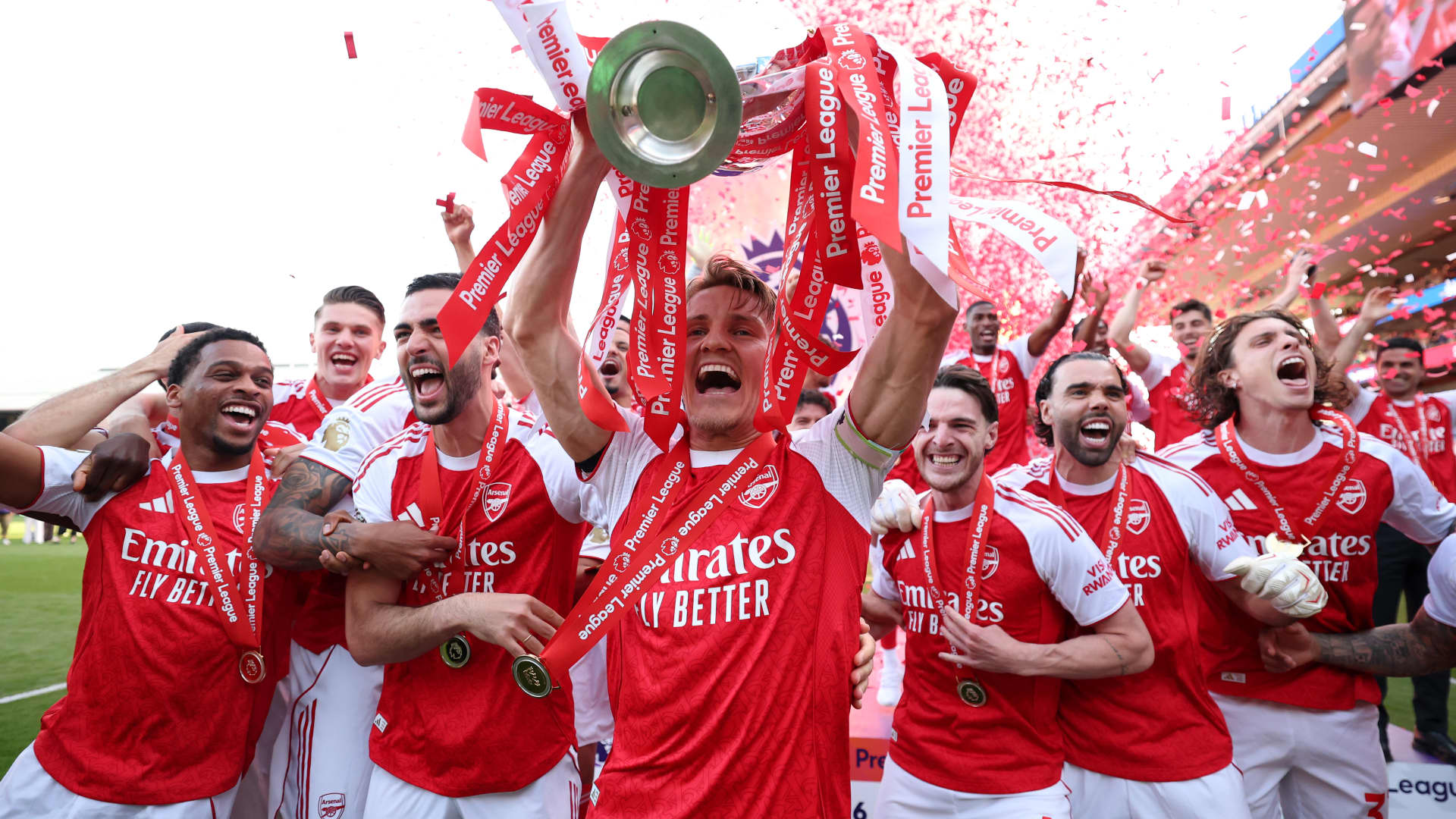
Arsenal lifted the Premier League trophy on May 24, becoming the third different club to win in three seasons. That run – Liverpool in 2024-25, Manchester City in 2023-24, Arsenal in 2025-26 – makes England's top flight look more competitive than any other major European league. Spain remains a Barcelona-Real Madrid duopoly (20 of the last 22 titles). Bayern Munich has won 13 of the last 14 in Germany. Paris Saint-Germain has eight of nine in France. Only Italy's Serie A matches the Premier League's variety, with four different winners in seven years.
English clubs also dominate international competitions. Aston Villa won the Europa League. Crystal Palace won the Europa Conference League. Chelsea holds the FIFA Club World Cup. The Premier League sells its TV rights – domestic and overseas – for more than any other football competition. English clubs took half the places in Deloitte's latest ranking of the world's 30 richest clubs by revenue, including relatively unheralded AFC Bournemouth, Brentford and Brighton & Hove Albion.
The Better Market Read: Financial Unsustainability Beneath the Surface
Scratch that surface and the picture changes. The Premier League's financial model is showing cracks that matter for anyone considering investing in English football – whether as an owner, a lender, or a sponsor.
Talent Drain: Six of England's World Cup Squad Play Abroad
England captain Harry Kane plays for a foreign club. Winger Anthony Gordon was sold from Newcastle United to Barcelona last week. Six of England's squad for the forthcoming World Cup now play abroad. That is almost a quarter of the group.
Martin Samuel, a leading sportswriter for The Times, summed up the shift: "We used to think that was great. We felt proud when Real Madrid or AC Milan came for one of our own. Yet almost a quarter of the group? That's a talent drain … It wouldn't be so troubling if the same level of quality was travelling in the other direction."
The outflow matters because the Premier League's global appeal rests on star power. If top English players increasingly leave, the league's broadcast value – the core of its revenue advantage – faces a long-term erosion risk.
Profitability Crisis: Only Four Premier League Clubs Are Profitable
Despite the revenue numbers, only four Premier League clubs – Newcastle United, Aston Villa, AFC Bournemouth and Liverpool – were profitable in the latest season with available figures. The rest operate at a loss.
Clubs rely on accounting maneuvers to comply with financial fair play rules. Sale-and-leaseback deals on stadia or training facilities are common. Outside the top flight, a host of clubs have entered administration in recent years, including storied names like Derby County and Sheffield Wednesday.