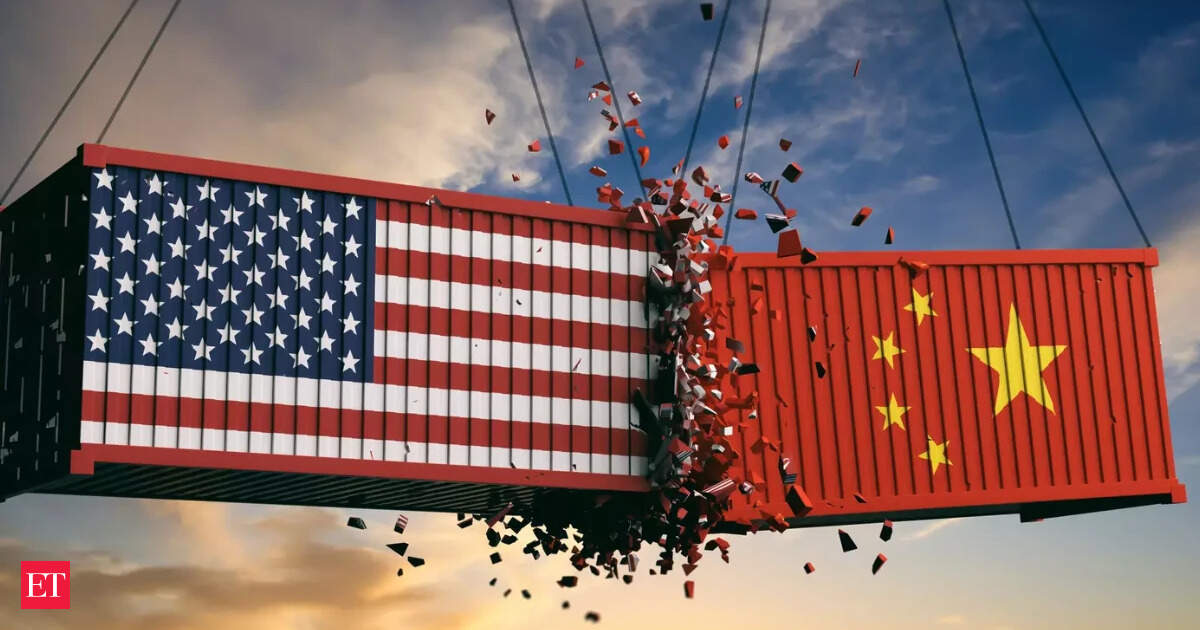
Beijing imposed export controls on 10 US companies and banned government agencies from buying products made by 46 American firms. Lockheed Martin and Raytheon were named in the procurement ban. Boeing's defense division was also listed. The commerce ministry announced the measures Monday, calling them retaliation for Washington's addition of 80 Chinese companies and their subsidiaries to a military enterprise list. The US blacklist included Alibaba and Baidu; BYD was also added.
The 10 entities subject to export controls include Aveox, which holds aerospace defense contracts with the US military, and Oshkosh Defense, a producer of military vehicles. The finance ministry's procurement ban applies to 46 US firms but exempts companies with US investments in China. Both controls took effect immediately.
Defense and Tech Exposure in the Crossfire
The defense contractors named in the procurement ban derive little direct revenue from Chinese government contracts. Lockheed Martin and Boeing each get less than 2% of sales from Chinese state sources, according to their most recent annual filings. The bigger risk sits in the rare earths export controls.
China processes roughly 60% of the world's rare earths. Those minerals are refined into permanent magnets used in fighter jet radars and missile guidance systems. By restricting exports from mining companies, Beijing can tighten supply for Western defense electronics without banning finished products. Lockheed Martin's annual report lists rare earths as a supply-chain risk. Monday's controls turn that footnote into a live constraint.
The tech blacklist is a different pressure. Alibaba and Baidu lose access to US advanced semiconductors and cloud computing services, compounding existing tariff and delisting risks. BYD, the EV maker, faces potential component constraints if blacklist rules tighten. All three have diversified revenue bases. The US restrictions add operational friction that consensus estimates may understate.
AlphaScala's scoring reflects the mixed outlook. Boeing carries an Alpha Score of 55, Lockheed Martin scores 41, both in the Industrials sector with a Mixed label. Alibaba scores 44, also Mixed, in Consumer Discretionary. The defense names have more direct exposure to rare earths tightening than the tech names face from US technology denials. None of the three shows strong momentum. The defense sector's supply-chain risk is more quantifiable.
The US trade representative's office did not immediately comment on Monday's measures. Washington could expand its blacklist or impose new tariffs. For now, the market readthrough is straightforward: defense contractors face a concrete rare earths squeeze. Chinese tech stocks absorb a clearer regulatory headwind. Neither group offers an obvious catalyst without a geopolitical resolution.