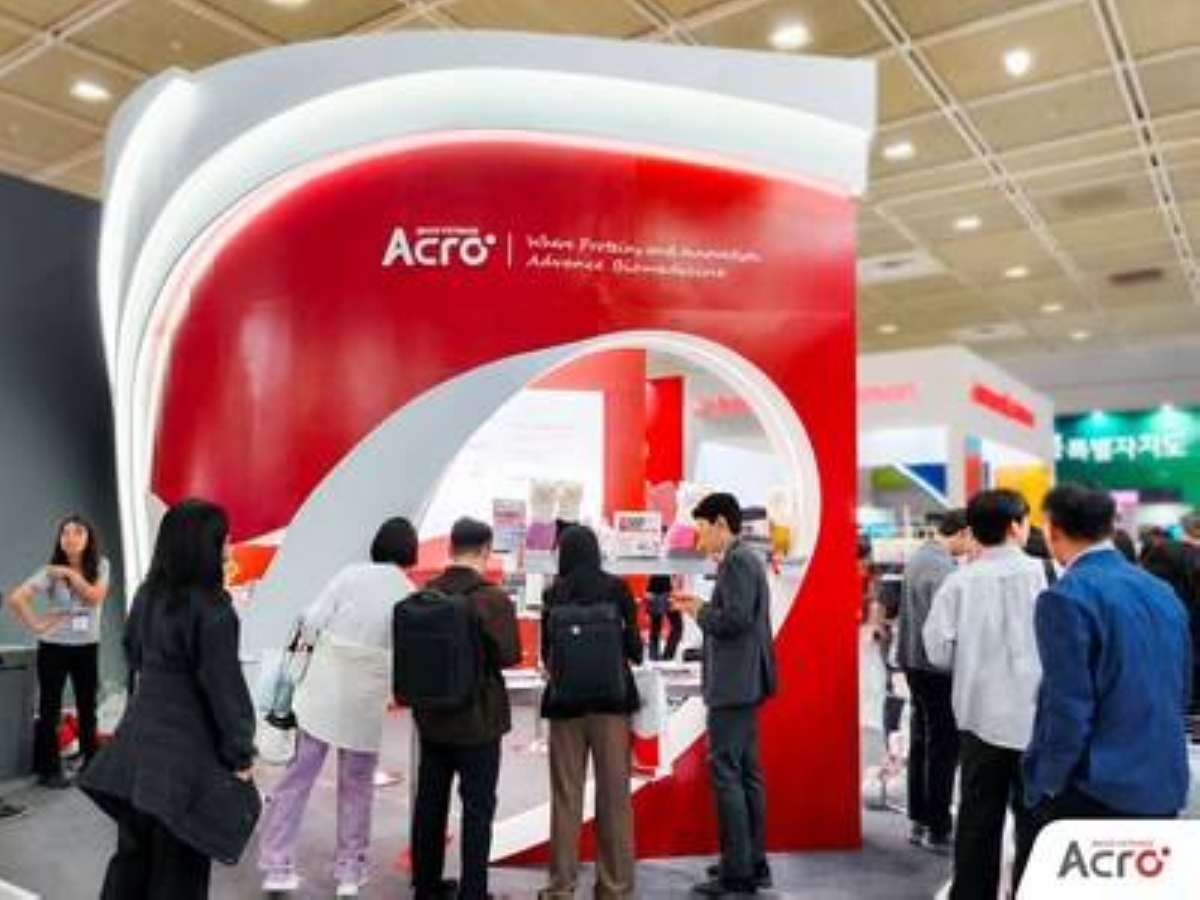
ACROBiosystems used Bio Korea 2026 to showcase GMP-grade raw material manufacturing at its 33-acre Suzhou facility, operational since June 2024. For cell and gene therapy (CGT) developers, the presentation was a marketing milestone. The practical question is whether audit-ready status today translates to reliable delivery under commercial pressure.
GMP Factory as Supply Chain Risk Node
The Suzhou plant covers more than 50,000 square meters and holds ISO 9001 and GMP certifications across U.S., EU, Japanese, and Chinese regulatory standards. ACROBiosystems maintains Audit-Ready (ADR) status and has passed international audits including Rx-360 and MDSAP. The cleanroom layout includes independent suites for cell banking, bulk solution, finished product, and magnetic beads, supported by a 2,200 m² QC lab capable of 10-500L production and multi-format fill-finish.
Certifications Document Compliance, Not Delivery
ACROBiosystems lists validated systems (BMS, EMS, SAP, TESTO, TSI, DMS, TMS) subjected to computerized system validation per FDA, EMA, and NMPA requirements. That documentation supports regulatory filings. It does not protect against contamination events or raw-material shortages. Rx-360 and MDSAP audits are snapshot checks, not guarantees of uninterrupted output.
Single-Facility Concentration
A single facility handling multiple CGT supply categories creates a single point of failure. A quality deviation shutting down one suite delays developers using those reagents. Clinical-stage protocols cannot absorb such delays without protocol amendments or patient enrollment pauses.
Exposure for CGT Developers
- Clinical-stage companies with lead assets tied to ACROBiosystems’ GMP-grade products face the highest risk. A supply interruption could force vendor qualification delays or protocol deviations, both of which extend timelines and raise costs.
- Smaller biotechs without leverage to qualify a backup supplier will feel any operational hiccup sooner than large pharma partners that can dual-source.
- Contract development and manufacturing organizations (CDMOs) that integrate ACROBiosystems’ materials into their workflows inherit the same single-source exposure.
Timeline and Catalysts
The factory has been operating for about two years. The next 12 to 18 months will test whether the modular, flexible design can handle demand ramp-up without quality drift. ACROBiosystems extended its virtual GMP Factory Open Day program to Bio Korea’s physical venue – a signal that the company is actively marketing spare capacity.
Events to Monitor
- Public quality notifications from ACROBiosystems or any regulatory body.
- Audit findings from clients or regulators, especially if they reference the Suzhou site.
- Supply allocation changes – any shift in priority toward large pharma partners away from smaller clients would create secondary market effects.
- Geopolitical friction between the U.S. and China could complicate audits, shipments, or raw material sourcing, even if quality remains pristine.
Conditions That Weaken the Thesis
- A second GMP facility or a formal partnership with a contract manufacturer would dilute single-site concentration risk.
- Published batch-release data or client testimonials showing consistent yield and quality would raise confidence in operational reliability.
- Regulatory filings from CGT developers that reference ACROBiosystems’ materials without adverse findings would reduce perceived supply-chain risk.
Conditions That Amplify the Risk
- An FDA or EMA warning letter tied to the Suzhou site, even if issued to a customer, would cascade across all developers using that supply chain.
- Capacity allocation constraints – if ACROBiosystems prioritizes large pharma partners, unserved smaller firms will scramble for alternatives, delaying their programs.
- U.S.-China trade actions could complicate equipment imports or data integrity audits, adding a geopolitical overlay to operational risk.
Affected Assets and Sector Read-Through
ACROBiosystems is not listed on a major U.S. exchange, so direct equity exposure is limited. The read-through is to CGT developers using its products – typically small-cap biotechs with high sensitivity to supply-chain news. For a broader view of manufacturing concentration risks in biotech, see stock market analysis.
The CGT industry is moving from clinical-scale to commercial-scale production. ACROBiosystems’ investment signals that raw-material vendors see the demand. However – that single vendor dependency exposes a structural bottleneck. A single-vendor issue becomes a sector-wide constraint. Developers should track not only their own supply but also audit and capacity reports of all critical GMP vendors.
AlphaScala’s scoring methodology illustrates similar concentration risk themes in other sectors. SAP SE carries an Alpha Score of 48/100 (Mixed) in Technology, reflecting risks tied to enterprise software reliance. Emera Inc. scores 61/100 (Moderate) in Utilities, where infrastructure concentration is more directly visible. Both contrast with the high-specificity, high-concentration risk of CGT raw-material supply.
Key insight: Audit-ready status is a floor, not a ceiling. The firms that treat ACROBiosystems’ GMP factory as a dependable single source are taking a risk that the next 18 months will expose. The safer position is to treat the facility as one node in a redundant supply network.
ACROBiosystems’ Bio Korea presentation was a marketing success. Whether the facility can meet market expectations under pressure is a question the next audit cycle will answer.