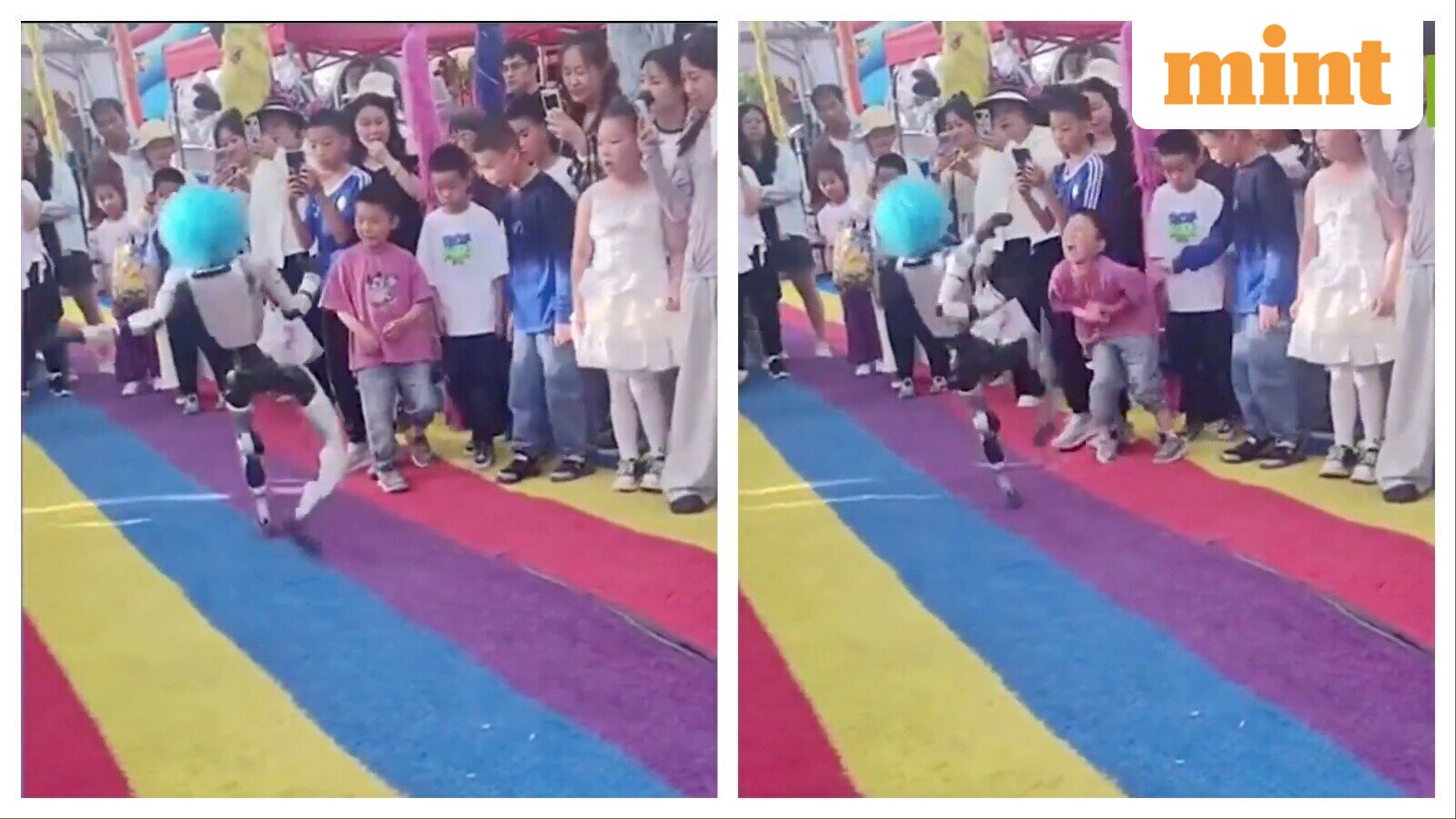
A video from Xinjiang, China, shows a Unitree G1 humanoid robot appearing to kick a young boy during a public demonstration. The footage, which has gone viral, captures the robot executing a 360-degree spin, extending its leg, and making contact with a child who then falls to the ground. Reports indicate the child was not seriously injured. The company behind the robot has not publicly commented on the cause.
For a trader looking at the humanoid robotics sector, this is not a one-off viral moment. It is a concrete event that tests the liability framework and regulatory trajectory for a technology moving from lab to public space. The market read-through depends on whether this incident accelerates crowd-safety rules, raises insurance costs, or forces design changes in dynamic-motion robots.
Why the Unitree G1 Kick Reshapes the Risk Premium
The naive interpretation is that a single malfunction at a tourist attraction has no bearing on publicly traded robotics companies. The better market read is that this event provides a real-world stress test for the human-machine interaction safety case that every humanoid robot maker must eventually address.
The Mechanism: Crowd Safety and Liability Exposure
Humanoid robots like the Unitree G1 and Tesla Optimus are designed for dynamic, multi-directional movement. The G1's choreographed routine – punching, spinning, kicking – is exactly the kind of motion that creates an unpredictable swing radius. When a robot executes a 360-degree spin, its leg extends beyond its base footprint. If crowd barriers are too close, or if spectators step forward, contact becomes a probability, not a bug.
Sector Read-Through: Which Companies Face Similar Risk
The table shows that Tesla and Hyundai carry the largest public-market exposure to this risk. A single high-profile incident involving Optimus could trigger a valuation haircut on safety concerns, similar to how autonomous vehicle accidents hit Waymo and Cruise valuations.
The Regulatory Catalyst: What Would Confirm or Weaken the Thesis
Confirming Factors
- Regulatory action: China's Ministry of Industry and Information Technology or local safety bureaus issue new crowd-distance requirements for robot demos.
- Insurance cost increase: Lloyd's or other specialty insurers raise premiums for public robot demonstrations, directly impacting demo budgets for private companies and raising costs for public firms.
- Design change mandates: Regulators require force-limiting joints or collision detection shutdown on all humanoid robots sold for public use.
- Social media amplification: Additional videos of similar incidents surface, creating a narrative that humanoid robots are inherently unsafe in uncontrolled environments.
Invalidating Factors
- Unitree issues a technical explanation showing the incident was caused by a spectator stepping into the safety zone, not a robot error.
- No regulatory response from Chinese or international bodies within 90 days.
- Tesla or Boston Dynamics release a statement confirming their robots have redundant collision detection that would prevent such an event, and the market accepts that as differentiation.
- The video is debunked as a staged stunt or edited clip (unlikely given multiple angles, possible).
The Practical Framework for a Trader
What This Means for Your Position
If you hold TSLA or BOTZ (Global X Robotics & AI ETF), this event is a tail risk – low probability of immediate impact, high severity if it triggers regulation. The correct response is not to sell on the video. It is to monitor the regulatory response in China and the US over the next 30 days.
The Mechanism of Transmission
- Viral video → public awareness → social media pressure → regulatory inquiry.
- Regulatory inquiry → proposed safety standards → compliance costs for all humanoid robot makers.
- Compliance costs → delayed product timelines → lower near-term revenue expectations for publicly traded companies.
The One Number to Watch
The distance between robot and spectator in the video. Reports say dozens of spectators were at "close range." If the safety zone was less than 2 meters, that becomes the benchmark for future regulation. Any company that cannot demonstrate a 3-meter minimum in public demos will face scrutiny.
Next Decision Point: The Unitree Response
Unitree has not publicly commented on the cause. When it does, the market will parse two things:
- Was the robot's control system aware of the collision? If yes, the failure is in the emergency stop logic. If no, the failure is in the sensor suite – a more fundamental design issue.
- Will Unitree issue a software update to reduce swing radius or add collision detection? That would be a positive signal for the sector, showing that the problem is fixable.
The Bottom Line for the Robotics Thesis
Humanoid robots are not yet a mainstream consumer product. The Unitree G1 incident is the first high-profile safety event for this generation of robots. How the industry responds will set the regulatory baseline for the next five years. For now, the event is a watch item, not a trade trigger. If regulators move, the risk premium on all humanoid-exposed stocks will reprice upward.
A trader looking at this should bookmark the Chinese Ministry of Industry and Information Technology announcements and Tesla's next safety disclosure on Optimus. The absence of regulatory action within 90 days would weaken the thesis. The presence of a new safety standard would confirm it.