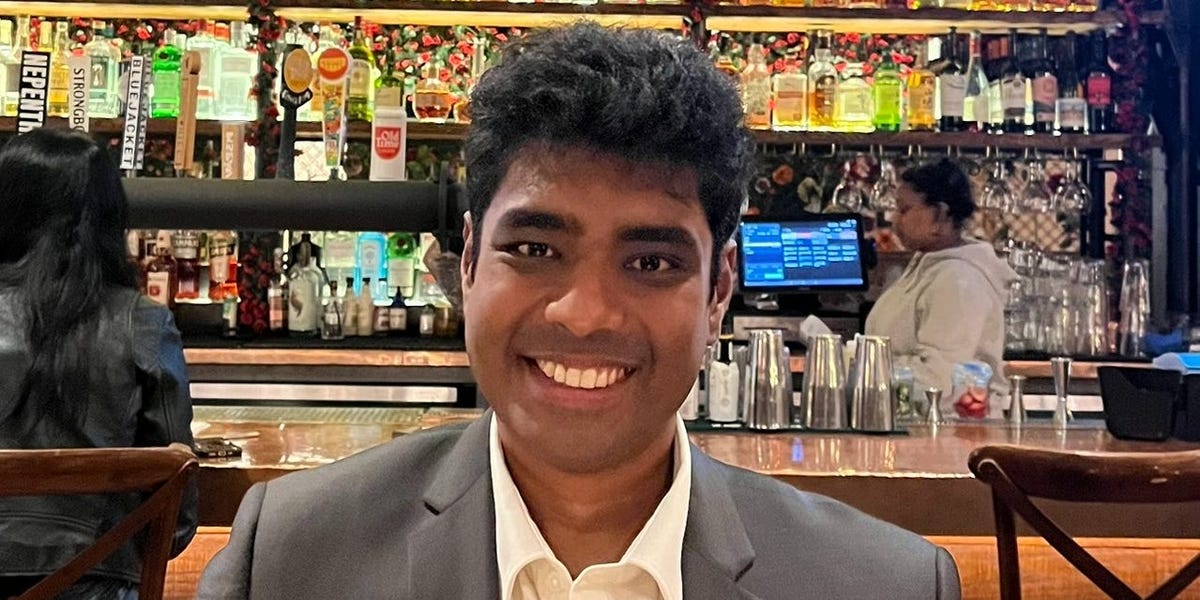
Mohamed Zeeshan came to the US on a student visa in 2016, left when the H-1B path looked too uncertain, and returned in 2023 with a green card he petitioned for from abroad. Now 32, he runs a consulting firm in Arlington, Virginia, and says he wouldn't make the same move today if he had to rely on employer sponsorship.
Zeeshan grew up between Indonesia and India, studied international affairs at Columbia, and graduated in 2018 just as the Trump administration's immigration rhetoric was shifting. Employers, he said, were reluctant to sponsor international students. So he took a job in Dubai instead, at a management consulting firm where he earned more than his first US role and paid no income tax.
“Economic upliftment wasn't the reason I moved to the US,” Zeeshan said. He was drawn to American free-speech protections. He is Muslim in a Hindu-majority India, and his writing on Indian policymaking had drawn hostility. “I've felt people have hated me for critiquing India's policymaking,” he said.
In 2021 he applied for a green card through the EB-2 national interest waiver, a self-petition route that does not require employer sponsorship. He submitted evidence linking his research and public-interest work to US national interests. The petition was approved in 2023.
His wife is still waiting for her green card. They are delaying children until her status is resolved, a family-planning constraint he called “unconventional by Indian standards.”
Zeeshan said the H-1B path remains a broken funnel. The visa is tied to an employer who can terminate the worker at any time, leaving the holder days to find a new sponsor or leave the country. “You're always on edge,” he said.
Recent policy changes have added to the uncertainty. A $100,000 H-1B fee proposed by the Trump administration was struck down by a federal judge but remains tied up in litigation. Data also shows EB-1A denial rates are rising, making even the “extraordinary ability” visa harder to get.
He now sees relatives and friends looking at Germany and Australia instead of the US. “If I had to rely on an H-1B visa to come here today, I don't think I'd do it,” he said.
He intends to naturalize and become a US citizen, unless future rule changes make that difficult.