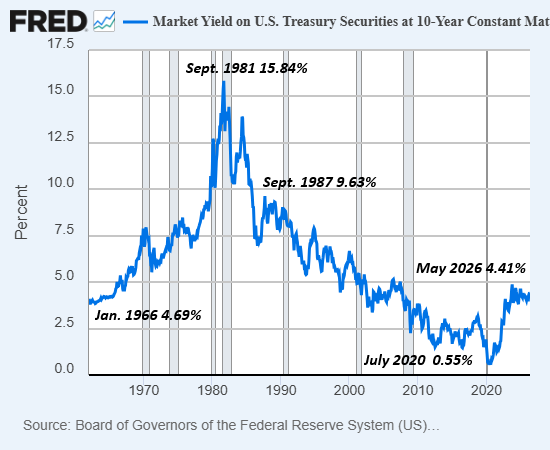
A sharp reversal in the 10-year Treasury yield often traps breakout chasers. The better read focuses on failed resistance, RSI divergence, and a shift in rate-cut pricing. The next inflation report will test the move.
Alpha Score of 35 reflects weak overall profile with poor momentum, poor value, moderate quality. Based on 3 of 4 signals — score is capped at 90 until remaining data ingests.
The 10-year Treasury yield reversed sharply after testing a resistance zone that had held for several months. The move caught momentum traders off guard. Many had positioned for a breakout that would push yields toward the next round number. Instead, the yield failed to hold above the zone and dropped through the 50-day moving average within two sessions.
The initial push above resistance looked convincing. Volume picked up, and the yield printed a new multi-month high. Breakout chasers added to short bond positions, expecting the selloff in Treasuries to accelerate. The simple read was that the trend was resuming after a consolidation.
That simple read unraveled quickly. The yield reversed the same week, closing back below the breakout level. The failure to sustain the move above resistance turned the breakout into a trap. The subsequent drop below the 50-day moving average confirmed that sellers had lost control.
A breakout that fails within a few sessions often signals a shift in the underlying order flow. The initial push attracts momentum traders who are forced to cover when the price reverses. That covering accelerates the move in the opposite direction. In the Treasury market, this dynamic is amplified by the large positions held by macro funds and CTAs.
The better read is to wait for confirmation that the breakout is real. A close above resistance for at least two consecutive sessions, accompanied by a rising RSI above 60, would have validated the move. Without that confirmation, the breakout was just a probe that got rejected.
Traders now watch several technical signals to confirm that the reversal has legs. First, the yield needs to hold below the 50-day moving average. A close back above that average would weaken the reversal case. Second, the RSI on the daily chart should remain below 50. A drop below 40 would add conviction. Third, a break of the recent swing low in the 10-year yield would establish a lower low and confirm a downtrend.
The reversal also aligns with a shift in Fed funds futures pricing. The market began to price in fewer rate cuts for the coming year after a run of stronger economic data. That repricing had driven yields higher. The reversal suggests that the market is now questioning the sustainability of that hawkish repricing. If upcoming data soften, the reversal could extend.
The next consumer price index report will test the reversal. A softer print would reinforce the move lower in yields and could push the 10-year yield toward the next support zone. A hotter print would likely reverse the reversal, sending yields back toward the resistance zone that just failed.
For equity traders, the Treasury reversal matters because it directly affects rate-sensitive sectors. Technology and real estate stocks, which are sensitive to discount rates, tend to benefit when yields fall. The reversal, if it holds, could shift leadership away from the cyclical and value trades that had worked during the yield run-up.
The setup is not yet confirmed. The yield is still above its 200-day moving average, and the long-term trend remains higher. A failure to break the swing low would keep the range intact. The next two weeks will determine whether the reverse card was a head fake or the start of a larger move.
For broader market context, see our stock market analysis.
Drafted by the AlphaScala research model and grounded in primary market data – live prices, fundamentals, SEC filings, hedge-fund holdings, and insider activity. Each story is checked against AlphaScala publishing rules before release. Educational coverage, not personalized advice.