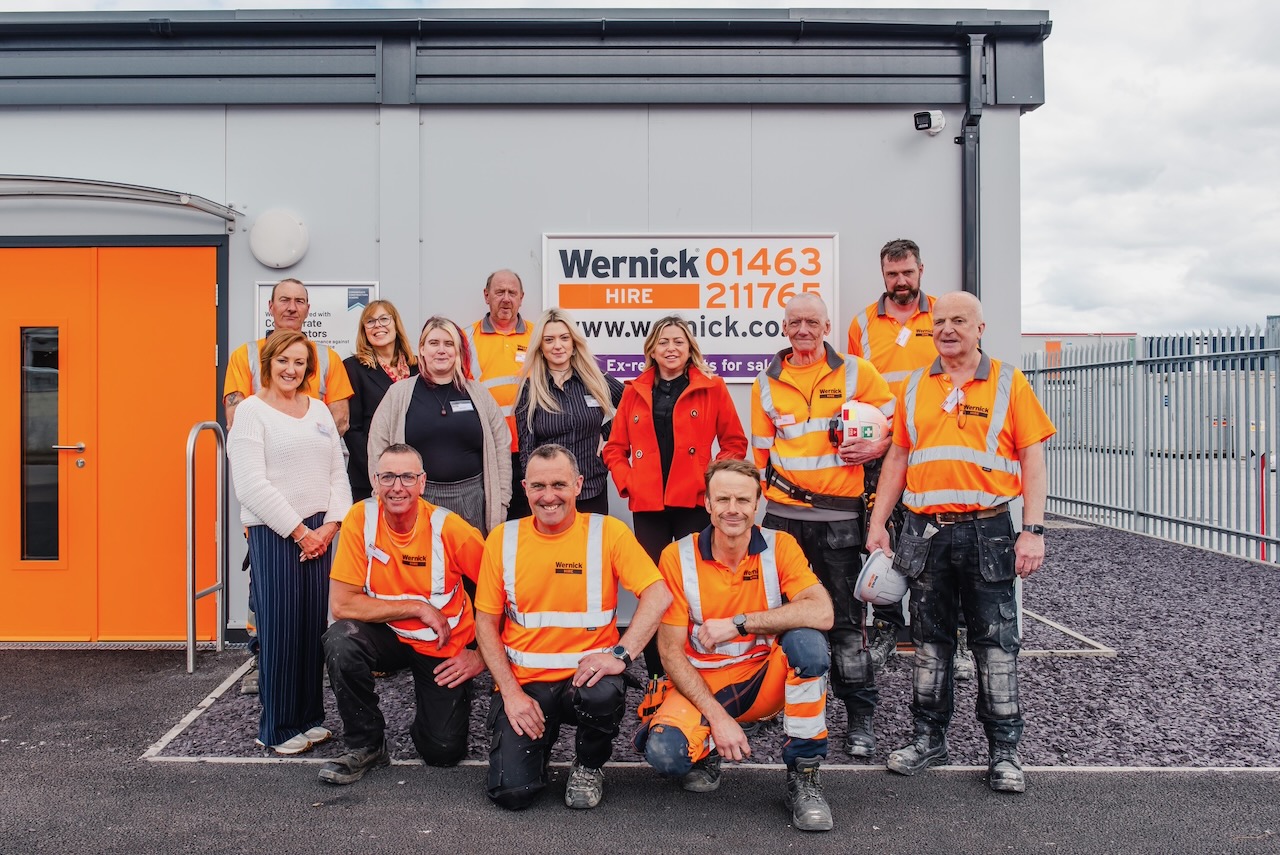
Wernick Group opens fourth Scottish depot in Inverness, completing a £25 million regional investment over five years. The expansion signals confidence in Scotland's modular building demand and net-zero construction push.
Wernick Group opened a new depot in Inverness, its fourth Scottish facility. The opening completes a regional investment totaling £25 million over the past five years, covering freehold properties and hire fleet buildings at depots in Glasgow, Lochgelly, and Dundee.
Councillor Glynis Sinclair, provost of Inverness & Area, cut the ribbon alongside David Wernick, executive chairman of Wernick Group. The event drew a strong turnout of customers and suppliers. Ricky Wedlock, operations director, leads Wernick Hire in Scotland, where it ranks among the largest providers of modular buildings and cabins north of the border.
Wernick has invested £25 million in a single region over five years. For a private company in the modular building sector, that capital allocation signals sustained confidence in Scottish construction demand. The Inverness depot extends geographic reach into the Highlands. Faster delivery and reduced logistics costs for projects in northern Scotland should improve cycle times and service margins.
The modular construction market is gaining traction as developers and governments push for faster, lower-carbon building methods. Scotland's net-zero targets and affordable housing goals create a structural demand pipeline for prefabricated buildings. Wernick's depot network now spans four cities – Glasgow, Lochgelly, Dundee, and Inverness – giving it coverage from the Central Belt to the Highlands.
This investment offers a window into capital allocation trends in the construction-services space. Wernick's depot build-out implies that utilization rates at existing Scottish sites supported incremental capacity. The £25 million figure provides a benchmark for peers: a similar investment in a single region suggests the modular segment is absorbing capital at a rate that signals demand visibility, not speculation.
For investors tracking infrastructure or construction services, the key metric is depot density relative to regional construction output. Wernick now has four depots covering Scotland's population centers. The next question is whether the company will add more sites or expand fleet at existing ones.
With Inverness operational, Wernick's management will gauge utilization rates across the four-depot network. The £25 million investment cycle may pause as the company absorbs the capital outlay. A follow-on investment – either a new depot or a significant fleet expansion at an existing site – within 12 months would confirm that demand justifies further capacity. A slowdown in depot openings or a reduction in hire fleet would suggest the market is tightening.
Wernick's private status means disclosure is limited. The next concrete data point will be any public announcement of additional depot openings, fleet orders, or project contracts in Scotland. The Inverness opening is a tangible milestone in the company's regional strategy. The £25 million figure ties Wernick's physical footprint to a clear capital commitment, making it easier to benchmark against peers in the modular space. The question now is whether the Highlands market can generate enough volume to justify the bet.
Prepared with AlphaScala editorial tooling from the source reporting linked above. Indexable analysis may include a cited Alpha Score value. Publishing checks screen each story before release. Educational coverage, not personalized advice.