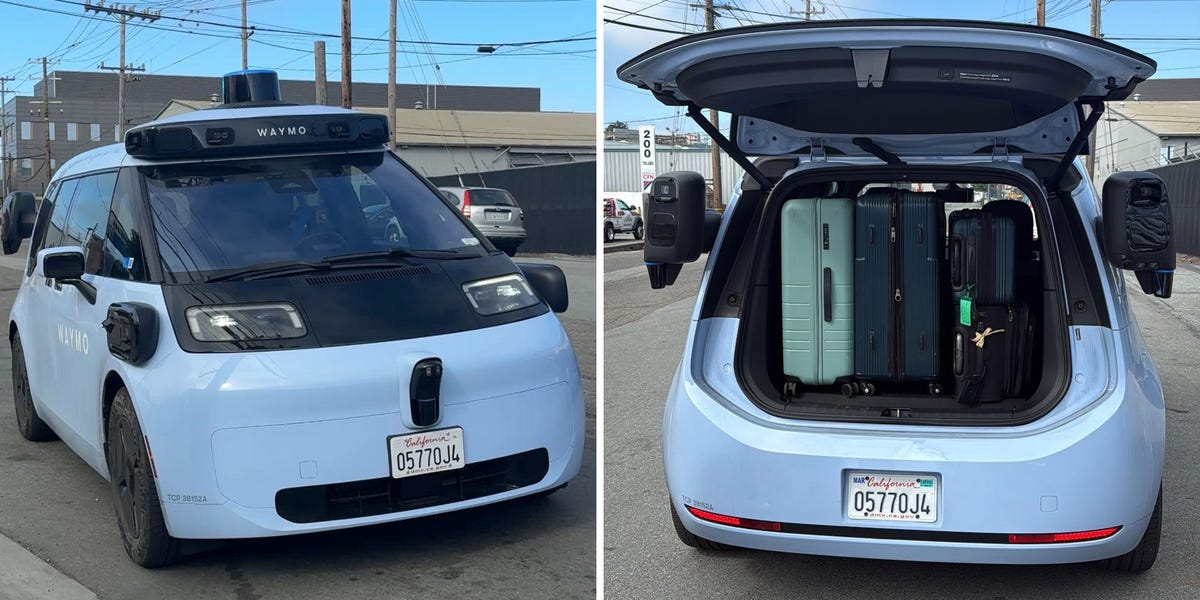
Waymo introduced the Ojai robotaxi on Thursday in San Francisco, Phoenix, and Los Angeles. The vehicle is designed for passengers with luggage; Waymo staff tested it by bringing suitcases during real trips. The company positions the Ojai as a more spacious option compared with its current Jaguar I-PACE fleet.
The simple read calls the Ojai a convenience play for over-packers. The better market read is a strategic pivot into the airport ground-transport segment. Airport trips generate longer distances, higher fares, and more predictable demand than short-hop urban rides. Uber and Lyft currently dominate that market. By offering a vehicle purpose-built for luggage, Waymo is signalling it wants to capture a slice of that high-value revenue stream.
Waymo's Ojai Robotaxi and the Airport Trip Economics
Autonomous ride-hailing unit economics depend heavily on trip length and vehicle utilization. A fleet optimized for airport runs can command a higher per-mile price while operating on longer, more revenue-dense routes. The Ojai appears designed to maximize per-trip revenue rather than per-minute utilization. A minivan or crossover footprint suggests the vehicle can carry more passengers or cargo without a dramatic increase in per-mile operating cost.
Waymo already operates paid robotaxi services in its three launch cities. Adding a new vehicle type means re-certifying safety systems with local regulators, a non-trivial hurdle. The company has not disclosed vehicle capacity, battery range, or a timeline for expanding the Ojai to other markets. Scaling this fleet requires sensor retrofitting, software validation, and city-specific approval for each new zone.
How Fleet Customization Changes the Waymo Unit Economics Story
Waymo has run a one-size-fits-all fleet since its public launch. The Ojai marks a deliberate shift toward vehicle platform differentiation. That matters because a robotaxi operator that can match vehicle type to trip type – airport runs, group travel, cargo delivery – can improve margin per trip without adding fixed costs elsewhere. The Alphabet subsidiary is still the only company operating paid autonomous rides in multiple US cities, but Cruise and Tesla are moving to close the gap.
Investors watching Alphabet (NASDAQ: GOOGL) should view the Ojai as a small but concrete data point on Waymo's operational trajectory. Alphabet's Other Bets segment has consumed billions in capital. The question is whether autonomous ride-hailing can eventually move from cost center to profit contributor. Ojai tests suggest Waymo is still investing aggressively in fleet differentiation, which could mean higher near-term capital expenditure. If the vehicle improves airport-trip market share and per-ride revenue, it strengthens the case for a future spin-off or external investment. Regulatory delays or production bottlenecks would push that bet further out.
The next catalyst is the pace of Ojai deployment across existing cities and any expansion into new markets. Ride-hailing area maps that include airport service zones would confirm the airport strategy. Any public statements on unit economics or per-trip revenue would give traders a clearer signal on when Waymo moves toward self-funding. stock market analysis readers tracking autonomous driving should note that fleet customization is a competitive advantage as long as Waymo deploys it faster than rivals.