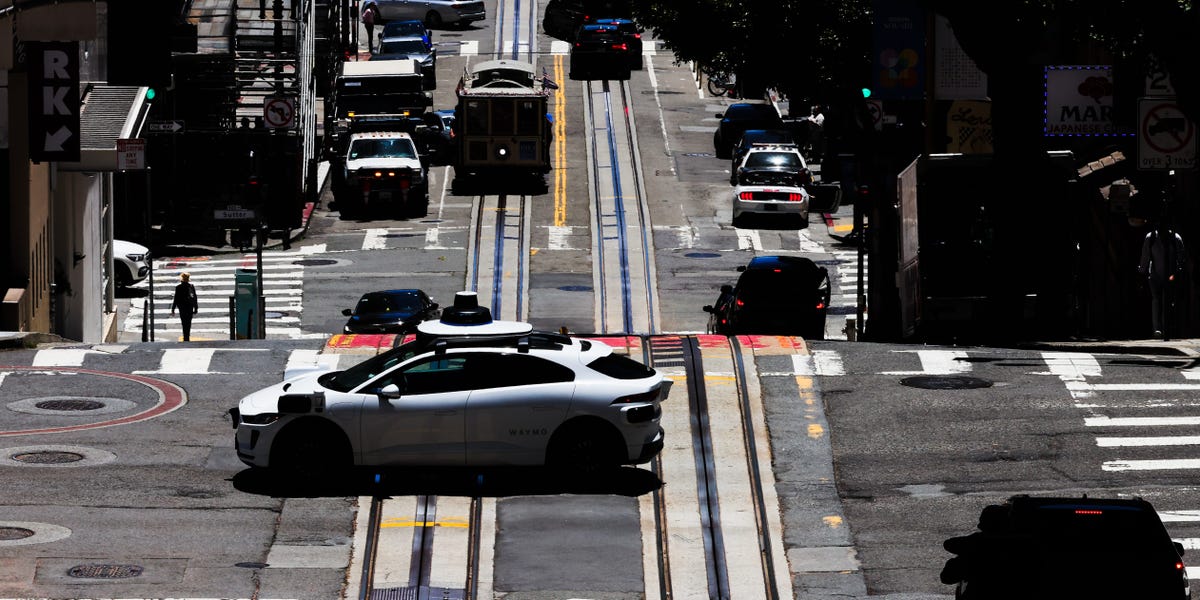
Alphabet's Waymo generated 15% of ride-hailing gross bookings in San Francisco and Los Angeles in June, and 16% in Phoenix, according to data from Yipit, a market research firm. Uber's chief financial officer, Balaji Krishnamurthy, posted the figures on X this month while discussing Uber's competitive position. He said Uber uses its own internal tracking for decisions and shared Yipit's data as an externally available reference.
The share is large enough that the effect on human drivers should be measurable, said Gad Allon, a Wharton professor who studies the gig economy. The first signs are unlikely to be a wave of drivers losing their jobs.
"My initial view is that the impact would not first appear as large numbers of drivers suddenly losing their jobs," Allon told Business Insider. "Because driver supply is flexible, the earliest effects would likely show up in utilization, longer waits between rides, fewer trips per hour, and possibly more unpaid repositioning."
Utilization is the share of a driver's online time spent on paid trips.
Yipit based its figures on trips that begin and end inside Waymo's operating zones, a Yipit spokesperson said. The estimates come from email receipts in a sample of about 1.5 million active U.S. consumer accounts.
The numbers measure gross bookings, not trips. Waymo's share of actual rides could be higher or lower depending on how its prices compare with Uber's and Lyft's.
In January, the share was at least 16% in each of the three markets and peaked at 19% in Phoenix. Yipit cautioned that Waymo's share can appear to decline when the service expands into new areas where it is initially less popular. Waymo said in May it expected to widen its Bay Area footprint by 60 square miles. Despite that caveat, the share stayed in the mid-teens in all three markets through June.
Allon called the June figure a "serious shock" to the labor market. The impact on individual drivers is diluted because many also work outside Waymo's geofences.
The wage data shows the same pattern. Last year, figures from Gridwise, a ride-hailing data platform, showed hourly driver pay declined in Austin, Los Angeles, Phoenix and San Francisco, all cities where Waymo operates, while the national median rose 1%. Researchers who reviewed the data told Business Insider it could not establish that robotaxis caused the decline.
Uber has acknowledged the shift. Chief executive Dara Khosrowshahi told Fast Company in a June profile that the company is recruiting fewer drivers in some cities where autonomous vehicles operate. At the same time, Uber said more drivers are signing up on their own and rider demand is growing.
Lyft expects the market to expand. Chief executive David Risher, in prepared remarks for the company's Aug. 6 earnings call, said "the future is hybrid and, as AVs scale, the market will expand." He added that Lyft rides within San Francisco's autonomous-vehicle operating area grew about 20% year over year. Spokespeople for Waymo and Uber did not respond to requests for comment.
Data gaps complicate any direct measure of displacement. Katie Wells, a senior fellow at the AI Now Institute who has studied Uber drivers, said the information needed to document the effect does not exist.
"We don't know how much, we don't know when, we don't know where," Wells told Business Insider.
Researchers would need utilization and wait-time data to identify the effects, she said.
Because drivers are independent contractors rather than employees, robotaxi displacement may not register as a measurable drop in employment, Wells said. She has documented how the prospect of automation changes driver behavior even before robotaxis arrive. In a five-year study of 40 Uber drivers, she and her coauthors found drivers had less incentive to press for better working conditions because they believed their work would eventually disappear.
"Uber drivers kept saying to us, 'Well, automated vehicles are coming, so they won't need me anymore,'" she said. "This is temporary."