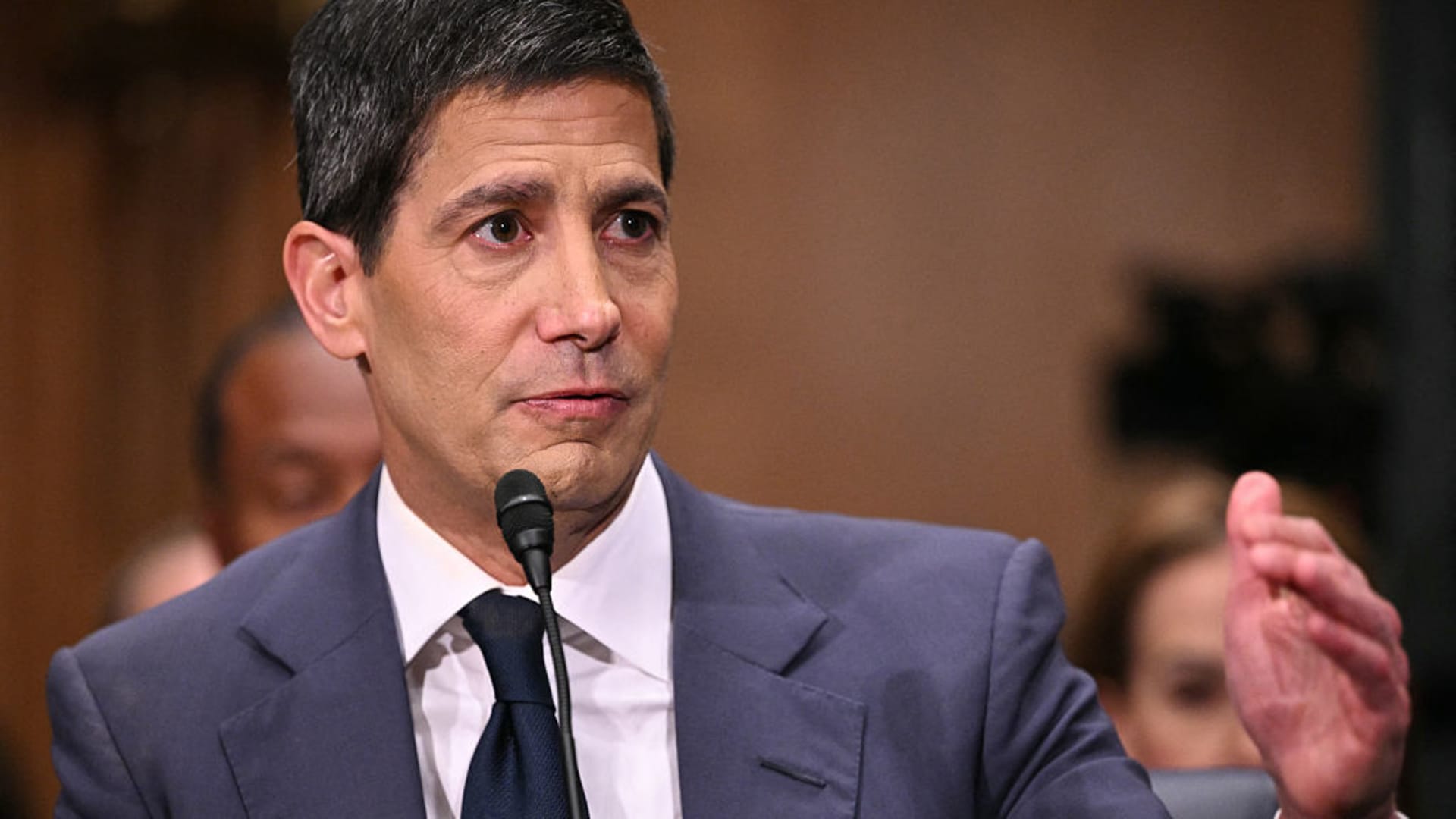
New Federal Reserve Chair Kevin Warsh takes over a central bank locked in internal conflict over the next interest rate move. Inflation is running at multi-year highs, the 10-year Treasury yield has broken above 4.50%, and three members of the Federal Open Market Committee voted against the latest policy statement. Warsh arrives with a stated preference for lower rates. The data and the committee are pulling in the opposite direction.
The macro signal is unambiguous: the inflation problem is not fading. Warsh has echoed the Trump administration's view that price surges are temporary and will fade once the conflict in Iran ends and productivity gains take hold. That argument faces a tougher audience now. Former Cleveland Fed President Loretta Mester, who served with Warsh during his prior stint as a governor, put it bluntly: "I just don't think right now he can make those arguments in a credible way, because we have an inflation problem."
The FOMC's April Dissent: Three Votes Against the Statement
The most recent FOMC meeting in late April saw three members vote against the policy statement. The point of contention was one sentence that investors interpreted as signaling the next move would be a cut: "In considering the extent and timing of additional adjustments to the target range for the federal funds rate, the Committee will carefully assess incoming data, the evolving outlook, and the balance of risks."
The "Family Fight" Origin
Warsh used the phrase "family fight" during his Senate confirmation hearing to describe his approach to internal debate. Those who have watched him expect strong arguments for cutting. The committee, however, is in no mood to ease. Several officials have stressed the need to keep options open for rate hikes. Former Governor Stephen Miran, who voted against every rate decision during his six meetings, told Bloomberg News that "people at the Fed are responsive to arguments" and that changing minds "takes time."
What a Consensus Looks Like
Former Cleveland Fed President Mester explained that the chair typically calls each participant before the meeting to gauge positions. "The driving towards consensus is part and parcel of the setup of the FOMC," she said. Warsh could try to remove the forward-guidance sentence from the statement, framing it as a shift to a more agnostic communications framework rather than a tightening signal. Lou Crandall, chief economist at Wrightson ICAP, noted that this approach has a PR element: "He doesn't have to say that the committee forced his hand in his first meeting to go to an effectively more restrictive stance."
Practical rule: The first FOMC statement under a new chair is a credibility event. Removing the cut bias reshapes the rate path without a single basis point move in the funds rate.
Transmission Path: Yields, Dollar, and the Repricing
The inflation persistence has already pushed the 10-year Treasury yield above 4.50%, a level that compresses valuations across equities and strengthens the dollar. The Core CPI Accelerates, 10-Year Yield Breaks 4.50%, Reshaping Markets article detailed how that move raises discount rates across every asset class.
Dollar and Gold Reaction
A hawkish FOMC outcome would lift the U.S. Dollar Index as rate differentials widen. That puts pressure on gold, which has been supported by rate-cut expectations. If the committee signals optionality for hikes, gold's opportunity cost rises. The Inflation Persistence Delays Fed Cuts, Reshapes Markets analysis showed that gold tends to sell off when real yields break higher.
Oil and Commodities
Warsh's temporary-inflation thesis hinges on a ceasefire in Iran. Until that happens, crude oil remains elevated by geopolitical risk. A stronger dollar from a hawkish Fed would partially offset that bid. Supply-side factors, however, dominate the oil market right now.
Equity Exposure: Growth Stocks Face the Highest Discount Rate Risk
Growth stocks are the most exposed to a shift in the rate path. The NASDAQ 100 has been pricing in a soft landing with rate cuts. If the FOMC removes that expectation, the valuation compression hits high-duration equities hardest. Sectors with short-duration cash flows – energy, materials, value – would hold up better.
Sector Exposures
- Technology and biotech: Long-duration, sensitive to changes in the discount rate. Every 25bp shift in the 10-year yield alters valuation models significantly.
- Regional banks: Benefit from higher yields if the curve steepens. Credit risk from a slowing economy, however, offsets some of that gain.
- Consumer discretionary: Squeezed by both higher rates and sticky inflation. Discretionary spending tends to weaken when real rates rise.
The Warsh-Powell Parallel
President Trump nominated Warsh with clear statements that he expected lower rates. If Warsh fails to deliver, the same dynamic that produced perpetual clashes between Trump and former Chair Jerome Powell could reemerge. That uncertainty itself is a risk premium that depresses equity valuations, especially for names with heavy retail or short-vol exposure.
Warsh's Communication Tightrope: Forward Guidance and Dot Plot
Warsh has spoken out against forward guidance, the dot plot, and even the practice of holding press conferences after every meeting. His first FOMC meeting will test whether he can change the communications framework without fracturing the committee.
Removing the Cut Bias
The simplest move is to delete the sentence that implies cuts are next. Bill English, former head of monetary affairs at the Fed and now a professor at Yale, served with Warsh and said he is "good at working with people" and will try to find a reasonable consensus. "He just doesn't seem like the sort of guy who's going to want to pick a fight with the committee," English said.
The Risk of a Dissenting Chair
If Warsh disagrees with the committee outcome, could he state his dissent in the post-meeting press conference? Mester said that would undermine his power. "Part of the job of chair is you get the committee to reach a consensus." A public split would signal dysfunction and reduce the Fed's credibility in markets.
Key insight: Markets can tolerate a hawkish Fed. Markets cannot tolerate a Fed with no clear internal alignment.
Next Catalyst: The May FOMC Statement Rewrite
The next scheduled FOMC meeting is in May. The key question is whether the statement retains the forward-guidance sentence. If Warsh successfully removes it, the market will interpret that as a hawkish tilt even if the funds rate stays unchanged. The Kevin Warsh Takes Fed Chair, Powell Stays as Governor article laid out the institutional dynamics. Traders should watch the pre-meeting speeches for clues on whether the three dissenters have been swayed.
For now, the macro transmission is clear: inflation spikes force yields higher, the dollar strengthens, and risk assets reprice lower. Warsh's ability to navigate the family fight will determine whether that repricing is orderly or disruptive.