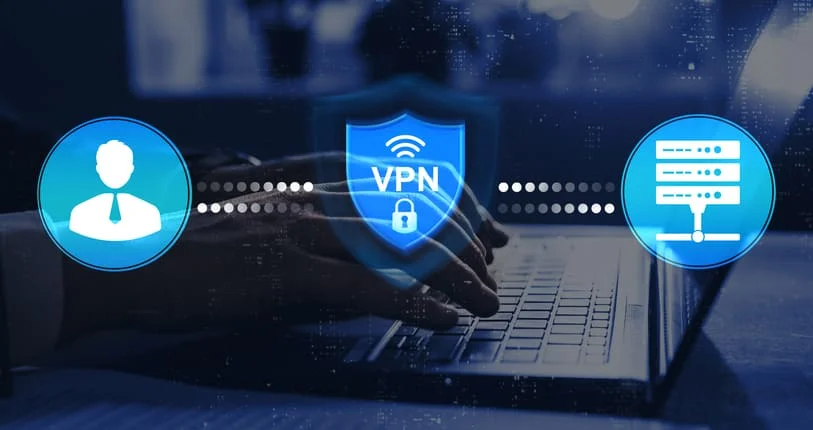
VPN tunnels secure data through encryption and integrity checks. Learn why protocol choice and kill switches are critical for maintaining your privacy.
The marketing surrounding VPNs often obscures the underlying engineering, replacing technical reality with vague promises of security. At its core, a VPN tunnel is a method of encapsulating data packets to prevent third-party observation of traffic metadata and destination. Understanding this mechanism is essential for evaluating whether a service actually protects your privacy or merely shifts the point of trust.
When a device initiates a network request, it breaks data into packets containing the payload and addressing information, such as the source IP address and destination. In a standard internet connection, these packets travel through various routers and servers, leaving the metadata visible to ISPs and network observers. A VPN tunnel fundamentally alters this journey by encrypting the packet on the local device before it enters the network.
Once the packet is encrypted, it is wrapped inside a new packet addressed to the VPN server. This process creates an encrypted channel where the original destination and content remain hidden behind the outer wrapper. To an observer, the traffic appears only as a stream of data between the user device and the VPN server. This shift in routing is the primary mechanism for privacy, but its effectiveness depends entirely on the integrity of the tunnel.
For a tunnel to function securely, it must execute three distinct phases. First, the handshake process uses asymmetric cryptography to establish a shared secret key between the client and the server without transmitting the key itself across the network. This step is critical for preventing interception during the initial connection phase.
Second, the system employs symmetric encryption, such as AES-256 or ChaCha20, to convert readable data into ciphertext. This ensures that even if a packet is intercepted, it remains computationally impractical to decrypt without the session key. Third, the tunnel performs integrity verification. Each packet carries a cryptographic signature; if the packet is altered or corrupted during transit, the verification fails and the system discards the data. This mechanism is the primary defense against man-in-the-middle attacks.
The choice of protocol dictates the performance and security profile of the tunnel. The industry has largely shifted toward WireGuard, which offers a significantly smaller attack surface compared to legacy standards like OpenVPN.
| Protocol | Codebase Size | Efficiency | Performance |
|---|---|---|---|
| OpenVPN | ~600,000 lines | Moderate | 70-80% of baseline |
| WireGuard | ~4,000 lines | High | 85-95% of baseline |
Linus Torvalds famously characterized WireGuard as a work of art, contrasting its streamlined architecture with the complexity of OpenVPN and IPSec. The reduced codebase is not merely a performance optimization; it is a security feature. Fewer lines of code translate to a smaller audit surface, making it easier to identify and patch vulnerabilities. Furthermore, the lower CPU overhead of WireGuard improves battery life on mobile devices, addressing a common friction point for users who maintain constant VPN connections.
Engineering sophistication often fails when confronted with unstable network conditions. Mobile networks and public Wi-Fi environments frequently experience signal drops, which can cause a VPN tunnel to collapse. If the tunnel fails, the device may default to sending traffic openly, exposing session tokens and credentials without the user realizing the protection has lapsed.
This risk necessitates a kill switch, a feature that blocks all outbound traffic if the tunnel is not active. Without a kill switch, the gap between a connection drop and a successful reconnection creates a window of vulnerability. For users prioritizing privacy, the kill switch is not an optional feature but a structural requirement for maintaining the integrity of the tunnel in variable environments.
While the underlying technology is complex, the barrier to entry has decreased significantly. Modern software, such as X-VPN on iOS, demonstrates how providers are removing friction by eliminating account registration and offering pre-configured protocols. These services automate the handshake, encryption, and verification phases, allowing users to benefit from tunnel security without requiring manual configuration.
For those evaluating the broader landscape of stock market analysis, understanding the trade-offs between protocol speed and security is vital. While high-level abstractions make VPNs accessible, the effectiveness of the privacy tool remains tethered to the stability of the tunnel and the rigor of the underlying protocol. As the industry moves toward more efficient, audited standards, the gap between technical complexity and user experience continues to narrow, though the fundamental risk of connection instability remains a constant factor for the end user.
AI-drafted from named sources and checked against AlphaScala publishing rules before release. Direct quotes must match source text, low-information tables are removed, and thinner or higher-risk stories can be held for manual review.