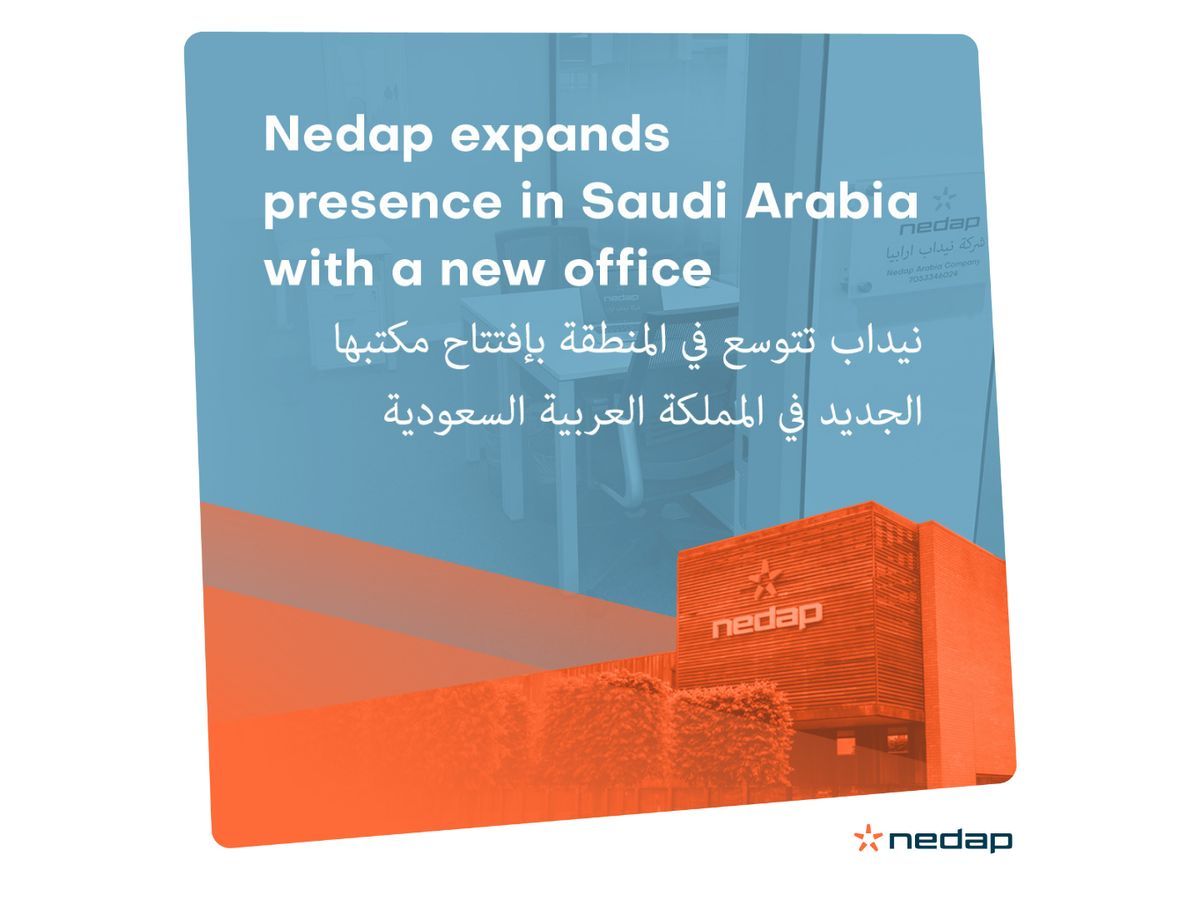
Nedap (AMS:NEDAP) opened a new office in Saudi Arabia, appointing Junaid Ul Haq as Country Director for Saudi Arabia and Bahrain. The move directly ties the access control and digital twin technology firm to the kingdom’s multi-hundred-billion-dollar infrastructure buildout. The stock has not yet repriced for a successful Middle East expansion. The office itself will not change revenue this quarter. The setup for investors is whether this physical presence converts a decade of project work into a structurally higher growth path in the Middle East & Asia-Pacific segment.
Nedap already counts oil and gas operators, industrial sites, government agencies, and healthcare networks among its Saudi customers. These relationships were built remotely or through partners. The new office, and the appointment of a dedicated country director, signals that management believes the addressable pipeline now justifies on-the-ground sales and support teams. The better read is not about the office footprint. It is about sales execution velocity in a market where face-to-face engagement and local service capacity often determine who wins large, multi-year security contracts.
The Vision 2030 Demand Driver
Saudi Arabia’s Vision 2030 pours capital into smart cities, transport corridors, mega-scale industrial zones, and data-driven public services. Security in these environments is no longer a checkbox at the construction handover. It becomes an integrated, identity-centric layer that must connect badge readers, biometrics, video, building management, and IT access policies into one auditable system. Nedap’s AEOS platform and its identity, mobile access, RFID, and locker solutions are built on open architecture, which allows them to slot into existing third-party systems without rip-and-replace. That architectural flexibility carries weight in government and enterprise RFPs where avoiding vendor lock-in is a procurement mandate.
Maarten Van Cauwenberghe, Managing Director META & APAC, described Saudi Arabia as “a key growth market for Nedap, both in terms of scale and long-term development.” His comment anchors the expansion in the reality of rising demand for solutions that manage identities and access across complex environments. Quoting directly from the company statement:
“We see increasing demand for solutions that help organizations manage identities, access, and security policies across complex environments. Establishing a local presence allows us to support our partners and engage closely with customers in enabling the deployment of integrated solutions that can scale and adapt over time.”
The quote matters because it frames the office not as a cost center but as a prerequisite for winning deals that require local installation, training, and 24/7 support. The alternative, flying in engineers from the Netherlands or relying solely on regional partners, works for mid-sized projects. The mega-projects now being tendered demand dedicated in-country resources. The office creates the condition for Nedap to bid on larger packages and to capture a higher share of lifecycle service revenue.
From Partnership to Direct Revenue: The New Office Model
Nedap has a long history in the Gulf, yet its go-to-market was partner-heavy. That model kept fixed costs low and still delivered projects in oil and gas, education, and finance. Opening an office under a newly appointed country director changes the operating leverage. Junaid Ul Haq’s mandate is to build a local team, deepen partner enablement, and directly engage with end users. He noted:
The operational translation: Nedap can now respond to tenders with in-country technical support, can hold inventory for faster deployments, and can offer service-level agreements that match what Saudi government entities require. That turns an access control product sale into a stickier, multi-year managed service relationship. The incremental margin on services is often higher than on hardware, so if the team converts even a fraction of the existing customer base to managed service contracts, the segment’s revenue quality improves.
Hiring a country director also signals that Nedap is willing to absorb the initial drag of local headcount and office costs before the pipeline converts. The market should treat the next few quarters of Middle East segment disclosures as a test of whether the cost ramp is being matched by order intake. If revenue from the region accelerates with a 12-month lag, the office investment thesis will gain credibility.
What Confirms the Setup Is Working
The office announcement itself is a leading indicator, not a confirmation. Confirmation will arrive through contract wins and revenue progression. Here is a framework for tracking the setup once quarterly reports land:
- Named project announcements. If Nedap issues press releases about major Saudi installations within the next 12-18 months, those wins would validate the on-ground hiring and suggest the pipeline is maturing. Look for mentions of NEOM, Red Sea Project, Diriyah Gate, or new government campuses.
- Segment revenue growth. The company does not break out Saudi Arabia separately. It reports under META & APAC. A sustained acceleration in that segment’s organic revenue, paired with management commentary explicitly linking it to Saudi traction, would confirm the strategic bet.
- Partner ecosystem expansion. Ul Haq’s team will need to recruit, train, and certify local integrators. A growing number of certified partners in the Kingdom would demonstrate execution of a channel strategy that multiplies reach beyond direct sales.
Invalidation would come from a mismatch between cost growth and revenue. If headcount increases in the Middle East without a corresponding rise in segment revenue after 12-18 months, the thesis weakens. A sharp drop in oil prices could delay government spending on non-critical infrastructure and security upgrades. Regulatory changes that require in-country data hosting or preferential treatment for domestic security firms could also erode the advantage of a local office for a European parent. The stock reacts to results, not to ribbon-cutting ceremonies.
Risk: Execution, Competition, and Macro Dependence
Local presence solves proximity but does not erase competition. The Saudi access control market already includes global players with established Gulf operations, such as Honeywell, Bosch, and Johnson Controls, alongside local integrators with deep government ties. Nedap’s open architecture pitch must be wedded to competitive pricing and delivery speed to win. A newly formed team under a first-time country director faces a steep learning curve in navigating procurement processes that can shift with changes in ministerial personnel.
There is macro risk, too. Vision 2030 spending plans are ambitious, and they get re-baselined when oil revenue dips. Saudi Arabia’s fiscal breakeven oil price remains well above USD 80 per barrel in many analysts’ estimates. A sustained drop would not halt the mega-projects. It would delay ancillary security upgrades that form a large part of Nedap’s addressable market. The setup therefore carries a commodity-price tail risk that is outside management’s control.
For investors, the Saudi office transforms Nedap from a European security technology name with a peripheral Gulf presence into a company placing a direct bet on one of the world’s largest construction cycles. The stock’s reaction will hinge on proof of execution. The open question is whether the Middle East can become a visible growth contributor large enough to move the consolidated revenue line. Until contract wins materialize, the announcement remains a seed, not a harvest. With Nedap trading on Euronext Amsterdam, the coming quarters will show whether the country director can turn a new office into a new growth engine. For broader market context on European small-caps, see stock market analysis.