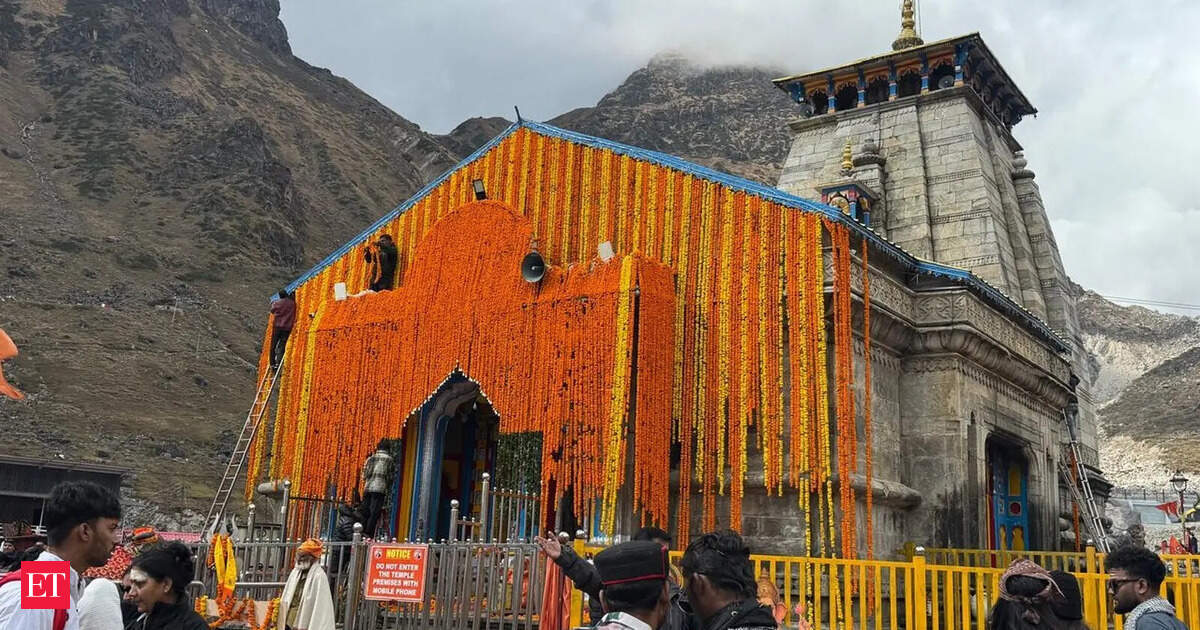
Uttarakhand Leadership Shift Targets Infrastructure Readiness for Char Dham Yatra

The appointment of Sohan Singh as CEO of the Badrinath-Kedarnath Temple Committee marks a strategic shift in managing the Char Dham Yatra as Uttarakhand prioritizes infrastructure and safety.
Alpha Score of 47 reflects weak overall profile with moderate momentum, poor value, moderate quality. Based on 3 of 4 signals — score is capped at 90 until remaining data ingests.
HASBRO, INC. currently screens as unscored on AlphaScala's scoring model.
Alpha Score of 45 reflects weak overall profile with strong momentum, poor value, poor quality, weak sentiment.
Alpha Score of 46 reflects weak overall profile with strong momentum, poor value, poor quality, moderate sentiment.
The Uttarakhand state government has appointed PCS officer Sohan Singh as the Chief Executive Officer of the Badrinath-Kedarnath Temple Committee. This leadership change arrives as the state accelerates preparations for the annual Char Dham Yatra, a pilgrimage that serves as a primary driver for the regional tourism economy. The appointment is intended to streamline administrative oversight of the temple sites during the peak influx of visitors.
Operational Oversight and Infrastructure Development
The transition in committee leadership aligns with a broader state initiative to enhance the safety and accessibility of pilgrimage routes. Beyond the administrative appointment, the government is prioritizing the completion of infrastructure projects designed to support higher foot traffic. These developments are central to the state's strategy for scaling religious tourism, which remains a critical component of the local economic framework.
As the pilgrimage season commences, the committee is tasked with managing the logistics of the yatra while ensuring that safety protocols remain consistent across the high-altitude terrain. Health screenings for pilgrims have been established at Rishikesh to mitigate risks associated with the arduous journey. The integration of these health measures with the committee's new management structure indicates a focus on operational continuity during the peak travel window.
Economic Implications for Regional Tourism
The focus on the Badrinath-Kedarnath circuit reflects a wider trend of state-led investment in religious infrastructure. By formalizing the management of these sites, the government aims to reduce bottlenecks that have historically impacted the efficiency of the yatra. This administrative shift is a direct response to the increasing volume of pilgrims, which necessitates more rigorous oversight of both site maintenance and visitor management.
While the focus remains on the immediate operational requirements of the pilgrimage, the long-term objective is the professionalization of temple management to sustain growth in the tourism sector. The success of these infrastructure improvements will serve as a benchmark for future development projects in the region. Investors and stakeholders in the hospitality and logistics sectors often monitor these state-led initiatives as indicators of regional economic stability and growth potential.
For broader context on how administrative shifts and infrastructure projects influence regional markets, readers can explore our stock market analysis. The effectiveness of the new committee leadership will be measured by the fluidity of the yatra and the completion rate of the planned safety upgrades along the primary routes. The next concrete marker for this transition will be the mid-season performance report, which will detail the impact of these administrative changes on visitor throughput and safety outcomes.
AI-drafted from named sources and checked against AlphaScala publishing rules before release. Direct quotes must match source text, low-information tables are removed, and thinner or higher-risk stories can be held for manual review.