Stocks● Neutral
US Treasury Debt Hits $40 Trillion; Bessent Doubles Buybacks
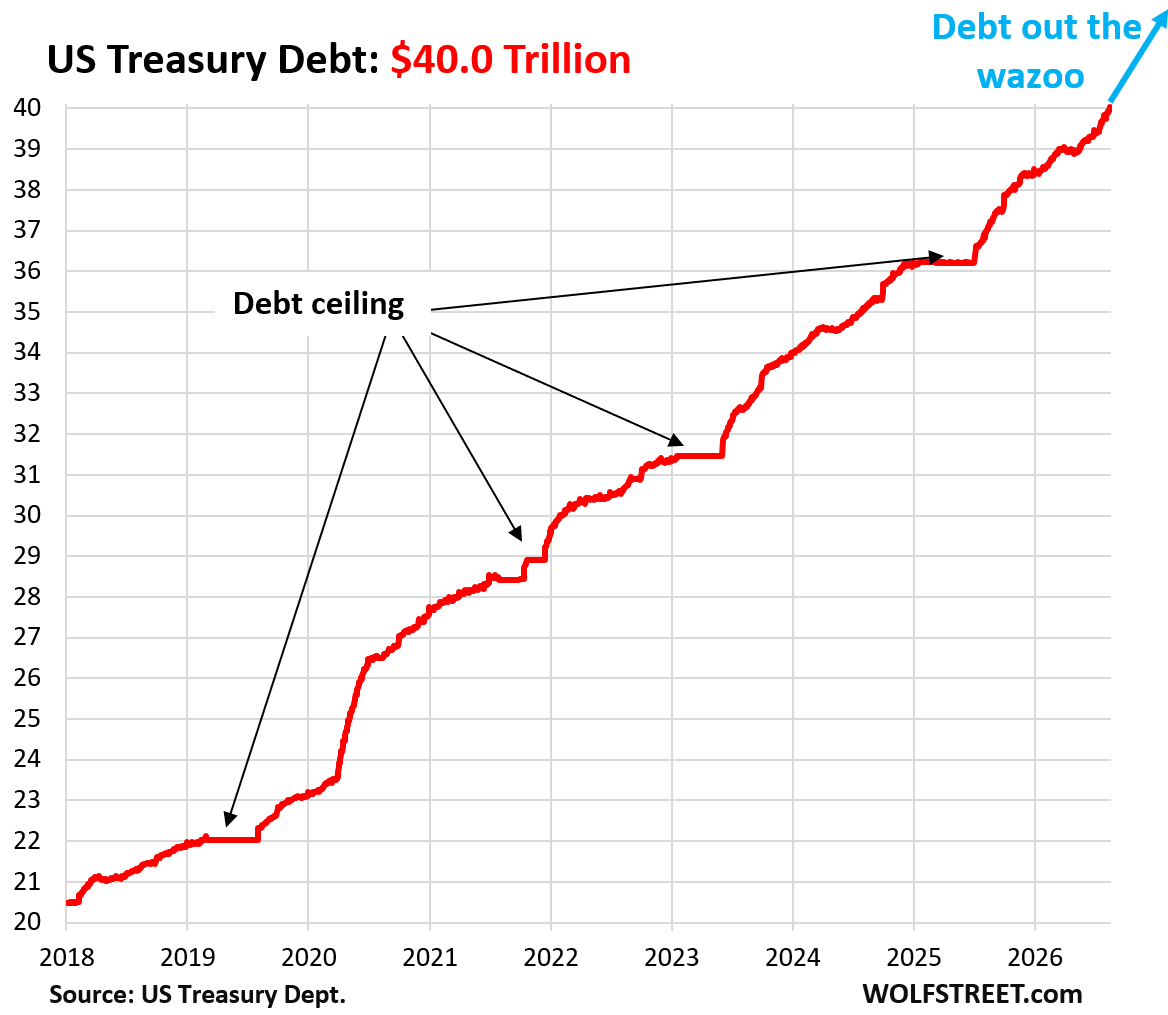
The 30-year Treasury yield touched 5.31% as investors absorbed $1 trillion in new debt in three months. Treasury Secretary Bessent doubled the buyback program starting September 9.
Continue with
The US Treasury's outstanding debt crossed $40 trillion this week, up $1 trillion in the past three months and $3 trillion over the past year. Tax cuts, federal spending, the conflict in Iran, and Supreme Court-ordered tariff refunds all accelerated the pace. To absorb that flood of new supply, yields had to rise high enough to pull buyers off the fence.
Of the $40 trillion total, $32.3 trillion is held by the public – traded and owned by investors, hedge funds running the basis trade, banks, insurers, the Federal Reserve, and foreign central banks. Overseas accounts hold $9.3 trillion. Another $7.78 trillion sits in federal pension funds, Social Security trust funds, and other government accounts. Those are real obligations to beneficiaries but do not trade in the secondary market.
The $1 trillion increase in public holdings over three months represents the new supply global bond buyers had to absorb, on top of rolling over maturing debt. Last week alone, the Treasury sold $742 billion in securities. To clear that much paper, the 30-year Treasury bond sold at auction at 5.22%, the highest auction yield since 2001. By Monday it had touched 5.31%.
Treasury Secretary Scott Bessent responded Tuesday by announcing the department will double its buyback program. The program, started by Janet Yellen in April 2024 after the 10-year yield briefly pierced 5%, lets the Treasury sell new securities to repurchase older ones. The practical effect mirrors shifting auction volume toward shorter-term T-bills, which the department already does. The increase does not start until September 9.