Stocks● Neutral
UNDP Award Validates SHG-Led Agri Model for Rural India
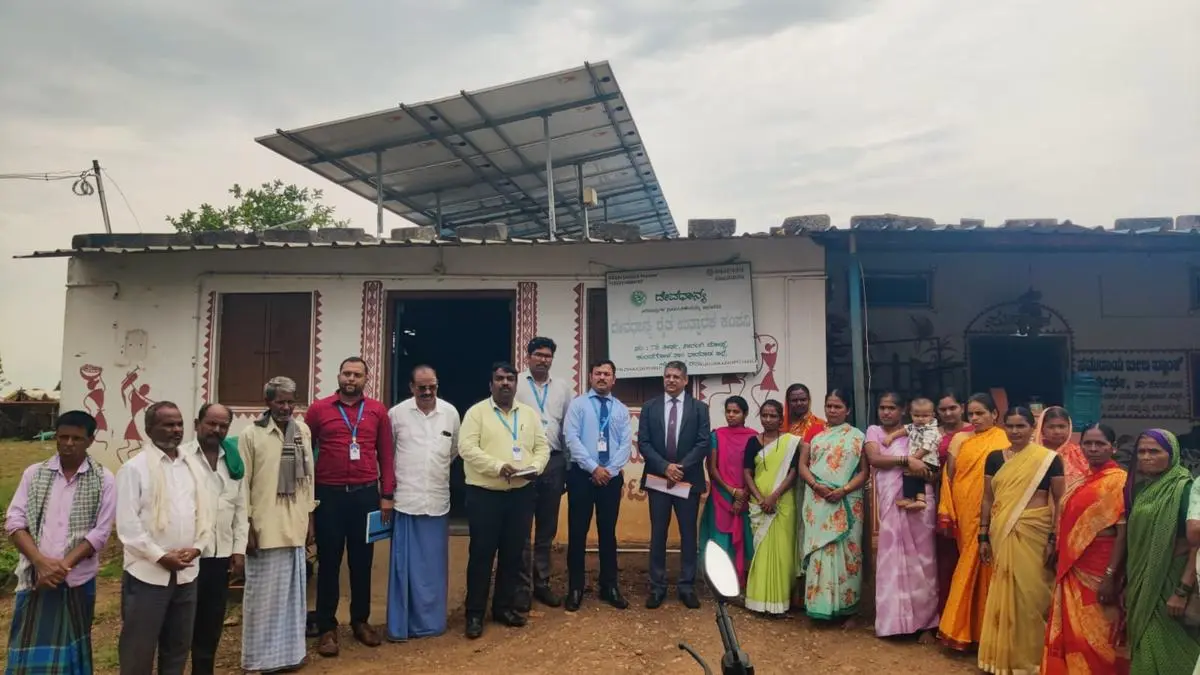
Bibi Fatima SHG's UNDP award validates a model serving 200 farmers across 30 villages. The SHG-FPO linkage could reshape rural lending and agri-processing supply chains.
Continue with
The Bibi Fatima Women SHG in Ingalagi village, Dharwad district, received the Equator Initiative Award 2025 from the United Nations Development Programme (UNDP). The recognition validates a model that integrates indigenous seed conservation, millet processing, and organic farming through a farmer producer organisation (FPO) linkage. Shreekant M Bhandiwad, Chairman of Karnataka Grameena Bank (KGB), visited the group and framed its work as a template for sustainable rural development. For traders tracking India's agri-sector transformation, this event provides a concrete case study in value chain integration at the village level.
The group started in 2018 with financial assistance from KGB's Ingalagi branch. It now operates a community seed bank and a millet processing unit that serve more than 200 farmers across nearly 30 villages. The operational metrics are modest. The model's replicability carries sector-level weight. Bhandiwad emphasized that value addition to agricultural produce is extremely important for farmer empowerment. He also noted that active participation of women SHGs in agriculture and allied activities strengthens the rural economy.
Bibi Fatima SHG's Value Chain Integration
The Mechanism That Makes It Scalable
The read-through for the broader ecosystem is not about the SHG itself. It is about the FPO linkage. Bhandiwad explicitly tied the group's success to its FPO centre, where value addition occurs. This is the missing piece in many rural development programs: processing infrastructure at the village level that captures margin otherwise lost to intermediaries. The Bibi Fatima SHG has built that bridge. The result is a vertically integrated unit – from seed bank to processing unit to market – that operates outside the traditional grain trade.
The group uses millet-based mixed cropping systems and eco-friendly farming practices. These methods have emerged as a model for sustainable rural development. The UNDP award confirms that the approach is commercially viable, not just environmentally sound.
What This Changes for the Rural Economy
Bhandiwad's statement that women SHGs strengthen the rural economy is not rhetorical. The UN award validates that the group's practices are commercially viable. For companies supplying organic inputs, millet processing equipment, or rural logistics, this creates a proof-of-concept that can attract bank financing and government subsidies. The Karnataka Grameena Bank itself may use this case to expand similar lending programs.
UNDP Award as Institutional Validation
The Institutional Seal
Receiving the Equator Initiative Award places the SHG among global best practices. For companies marketing organic or millet-based products, the association with a UNDP-recognised group provides genuine third-party validation. Retail investors looking for authentic exposure to the sustainable agriculture theme can use this event as a screening filter: companies that secure supply agreements with award-winning SHGs or FPOs have a tangible source of competitive advantage.
Practical Rule for Traders
- Treat Bibi Fatima SHG as a leading indicator, not a portfolio holding.
- Monitor regional rural bank quarterly reports for mention of similar SHG-FPO funding.
- Watch for millet procurement tenders from state governments in Karnataka, Maharashtra, and Odisha – these are demand signals for the processing infrastructure being built.