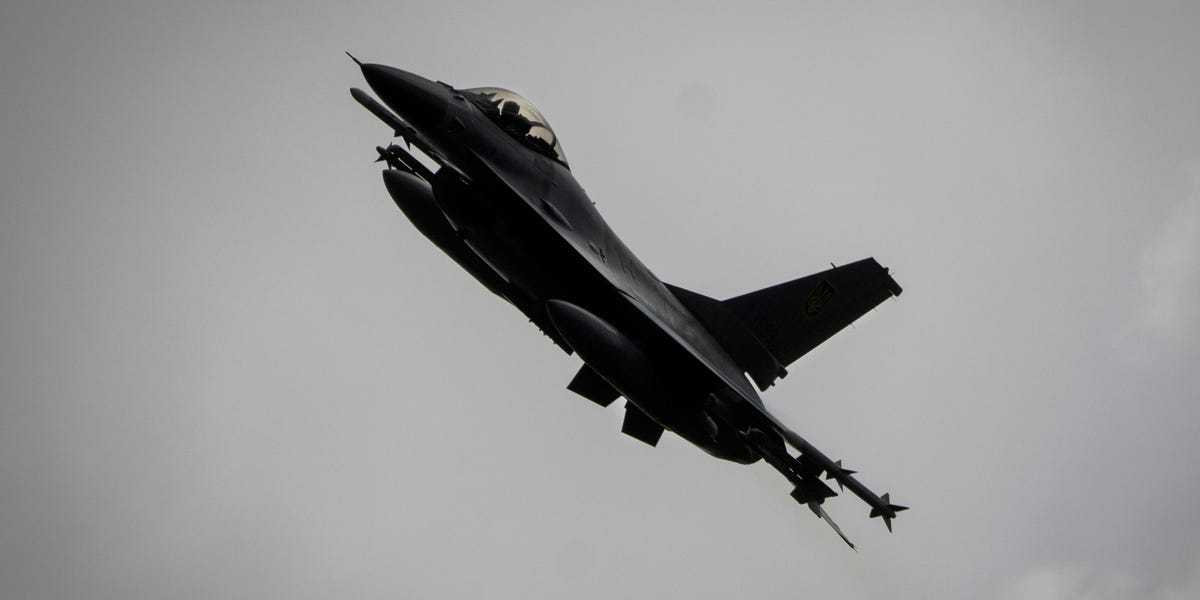
Ukrainian pilots are undergoing a fundamental transition in flight training, moving away from rigid, top-down Soviet-era command structures toward the decentralized, initiative-based tactical doctrine used by Western air forces. Royal Air Force instructors currently overseeing early-stage training for Ukrainian aviators report that the most significant hurdle is not the technical mastery of the F-16 platform, but the psychological shift required to operate within a mission-command framework.
Under the Soviet model, pilots functioned as extensions of ground-based controllers. Every maneuver, engagement, and tactical decision was dictated by a command center, leaving little room for individual pilot discretion. Western training, by contrast, emphasizes the pilot's role as a tactical decision-maker who must assess dynamic environments and execute missions based on commander intent rather than step-by-step instructions. This shift is essential for the effective deployment of the F-16, an aircraft designed to leverage advanced sensor fusion and independent target acquisition.
Tactical Autonomy and Sensor Integration
The transition requires pilots to process complex data streams in real time. While Soviet-era training prioritized adherence to established flight paths and ground-directed intercepts, the F-16 requires pilots to manage their own situational awareness. Instructors note that the ability to operate independently is what allows Western air forces to maintain operational tempo in contested airspace. For Ukrainian forces, this change in mindset is the primary bottleneck in scaling their combat capability.
This shift in doctrine has implications for the broader industrial landscape supporting these defense programs. As Ukraine integrates more Western hardware, the demand for sophisticated simulation training and software-defined combat systems increases. Companies involved in the defense supply chain, such as those within the industrials sector, are increasingly focused on these training-to-hardware integration cycles. For instance, firms like Firefly Aerospace Inc. (FLY) operate within a broader aerospace ecosystem where the success of platform deployment is increasingly tied to the human-machine interface and the speed at which operators can adapt to new tactical paradigms.
Operational Readiness and Institutional Change
Institutional inertia remains the most significant risk to this training program. Moving from a culture of strict obedience to one of calculated risk-taking is a multi-year process that cannot be accelerated by hardware delivery alone. The current training cycle is designed to bridge this gap by forcing pilots to solve tactical problems in the air without constant intervention from instructors. Success in this program is measured by the pilot's ability to maintain formation integrity while simultaneously managing electronic warfare threats and target identification.
Market participants tracking the defense sector should view this training transition as a leading indicator of long-term operational effectiveness. The ability to field F-16s is a binary event, but the ability to utilize them as force multipliers depends entirely on this doctrinal pivot. As the training progresses, the focus will shift from basic flight mechanics to complex multi-ship integration, which will ultimately determine the utility of the platform in the current conflict. With an Alpha Score of 24/100, Firefly Aerospace Inc. (FLY) remains a point of interest for those monitoring the stock market analysis regarding how specialized aerospace firms navigate these shifting defense requirements. The next concrete marker for this transition will be the deployment of fully trained squadrons into active combat roles, which will test whether this Western-style tactical autonomy holds up under high-intensity pressure.