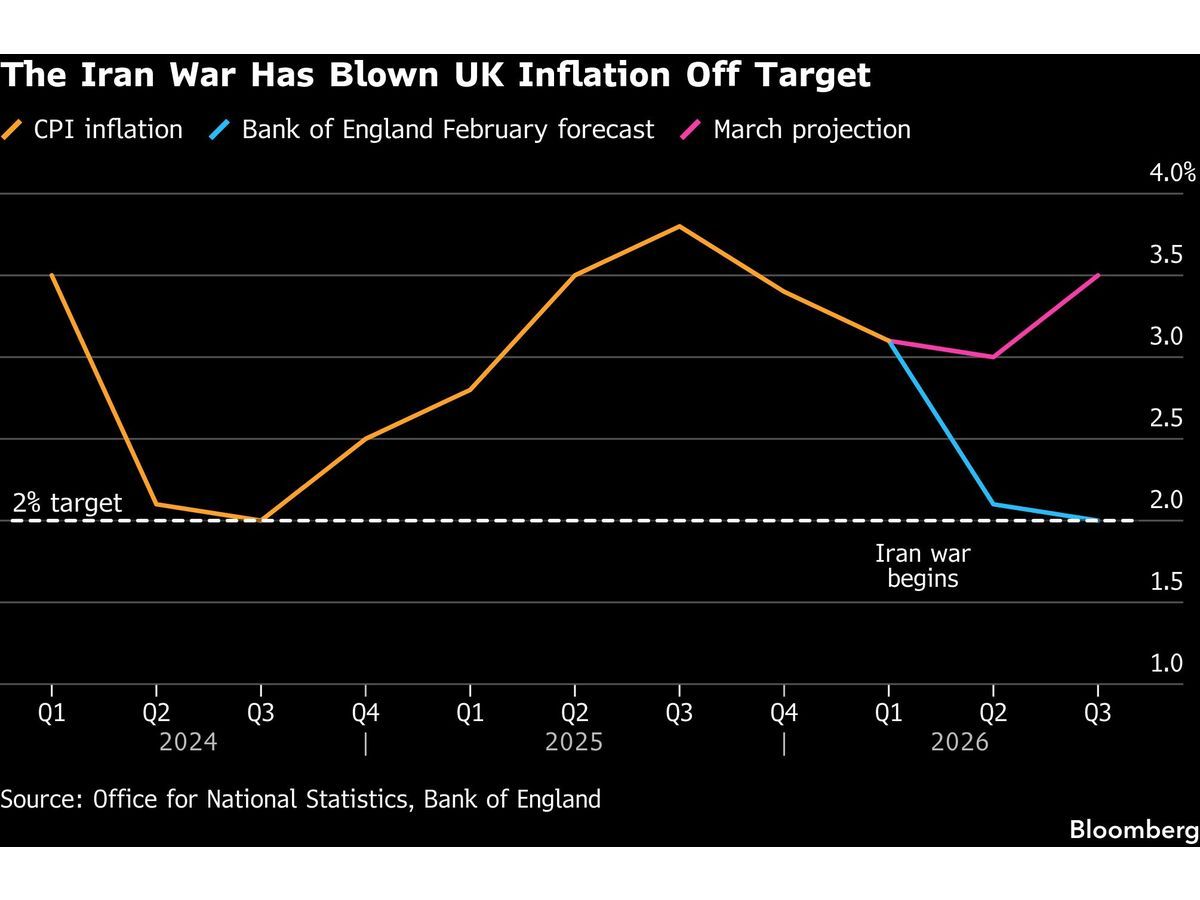
The UK consumer price index rose to 3.3% in March, driven primarily by a sharp increase in petrol costs following the escalation of conflict in Iran. This acceleration in headline inflation complicates the Bank of England's path toward policy normalization, as energy-driven price shocks threaten to embed higher expectations into the broader economy.
Transmission to Energy and Currency Markets
The immediate impact of the inflation print is a repricing of energy-sensitive assets. Rising petrol costs act as a direct tax on household disposable income, which often leads to a contraction in discretionary spending. As the cost of energy imports rises, the sterling exchange rate faces downward pressure. This creates a feedback loop where a weaker currency further increases the cost of imported goods, potentially extending the duration of the inflationary spike.
Bond markets are responding to the prospect of a more hawkish policy stance. Yields on UK gilts have moved higher across the curve as investors adjust for the risk that the Bank of England will be forced to maintain elevated interest rates for longer than previously anticipated. The shift in rate expectations is a direct response to the headline print, which now sits further above the central bank's target.
Equity Sector Sensitivity and Macro Linkages
Consumer cyclical stocks are particularly vulnerable to this shift in the inflation narrative. When energy costs rise, companies with high logistics exposure or those reliant on consumer discretionary spending face margin compression. For instance, companies like Amer Sports, Inc. (AS stock page) currently carry an Alpha Score of 47/100, reflecting the mixed outlook for the consumer cyclical sector as it navigates these macro headwinds. Similarly, Agilent Technologies, Inc. (A stock page) holds an Alpha Score of 55/100, indicating a moderate stance in the healthcare space.
This inflationary pressure is not isolated to the UK. Global markets are increasingly sensitive to supply-side shocks originating from geopolitical instability in oil-producing regions. The current environment mirrors the structural pressures discussed in our broader market analysis, where supply chain disruptions and energy volatility dictate the limits of monetary policy effectiveness. As the UK navigates these pressures, the focus shifts toward the next round of wage growth data and energy price adjustments.
Policy and Market Outlook
The primary marker for the next phase of this cycle is the upcoming Bank of England policy meeting. The central bank must now balance the risk of suppressing economic growth against the necessity of anchoring inflation expectations. If energy prices remain elevated, the policy framework will likely shift toward a more defensive posture. Investors should monitor the next set of producer price indices and trade balance filings to gauge the extent to which these energy costs are being passed through to the wider economy. The persistence of this inflationary trend will determine whether the current move in gilt yields is a temporary adjustment or a structural repricing of the UK rate environment.