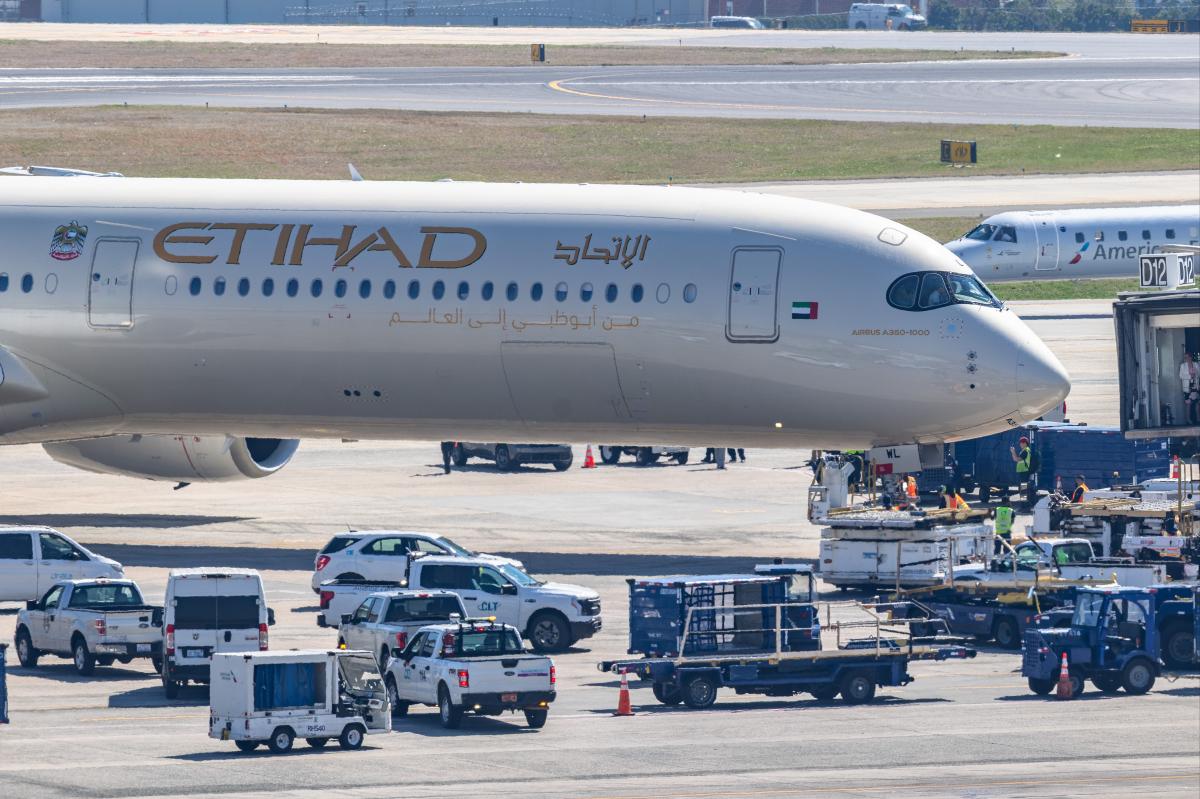
UAE Carriers Resume Tel Aviv Routes as Regional Aviation Normalizes

Etihad and FlyDubai have resumed flights to Tel Aviv, outpacing Western carriers in restoring regional connectivity following the February 28 conflict onset.
Alpha Score of 47 reflects weak overall profile with moderate momentum, poor value, moderate quality. Based on 3 of 4 signals — score is capped at 90 until remaining data ingests.
Alpha Score of 57 reflects moderate overall profile with moderate momentum, moderate value, moderate quality, moderate sentiment.
Alpha Score of 53 reflects moderate overall profile with strong momentum, weak value, weak quality, moderate sentiment.
Alpha Score of 45 reflects weak overall profile with strong momentum, poor value, poor quality, weak sentiment.
The resumption of commercial flight services by Etihad and FlyDubai to Tel Aviv marks a significant shift in regional connectivity following the suspension of operations triggered by the onset of Operation Epic Fury on February 28. By re-establishing these routes, the two Emirati carriers have moved faster than major North American and European counterparts, which remain cautious regarding the security environment in the Middle East.
Strategic Re-entry and Regional Connectivity
The decision by Abu Dhabi’s flag carrier and the low-cost operator to restart flights signals a return to the operational status quo established under the Abraham Accords. This move effectively positions the UAE as a primary transit hub for travelers entering and exiting Israel while Western carriers continue to evaluate risk profiles. The restoration of these links is a functional necessity for maintaining diplomatic and economic ties that were prioritized by the UAE prior to the current conflict.
For the aviation sector, this development serves as a litmus test for regional stability. The ability of these carriers to resume service suggests a localized assessment of risk that differs from the broader international consensus. While other global airlines maintain indefinite suspensions, the Emirati carriers are prioritizing the preservation of their network infrastructure in the Levant. This divergence creates a temporary monopoly on direct air travel between the UAE and Israel, reinforcing the importance of these specific flight corridors for regional business continuity.
Market Context and Sector Read-Through
Investors are monitoring how this resumption influences the broader travel and logistics landscape. While the consumer staples and discretionary sectors often react to shifts in global logistics, companies like COST stock page and LOW stock page remain focused on domestic supply chain resilience. The aviation sector, however, faces a distinct set of pressures related to insurance premiums and fuel hedging strategies in volatile regions.
AlphaScala data currently reflects varying sentiment across the broader market. For instance, C stock page holds an Alpha Score of 63/100, categorized as Moderate, reflecting the bank's exposure to global macroeconomic shifts. The aviation sector's ability to normalize routes will be a key indicator for broader stock market analysis regarding the containment of the current regional conflict.
The Path to Normalization
The next concrete marker for this narrative is the potential response from major European and American carriers. If these airlines continue to delay the resumption of service, it will confirm a bifurcated approach to regional risk management. Conversely, any announcement from Western carriers regarding a return to Tel Aviv would signal a broader confidence in the security environment. Market participants should look for updates on insurance coverage adjustments and regional airspace management protocols, as these factors will dictate whether other international carriers follow the precedent set by the UAE airlines.
AI-drafted from named sources and checked against AlphaScala publishing rules before release. Direct quotes must match source text, low-information tables are removed, and thinner or higher-risk stories can be held for manual review.