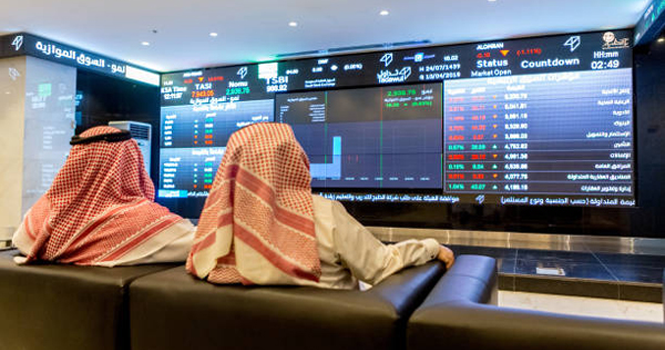
Two negotiated deals on the Saudi Stock Exchange (Tadawul) on Monday moved SAR 19.6 million in shares of Saudi Aramco and Miahona Co. These block trades bypassed the continuous auction, executing at a fixed price agreed between two pre-arranged counterparties.
Negotiated deals on Tadawul are used for large institutional transfers, family office repositioning, or sovereign wealth fund adjustments. Because they do not hit the order book, they leave no immediate price impact. The concentration of two such trades on the same day suggests coordinated activity, though the counterparties remain undisclosed.
Saudi Aramco: Small Trade, Big Index Signal
The SAR 19.6 million deal in Saudi Aramco represents less than 0.003% of its market capitalization. That ratio is tiny. The trade still draws attention because Aramco is the largest component of the TASI index and a core holding of the Public Investment Fund. A block trade of this size could reflect a routine rebalancing by a passive index fund, a direct transfer between government-related entities, or a pre-arranged sale by a board member. Any of these scenarios would require a Tadawul disclosure if the trade pushes a shareholder across the 5% threshold.
Miahona: A Liquidity Event in a Smaller-Cap Stock
Miahona Co., a water and wastewater services firm with a market cap below SAR 1 billion, typically trades a few million riyals per day. A SAR 19.6 million negotiated deal is a significant liquidity event for this stock. The block trade likely represents a concentrated buyer accumulating a strategic stake or a large shareholder exiting a core position. Because negotiated deals do not affect the order book, the stock’s price in the coming sessions will reveal whether the buyer or seller was the informed party. A close above the negotiated price suggests the buyer had positive conviction. A close below suggests the seller was motivated.
Next Disclosure Determines the Signal’s Value
Traders watching these two TASI names should focus on two follow-up signals. First, any Tadawul disclosure triggered by the trade. Saudi market rules require public filing when a shareholder crosses the 5% ownership threshold or when a board member or senior executive trades. If such a filing appears, the market will learn whether the move was passive indexing or active strategic positioning.
Second, watch the post-trade price action over the next five sessions. If Saudi Aramco and Miahona trade above their respective negotiated deal prices, the buyer was likely informed and the market is re-rating. If they trade below, the seller had the informational edge.
These two block trades are not a macro event for the Saudi market. They offer a window into institutional positioning in two very different TASI names – one ultra-large cap, one small cap with thin daily liquidity. The next regulatory filing will determine whether the trades were noise or a signal worth following.
For a deeper look at how block trades affect Saudi equities, see our stock market analysis. For accessing Tadawul, our broker guide covers the best options.