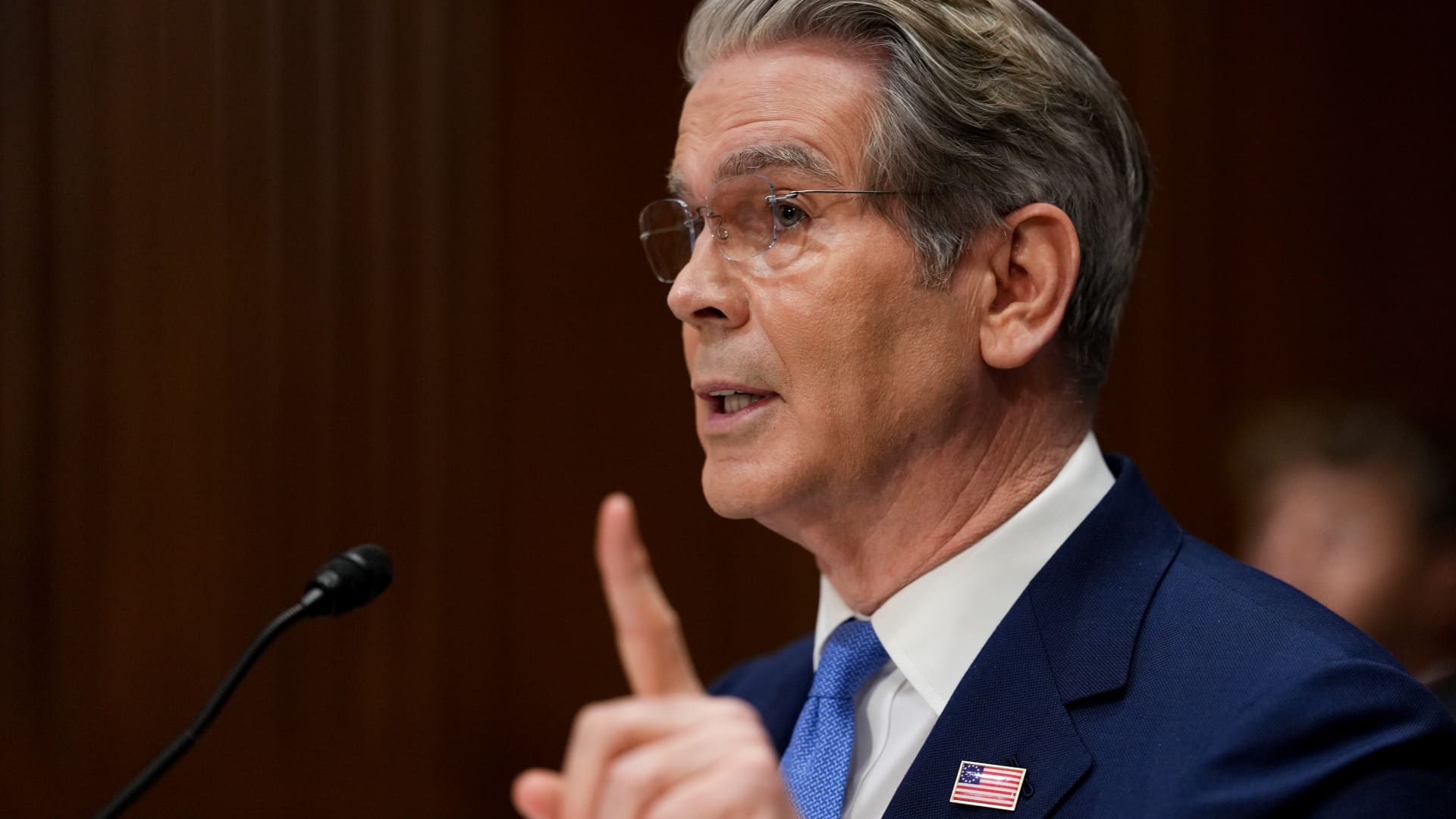
Treasury Secretary Scott Bessent called Trump Accounts "the most successful launch in government history" on Monday, as sign-ups reached 7 million children, up from 6.5 million earlier this month. Bessent made the remark in prepared remarks for the Financial Literacy and Education Commission meeting, provided exclusively to CNBC.
The program, officially known as 530A accounts, opened July 4 under President Donald Trump's signature tax and spending bill. It targets children under 18 with a Social Security number. Those born between 2025 and 2028 get a one-time $1,000 deposit from the Treasury, seeded into S&P 500-linked exchange-traded funds. Parents, guardians and grandparents can add up to $5,000 per child each year.
McKinsey's recent analysis pegged the long-term asset accumulation potential at $80 billion to $900 billion over the next decade, depending on participation and contribution patterns. Bessent framed the program as a vehicle for wealth creation among households that have largely missed equity gains. He cited a Gallup Poll showing 38% of Americans have no stock exposure.
"American families, left on the sidelines of Wall Street for too long, will finally understand what it feels like to have a piece of the action," Bessent said.
Young adults increasingly turn to social media and AI for financial advice, Bessent said, making the accounts "one of the great real-time learning experiences in the history of the United States."
The pilot program covers children born through 2028. Bessent offered no timeline for expansion.
What the numbers mean
The 7 million sign-up figure covers children enrolled so far, roughly triple the 2.5 million who were eligible under existing child tax credit structures. The $1,000 seed per child works out to a $7 billion upfront cost from Treasury if all eligible receive it. McKinsey's $80 billion-to-$900 billion range reflects wide uncertainty on whether families add their own money and keep accounts funded.
Higher uptake among lower-income households, which own equities at the lowest rates, would depend on whether the initial deposit is enough to draw sustained contributions. A $5,000 annual cap is generous relative to most state-based 529 college savings plans, which typically limit contributions to $15,000-$18,000 per beneficiary but carry no federal match.
The program's structure – a one-time Treasury deposit plus tax-advantaged contributions capped at $5,000 annually – mirrors elements of the existing Coverdell Education Savings Account, but expands the eligible use to any investment, not just education expenses.
Who is affected
Asset managers offering S&P 500 ETFs are the direct beneficiaries. Vanguard, BlackRock and State Street dominate that market with their VOO, IVV and SPY funds. Annual contribution flows of $5,000 per child on 7 million accounts would direct $35 billion into the ETF market each year, before any Treasury seed.
Brokerage firms that handle 530A account administration will see new account opening volumes. Fidelity, Charles Schwab and Robinhood have all announced support. Robinhood, which built its retail base on commission-free trading and fractional shares, is positioned to capture younger cohort accounts as those children age into direct investing.
The $1,000 seed is a lump-sum transfer, not a tax credit; it will show up in Treasury outlays under the new account program line item. Bessent said early sign-ups have outpaced those for other digital platforms and products, though he did not specify which.
The catch
The $1,000 deposit is a pilot measure covering only children born between 2025 and 2028. Children born outside that window receive no seed money, though their accounts remain open for contributions from family members.
Long-term returns depend on market performance of the underlying ETFs. A decade of average S&P 500 returns in line with history would grow the $1,000 seed to roughly $2,500 before fees. But a 10-year stretch that matches the 2000-2009 period – the lost decade with near-zero returns – would leave the balance largely unchanged.
The McKinsey analysis assumes wide variation in participation rates among income brackets. Low-income families with the highest marginal benefit from the $1,000 seed also face the highest opportunity cost of forgone consumption, the report noted. Bessent did not release Treasury's own projections.
Trump Accounts do not require a minimum contribution, so the accounts could open and sit empty – a risk Bessent's staff acknowledged in planning documents. The Treasury plans to send annual reminders to account holders, but has not allocated funding for a broader marketing push beyond the initial launch.