Tokenized QQQ drove 288% of July volume; Robinhood Chain bets on it
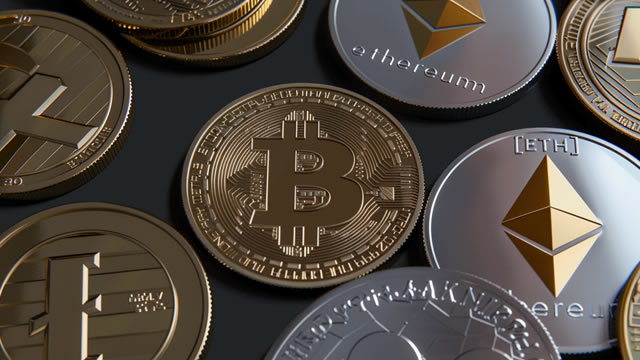
Tokenized QQQB drove July's 288% volume jump. Robinhood's free-gas window ends Sept. 30, and the DTCC's tokenized network follows in October.
One Product Carried July's Volume
July's headline number was 288 percent. Tokenized stock trading volume rose that much from June, according to multiple research trackers. The number is real. The breadth behind it is not.
A single product, QQQB, accounted for the dominant share of decentralized secondary-market volume in tokenized equities. QQQB is a tokenized version of the Invesco QQQ exchange-traded fund. A regulated issuer holds the underlying shares in custody and mints tokens one-for-one against them. Redemptions are available during market hours, the issuer said. AlphaScala's signal page for QQQ carries an Alpha Score of 44, a Mixed label.
QQQ trades on Nasdaq between 9:30 a.m. and 4:00 p.m. Eastern. QQQB trades around the clock on decentralized secondary markets. For traders in Asia and Europe, the gap is the product. They can take Nasdaq-100 exposure during their own workday rather than waiting for New York's session.
Concentration is the flip side. Tokenized versions of SPY and individual mega-cap stocks exist, yet neither matched QQQB's activity in July. The market has moved past the proof-of-concept stage, with daily volume no longer measured in thousands of dollars. The jump is one product deep.
Robinhood Chain's Free-Trade Window
Robinhood entered the space with a rollup on Arbitrum, launched in Q2 2026. The chain is built around tokenized equity settlement. Stocks represented as tokens settle in minutes rather than the T+1 settlement cycle, and trading runs around the clock. The company is paying all gas costs through at least the end of September, Robinhood said.
The subsidy removes the friction that sank earlier tokenized stock experiments on Ethereum mainnet, where gas fees made small orders uneconomical. With price at zero, the chain attracts the same mix every zero-commission product sees: durable demand plus arbitrage that exits when fees appear. The split becomes visible after Sept. 30.
Crypto exchanges are approaching the same 24/7 equity demand from the other direction. Stock perpetual futures offer price exposure without custody or settlement. The trader never touches a share, and positions settle in stablecoins.
Ownership is the difference. QQQB gives a holder a claim on actual QQQ shares held in custody, including any dividend flow the structure passes through. A perpetual gives its holder a derivative contract. For investors who want equity exposure and transferability, the token structure matters. For traders who want leveraged price access, the derivative is enough.
October Brings the DTCC and the Subsidy Expiry
The Depository Trust and Clearing Corporation, which clears virtually all U.S. equity settlement, is scheduled to launch its tokenized-securities network in October. The DTCC's version is permissioned, linking broker-dealers and custodians rather than running on a public chain. Tokens settle faster and carry programmable compliance.
That launch validates the shift to tokenized equity settlement and, at the same time, offers that settlement through channels Robinhood cannot replicate. The bull case is segmentation: the DTCC serves institutions while Robinhood serves retail. The competing case is absorption: once the DTCC reaches retail through existing brokerages, a separate retail chain loses its reason to exist.
Robinhood Chain runs on Arbitrum and shares sequencer revenue with the rollup provider under terms that reduce or redirect fees through the subsidy period. The long-term measure is whether users pay to trade tokenized equities when the cost is visible. The chain's economics sit alongside Robinhood's brokerage lines, which earn from payment for order flow and net interest income.
The 288 percent growth comes from one product. Tokenized versions of SPY and individual mega-cap stocks have not produced comparable volume. Replication has not happened yet.
The gas subsidy expires Sept. 30. The DTCC network is scheduled for October. Both models face the same calendar.
Drafted by a large language model from the source reporting linked above, then screened by automated publishing checks. It is not read by a journalist before publication. Some articles cite our Alpha Score. Verify prices and figures against the original source. Educational coverage, not personalized advice.