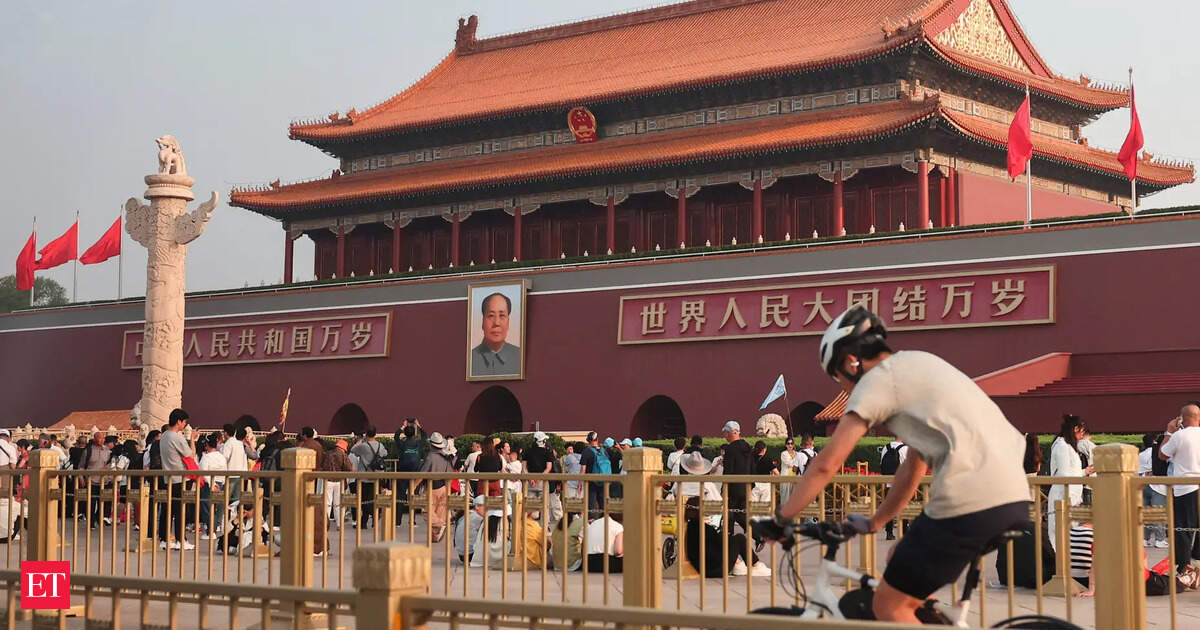
Donald Trump is scheduled to arrive in Beijing on Wednesday, with meetings set for Thursday and Friday. The White House confirmed that Trump and Xi Jinping will visit the Temple of Heaven on Thursday. The summit is the first direct engagement between the two leaders in months, and the choice of venue immediately shifts the market narrative around US-China trade.
Trump-Xi Beijing Summit: The Catalyst
The meeting itself is the catalyst. Trade tensions between the world’s two largest economies have been a persistent source of equity volatility. Any signal of de-escalation or renewed negotiation can trigger sharp sector rotations. The Temple of Heaven visit, a site historically associated with imperial ceremonies for good harvests, is a deliberate diplomatic gesture. It suggests a willingness to project harmony, even if substantive disagreements remain.
For traders, the summit’s market impact will be determined by whether it produces a concrete framework for tariff relief or simply a photo opportunity. The last round of high-level talks ended without a breakthrough, leaving tariffs on hundreds of billions of dollars in goods in place. This meeting resets the clock on potential progress.
Sectors in the Crosshairs
The stocks most sensitive to the outcome are those with direct China revenue exposure. Apple (AAPL) generates roughly 19% of its sales from Greater China, making it a bellwether for trade sentiment. NVIDIA (NVDA), while constrained by export controls on advanced chips, still has significant China-facing demand that could be affected by any easing of restrictions. Agricultural commodities and related equities, such as soybean processors and grain traders, also move sharply on trade headlines. A positive signal could lift the entire agribusiness complex.
Conversely, a breakdown in talks would hit these names first. The market’s reaction function is asymmetric: a lack of progress is often priced in, while a genuine olive branch can spark a relief rally. The S&P 500 futures and the offshore Chinese yuan will be the first instruments to reflect the post-summit tone.
What the Temple of Heaven Visit Signals
The Temple of Heaven is not a random backdrop. In Chinese statecraft, the choice of venue carries weight. It signals respect for tradition and a desire for stability. For markets, this symbolic layer matters because it reduces the probability of an outright hostile exchange. It does not, however, guarantee policy concessions. The real test is whether the symbolism translates into a joint statement that addresses tariffs, technology transfer, or intellectual property protections.
The visit also provides a narrative hook for state media, which can frame the meeting as a success regardless of substance. Traders should separate the optics from the deliverables. The absence of a joint communique or a vague statement would be a bearish signal, even if the Temple of Heaven photo op looks cordial.
Next Decision Point: Post-Summit Statements
The immediate catalyst for market direction will be the official readout after Friday’s meetings. Any mention of a “phase one” trade deal revival, tariff rollbacks, or new working groups would be taken as a positive. A commitment to further talks at a specific date would also support risk assets. If the statement is limited to generalities about “frank and constructive” dialogue without specifics, the market is likely to fade the initial optimism.
Traders should monitor the Chinese yuan fix and S&P 500 futures in the hours after the summit concludes. A stronger yuan and higher equity futures would confirm that the meeting delivered more than symbolism. A flat or negative reaction would suggest the market saw the Temple of Heaven visit as just that–a visit.