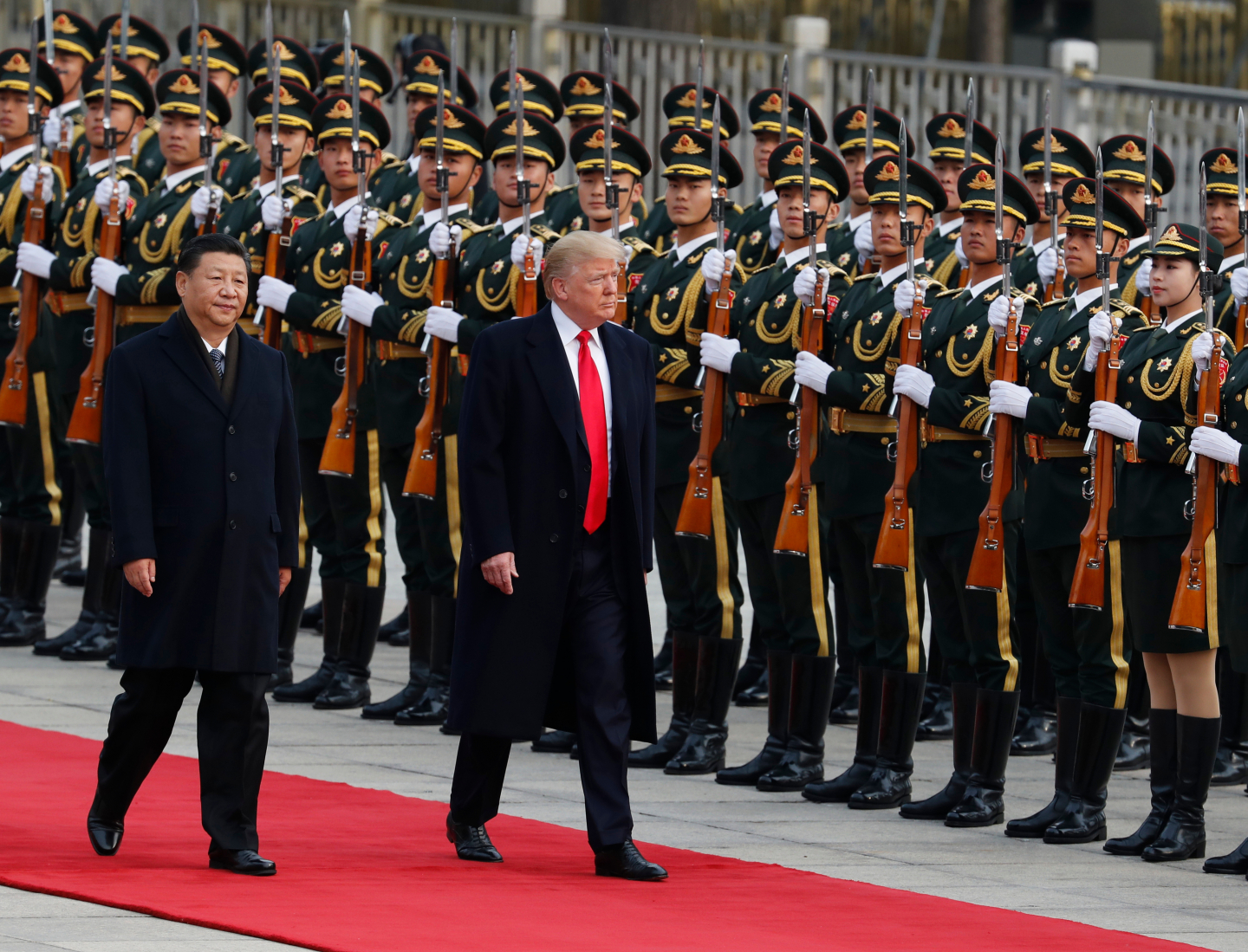
Robert D. Hormats' Foreign Affairs analysis frames a potential Trump-Xi meeting as a negotiation where each leader holds cards the other wants, creating a binary event for trade-exposed equities.
A new Foreign Affairs analysis by Robert D. Hormats reframes the prospect of a U.S.-China leaders' summit as a transactional negotiation where each side holds leverage the other wants. The subtitle, "What Xi wants from Trump–and Trump might get from Xi," signals a bargaining framework that turns any future meeting into a discrete catalyst for trade-exposed assets. The simple market read is that a summit reduces the tail risk of uncontrolled escalation. The better read is that the event itself forces investors to price two sharply divergent paths before a single communiqué is released.
The Hormats piece does not predict an outcome. It establishes that a meeting, if it occurs, will be structured around concrete asks and offers rather than vague diplomatic language. That structure creates a binary event risk for equities, currencies, and commodities. A deal that produces visible concessions on tariffs, technology access, or currency practices would lift the cloud that has suppressed forward multiples for multinationals with China revenue. A breakdown that yields no joint statement, or one that merely agrees to keep talking, would validate the thesis that structural competition is hardening and that the trade-war premium is not yet fully priced.
Markets have learned from prior summits that the gap between a handshake and enforceable terms is wide. The Trump-Xi Meeting Tests Trade War Stalemate's Fragile Equilibrium episode demonstrated that index-level moves can reverse within days if commitments lack specificity. The Hormats framework reinforces that lesson: the market's reaction function will depend less on the fact of a meeting and more on whether the resulting text contains quantifiable targets or merely aspirational language.
The binary nature of the catalyst means the dispersion of returns across sectors will be unusually wide. Technology supply chains face the largest potential swing. Any signal that export controls on advanced semiconductors could be loosened would remove a valuation overhang that has kept some equipment makers' multiples compressed relative to their earnings trajectories. A failure to address technology restrictions would reinforce the bear case that decoupling is a permanent feature of the investment landscape.
Industrial and consumer-goods companies with China-based manufacturing footprints are positioned for a relief rally on any tariff-rollback language. The market has partially priced a détente; the magnitude of the move will depend on whether a rollback is immediate or phased. Agricultural commodity markets are the mirror image. A large-scale Chinese purchase commitment would tighten physical balances and lift deferred futures. The absence of such a commitment would leave the complex searching for demand at a time when global supplies are ample.
Currency markets add another layer. A pledge from Beijing to refrain from competitive devaluation would reduce the volatility premium embedded in emerging-market ETFs and in the earnings of U.S. firms with heavy China exposure. The Hormats analysis implies that currency cooperation could be a bargaining chip on both sides, making the yuan a direct proxy for summit progress.
No date or venue has been confirmed. The next concrete decision point for traders is the pre-summit positioning that will begin as soon as the White House or China's Ministry of Foreign Affairs signals a meeting. History shows that the mere announcement of a summit can produce 2% daily moves in the S&P 500 in either direction. The challenge is that carrying risk through the event means accepting the possibility of a sharp reversal if the outcome falls short of the market's baseline expectation.
The Hormats framework clarifies the negotiating architecture without revealing the contents of each side's brief. The market's job now is to assess the probability that either leader gets enough of what they want to justify current equity multiples. For a deeper look at how trade-policy catalysts ripple through portfolios, see our stock market analysis section. The summit's promise and peril lie in the same mechanism: a single meeting can compress years of uncertainty into one afternoon of headlines, and the aftermath will be determined by the fine print, not the photo op.
Drafted by the AlphaScala research model and grounded in primary market data – live prices, fundamentals, SEC filings, hedge-fund holdings, and insider activity. Each story is checked against AlphaScala publishing rules before release. Educational coverage, not personalized advice.