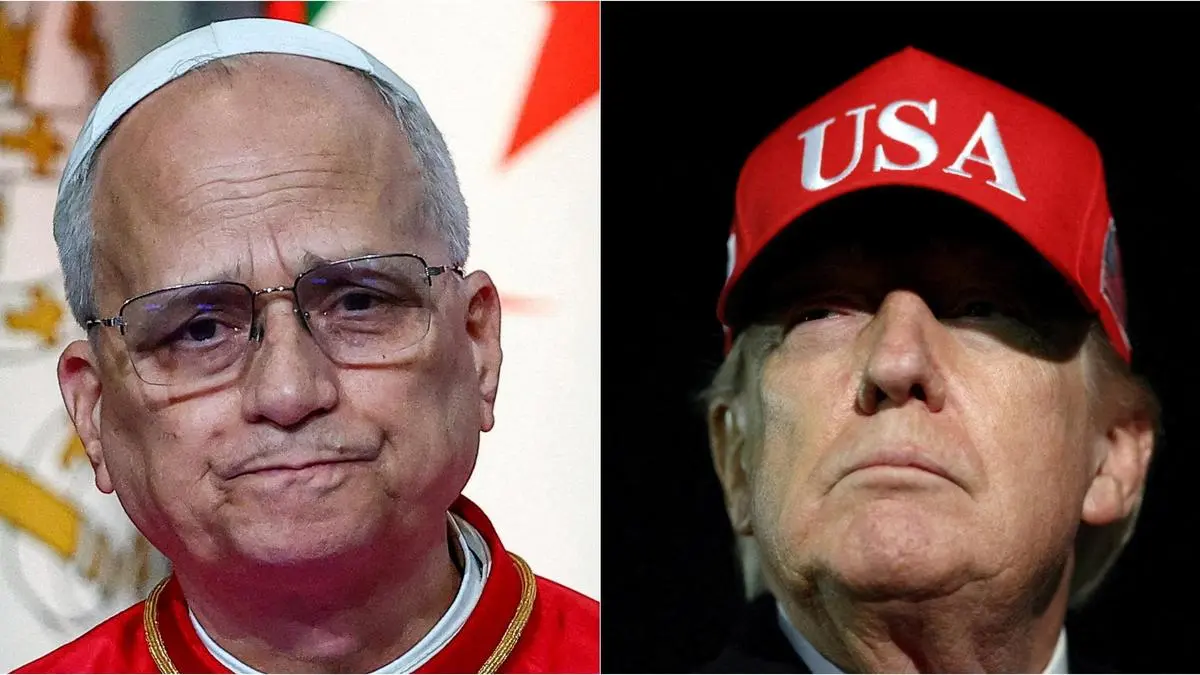
Diplomatic friction between the US and the Vatican over Iran’s nuclear ambitions creates new geopolitical risks. Watch for shifts in transatlantic policy.
Alpha Score of 52 reflects moderate overall profile with strong momentum, poor value, moderate quality, weak sentiment.
The escalating diplomatic friction between the White House and the Vatican has moved beyond rhetorical sparring, creating a new layer of geopolitical uncertainty for global markets. US President Donald Trump’s repeated assertions regarding Pope Leo XIV’s stance on Iran’s nuclear program serve as the primary catalyst for this tension, specifically ahead of US Secretary of State Marco Rubio’s scheduled visit to the Apostolic Palace this Thursday. While the administration frames the upcoming meeting as a routine diplomatic engagement, the underlying conflict over Iran’s nuclear ambitions and the subsequent strain on transatlantic relations suggests a potential for heightened volatility in assets sensitive to geopolitical risk.
Market participants often view diplomatic stability between the US and the Holy See as a proxy for broader transatlantic cohesion. When these relations fracture, the risk premium on European-exposed equities and currencies typically widens. Trump’s public criticism of Pope Leo XIV, including characterizations of the pontiff as "WEAK on Crime" and "terrible for Foreign Policy" on Truth Social, signals a departure from traditional diplomatic decorum. This rhetoric complicates the ability of US officials to maintain a unified front with European allies on critical security issues, particularly regarding the containment of Iran’s nuclear capabilities.
For investors, the mechanism of risk here is twofold. First, the direct threat of a nuclear-armed Iran creates a persistent tail risk for energy markets and regional stability in the Middle East. If the diplomatic channel between Washington and the Vatican remains blocked or adversarial, the capacity for international consensus on sanctions or security protocols diminishes. Second, the degradation of US-Vatican relations acts as a bellwether for the health of broader US-European diplomatic ties. As Rubio prepares to meet with Cardinal Pietro Parolin and the Pope, the market will be looking for signs of a potential reset or a further hardening of positions. A failure to find common ground could lead to increased friction in trade and security negotiations, impacting sectors that rely on stable transatlantic policy frameworks.
Investors should consider how these geopolitical shifts influence stock market analysis and broader risk-off sentiment. The administration’s firm stance—that "Iran cannot have a nuclear weapon"—is a non-negotiable policy pillar. However, the public dispute over whether the Pope previously indicated a willingness to accept Iranian nuclear capabilities creates a narrative of distrust. This is not merely a political spat; it is a signal that the current administration is willing to prioritize unilateral security objectives over traditional diplomatic consensus. Such a posture often leads to unpredictable policy outcomes, which markets generally price as a negative for long-term stability.
Furthermore, the timing of this visit, occurring amidst heightened tensions following the Pope’s criticism of US military operations in Iran, suggests that the agenda will be fraught with friction. While Rubio has attempted to downplay the visit as "not tied to anything other than the fact that it would be normal for us to engage," the reality of the situation is that the diplomatic environment is far from normal. The inclusion of topics such as Cuba in the discussions indicates that the administration is looking to leverage the meeting for broader policy objectives, which may further complicate the primary focus on Iran.
When evaluating the impact on portfolios, one must look at the potential for "policy drift" where the US and its allies diverge on key security and economic issues. If the Vatican, which holds significant moral and diplomatic influence across Europe and Latin America, continues to distance itself from the US administration’s hardline approach, the resulting policy fragmentation could weaken the effectiveness of international economic sanctions. This, in turn, could lead to a more permissive environment for Iranian nuclear development, increasing the long-term risk profile for energy-dependent economies.
Ultimately, the decision point for market participants is whether to hedge against a prolonged period of diplomatic isolationism. If the Thursday meeting concludes without a clear path toward de-escalation, the risk of further transatlantic policy divergence will likely intensify. Traders should monitor the tone of the post-meeting briefings for any indication that the Vatican is willing to align with the US position on Iran. A lack of such alignment would confirm that the current diplomatic rift is structural rather than temporary, necessitating a reassessment of geopolitical risk premiums across global markets. The focus remains on whether the administration can bridge the gap with the Holy See, or if this meeting serves only to highlight the growing distance between Washington and its traditional international partners.
AI-drafted from named sources and checked against AlphaScala publishing rules before release. Direct quotes must match source text, low-information tables are removed, and thinner or higher-risk stories can be held for manual review.