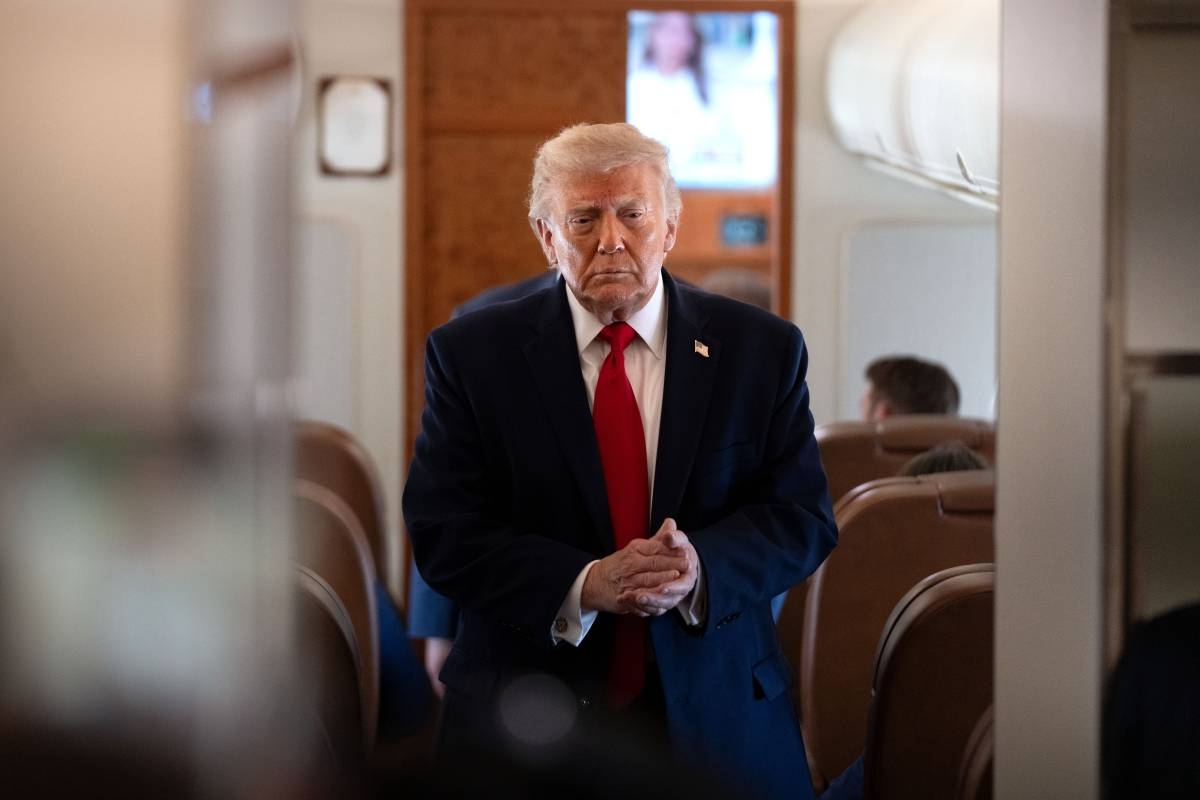
President Donald Trump told an AFP reporter in the Oval Office on Wednesday that he plans to attend World Cup matches. “I will, I will,” he said when asked whether he would be at any games.
Trump offered no additional details. FIFA president Gianni Infantino has said he expects Trump to present the trophy to the winning team at the final on July 19. Trump performed that role last year at the FIFA Club World Cup final at MetLife Stadium in New Jersey, the same venue that will host the World Cup final. He was booed.
The Republican billionaire has tried to put his stamp on the tournament, which the U.S. is co-hosting with Mexico and Canada. He often mentions that his administration secured the winning bid during his first term. Trump also noted his friendship with Infantino. “I spoke to Gianni this morning … he said there’s never been anything close” to the success of the coming tournament, Trump said.
The World Cup faces off-field distractions. Ticket prices are sky-high. An immigration crackdown has kept fans, team officials, and even a top Somali referee from entering the United States. Trump said the administration is working on the issue. “We’re working on it very closely to ensure the right people come into our country,” he told reporters.
For investors tracking the event’s economic impact, the simple read is that a presidential appearance adds prestige and signals official support for the tournament. The better read centers on whether the entry barriers get resolved before July. Real spending on travel, hotels, and stadium concessions depends on actual attendance. The administration has acknowledged the problem but offered no specifics on timing or policy changes. Every day of unresolved visa friction narrows the window for fans to book trips and spend money.
The immigration bottleneck affects more than ticket sales. Team logistics, sponsor activations, and local service jobs all rely on cross-border movement. A Somali referee being barred hints at wider visa friction for non-US citizens involved in the event. If the administration fails to clarify the process by late spring, the ripple effects will show up in lower hotel occupancy, lighter foot traffic at fan zones, and weaker consumer-facing earnings for companies with exposure to the host cities.
Trump’s booing at the Club World Cup final is a minor data point but worth noting. It suggests not every stadium crowd will welcome a political figure in the spotlight. That could dampen the feel-good factor that sponsors hope for.
Infantino’s peace prize to Trump in December and their regular calls point to a close working relationship. That may help smooth some bureaucratic hurdles inside FIFA. It does not, however, override US immigration law or the current enforcement posture. The White House has not signaled any relaxation of the visa rules that have blocked a top referee and multiple team officials.
The World Cup is still months away. The gap between Trump’s attendance pledge and the practical access problem for thousands of potential visitors is the story that matters for the bottom line.