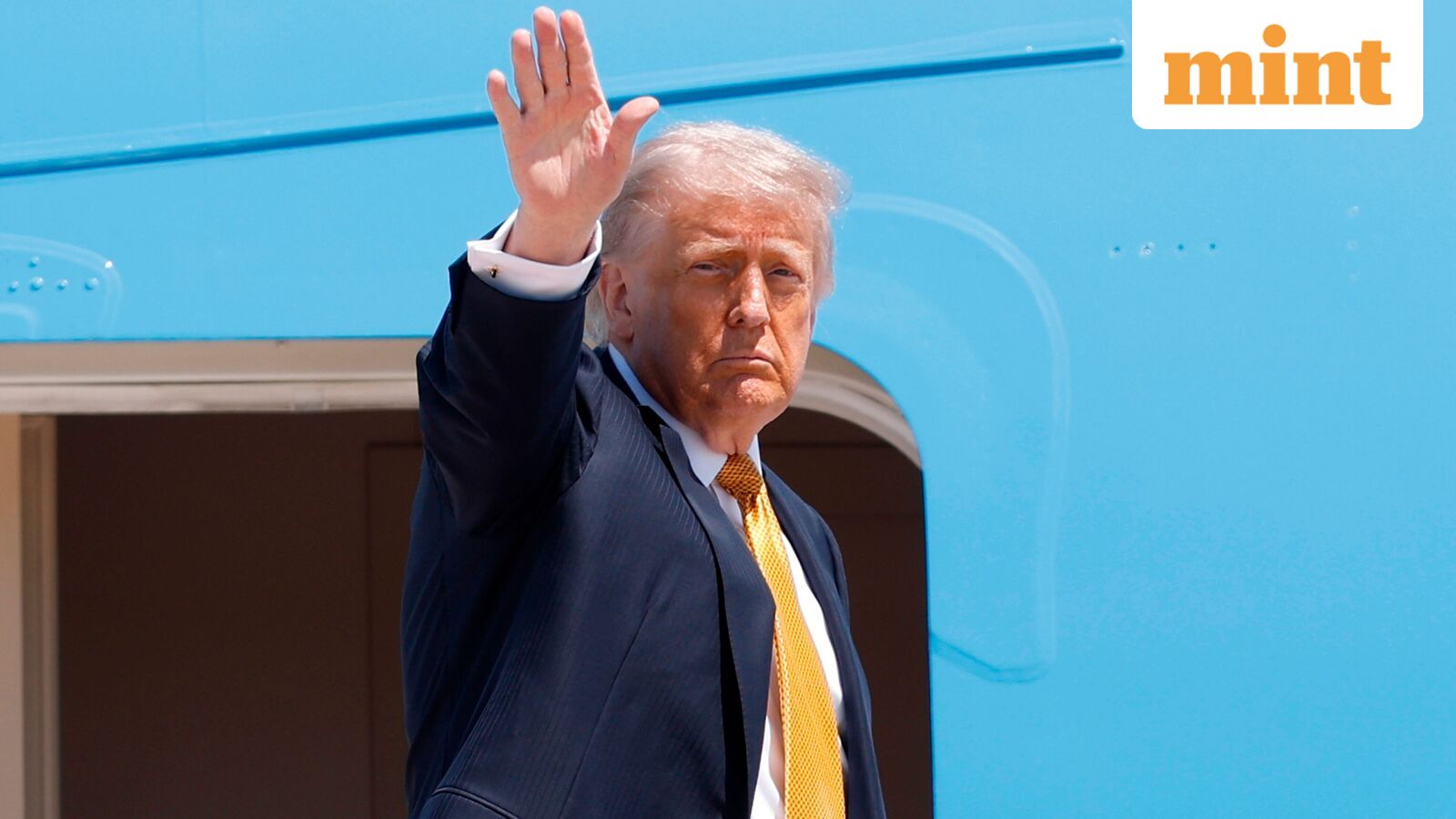
President Donald Trump's pre-summit declaration that the United States does not need China's help on Iran, combined with a claim that the US military has already dismantled Tehran's war machine, introduced a sharp two-way risk for energy and defense markets hours before his departure for Beijing. Speaking to reporters on the White House lawn, Trump projected total confidence in the US blockade strategy and predicted a surge in oil supply, even as the Strait of Hormuz remains a live chokepoint. The remarks reset the narrative around the high-stakes meeting with President Xi Jinping, forcing traders to weigh the possibility of a rapid de-escalation against the persistent threat of a Hormuz disruption that could spike crude prices.
The Iran Claims: Military Victory or Unverifiable Assertion?
The president's statements on Tuesday morning contained several specific assertions that directly affect the oil supply outlook and the geopolitical risk premium embedded in crude futures. Each claim carries implications for how markets price the probability of a supply shock or a sudden easing of tensions.
What Trump Said on the White House Lawn
Trump told reporters that the United States does not require Beijing's leverage over Tehran to resolve the standoff.
"I don't think we need any help with Iran, and we'll win it one way or the other," Trump said.
He then described a military campaign that he characterized as already won.
"The Navy's gone. Their air force is gone. Every single element of their war machine is gone."
The president added that the blockade was "100% effective" and that Iran's military had been "beaten very soundly."
These declarations, if taken at face value, would suggest that the supply disruption risk that has supported crude prices for weeks is receding. A defeated Iranian military and a fully effective blockade imply that Tehran lacks the capacity to threaten tanker traffic through the Strait of Hormuz. The market's immediate reaction, however, was complicated by a separate oil-supply comment that pointed in the opposite direction.
The Military Claims and the Blockade Assertion
The simple read is that a degraded Iranian military reduces the probability of a Hormuz closure and therefore justifies a lower geopolitical risk premium in Brent and WTI. The better read is that Trump's claims are unverifiable in real time and that the blockade's effectiveness is itself a source of uncertainty. A 100% effective blockade, if it exists, would mean Iranian crude exports are near zero. That tightens global supply and supports prices, all else equal. The president's framing, however, treated the blockade as a victory condition that would lead to a resolution, not as a persistent supply constraint.
Key insight: The same blockade that Trump calls a success is also a supply cut. Markets cannot price both a swift resolution and a sustained export halt simultaneously without a clear timeline.
The Gusher Signal and the Supply Puzzle
Trump's most consequential market remark may have been his prediction of a flood of new oil supply.
"You're going to have a gusher of oil like you've never had before," he said. "So when oil goes up a little bit, I thought it would go up much more."
The statement implies that the administration expects a near-term increase in production or a release of strategic reserves that would overwhelm any Iran-related supply anxiety.
Parsing the 'Gusher' Statement
The president did not specify whether the gusher would come from domestic shale, OPEC+ spare capacity, a Strategic Petroleum Reserve release, or a resolution that returns Iranian barrels to the market. Each source carries a different timeline and credibility. US shale production responds to price signals with a lag of months, not days. An SPR release is a political decision that would require a clear emergency trigger. OPEC+ spare capacity is concentrated in Saudi Arabia and the UAE, and any coordinated increase would need a consensus that does not currently exist.
Traders should treat the gusher comment as a signal of policy intent rather than a near-term supply forecast. The administration is communicating that it will not tolerate sustained high oil prices and is prepared to use whatever tools are available to cap them. That puts a soft ceiling on crude, even if the physical barrels are not yet flowing.
Strait of Hormuz: The Persistent Chokepoint Risk
Despite Trump's assertion that Iran's navy is gone, the Strait of Hormuz remains the world's most critical oil transit point, with roughly 20 million barrels per day passing through it. Any disruption, even a partial one, would send crude prices sharply higher. The president's confidence does not eliminate the risk; it only changes the market's perception of how likely a disruption is. If the summit produces a visible de-escalation framework, the Hormuz risk premium could collapse. If the talks stall and Iran tests the blockade's effectiveness, that premium could return violently.
Risk to watch: A single confirmed incident in the Strait of Hormuz would override the gusher narrative and force a repricing of the entire energy complex.
Summit Agenda: Trade Dominates, Iran a Sideshow
Trump downplayed Iran's role in the summit agenda, saying, "We have a lot of things to discuss. I wouldn't say Iran is one of them, to be honest with you, because we have Iran very much under control." The statement signals that the administration sees the Iran file as a secondary issue compared to trade, technology restrictions, and the broader US-China rivalry. That prioritization matters for markets because it suggests that any breakthrough on Iran is unlikely to be the headline outcome of the meeting.
Trade and Tech vs. Iran: What Gets Airtime
The summit's primary agenda items–tariffs, semiconductor export controls, Taiwan, and intellectual property–carry far larger market-moving potential than the Iran discussion. A trade truce or a rollback of certain tech restrictions would lift global equities and risk assets. A breakdown that leads to new tariffs would hit stock market analysis across sectors with China exposure. Iran, in this context, is a secondary catalyst that could amplify or offset the primary trade signal.
The Warm Tone Toward Xi and Its Limits
Trump adopted a warm personal tone when discussing Xi.
The warmth suggests that the president is entering the talks with a deal-making mindset, which historically has produced short-term market rallies. The risk is that personal rapport does not translate into concrete agreements on the structural issues that divide the two economies. A summit that ends with friendly words but no actionable trade or tech outcomes would likely be a sell-the-news event for China-exposed equities.
Two-Way Exposure Across Crude, Shipping, and China Equities
The combination of an oil supply narrative in flux and a high-stakes US-China summit creates a concentrated risk profile across several asset classes. The direction of the next move depends on which of the competing narratives–de-escalation and supply flood, or persistent blockade and Hormuz risk–gains credibility in the coming days.
Crude Oil Futures and Energy Equities
WTI and Brent crude futures are the most direct expressions of the Iran risk premium. A de-escalation that includes a path to lifting the blockade would likely send prices toward the lower end of their recent range. A confirmed Hormuz incident would spike them above recent highs. Energy equities, particularly US exploration and production companies and oilfield services, face a similar two-way risk. The gusher comment, if followed by policy action, could compress margins for producers even as it lowers input costs for refiners.
Shipping and Defense Stocks
Shipping companies with exposure to the Gulf region, including tanker operators, carry a direct Hormuz risk premium. Any disruption would raise day rates and insurance costs, benefiting owners of available tonnage while disrupting global trade flows. Defense contractors with naval and missile defense exposure, such as those discussed in CACI CFO Maps 60% Tech Mix, National Security Focus at BofA Conference, could see increased attention if the blockade narrative shifts toward a prolonged military engagement. The president's claim that the war machine is already destroyed, however, works against that thesis in the near term.
China-Exposed Equities and EM
Stocks with significant revenue exposure to China, including semiconductor and consumer names, will trade primarily on the trade and tech outcomes of the summit. The Iran discussion is a secondary factor that could influence the overall tone. A summit that produces a trade framework and a separate Iran de-escalation would be a double positive for these names. A summit that fails on trade while Iran tensions persist would leave China-exposed equities vulnerable to a risk-off move.
Markers That Confirm or Break the De-Escalation Narrative
The market is currently pricing a muddled picture: the blockade is both a success and a supply cut, the gusher is coming but the timeline is unclear, and the summit could produce anything from a trade deal to a breakdown. Traders need concrete markers to determine which narrative is gaining traction.
Confirming the De-Escalation Path
A joint US-China statement that references a framework for Iran negotiations would be the strongest confirmation that the risk premium is set to decline. A specific timeline for lifting the blockade or a visible reduction in military posture in the Gulf would add credibility. An actual SPR release announcement or a coordinated OPEC+ supply increase would validate the gusher narrative and put a hard cap on crude prices.
Weakening the De-Escalation Path
A summit that ends without any Iran language, combined with continued US assertions of military success that are not independently verified, would leave the market in an information vacuum. In that scenario, any report of Iranian naval activity or a tanker incident would be magnified. A failure to reach a trade agreement would add a risk-off layer that could hit energy demand expectations even as supply risks remain elevated.
Bottom line for traders: The oil gusher comment is a policy signal, not a supply fact. Until barrels appear or the blockade is lifted, the Hormuz risk premium cannot be priced to zero.
The Beijing summit is the immediate catalyst. Traders should watch for any joint communiqué that addresses Iran, even in passing, as a signal that the US and China are coordinating on de-escalation. The absence of such language would be notable. Beyond the summit, weekly US petroleum inventory data and tanker tracking reports will provide the first hard evidence of whether the blockade is truly 100% effective and whether the gusher is materializing. The gap between the president's rhetoric and the physical market data will define the next tradable move in crude and energy equities. For those positioning through best stock brokers, the asymmetry favors defined-risk strategies until the summit outcome is known.