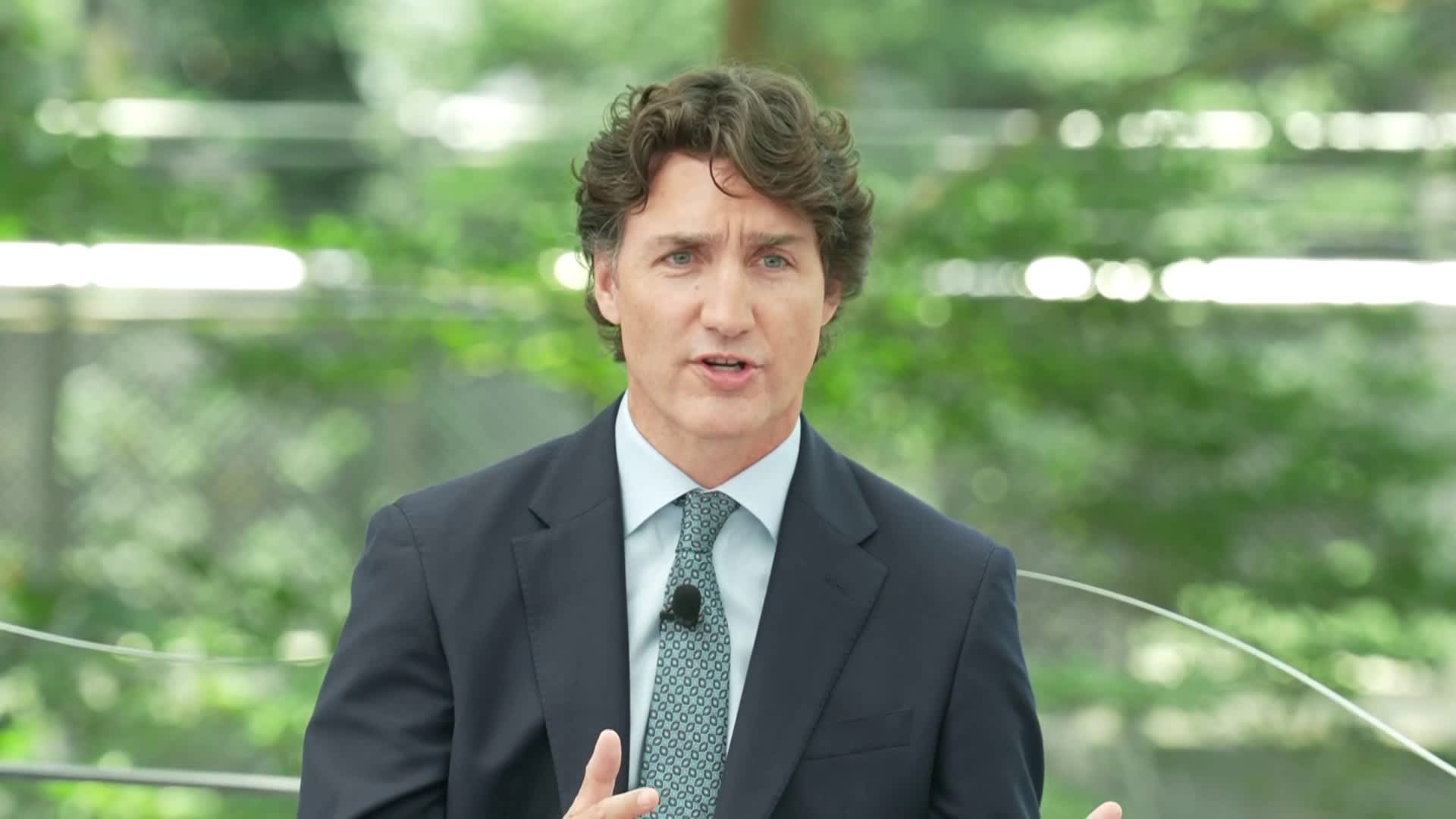
Former Canadian Prime Minister Justin Trudeau’s recent assessment of international financial institutions marks a significant pivot in the discourse surrounding global governance. Speaking at CNBC’s CONVERGE LIVE in Singapore, Trudeau suggested that established international organizations may no longer be fit for purpose. This critique arrives as nations grapple with the necessity of recalibrating diplomatic and economic frameworks to survive the current era of Geopolitical Realignment and the Expanding Conflict Cycle.
Institutional Obsolescence and Economic Sovereignty
The core of the argument centers on the perceived inability of post-war financial structures to address modern economic volatility. Trudeau’s comments reflect a growing consensus among political leaders that the existing architecture, designed for a different era of global trade, struggles to manage the complexities of current supply chain disruptions and protectionist policies. When international bodies fail to provide effective mediation or stability, individual states are increasingly forced to prioritize domestic industrial policy over multilateral cooperation.
This shift creates a fragmented landscape for multinational corporations. As governments move away from reliance on global consensus, the regulatory environment becomes more localized and unpredictable. For sectors heavily dependent on cross-border trade, the erosion of faith in these institutions necessitates a more defensive posture regarding capital allocation and long-term infrastructure investment. The transition from a globalized framework to a series of bilateral or regional agreements forces firms to navigate a more complex web of compliance and trade barriers.
Sectoral Read-Throughs and Capital Allocation
Industrials and consumer-facing firms are particularly sensitive to this transition. Companies operating within the industrial sector must now account for the risk that international trade agreements may be superseded by national security mandates. This environment often leads to higher operational costs as firms attempt to diversify their supply chains away from regions that may become isolated by the breakdown of international cooperation.
AlphaScala data currently reflects the volatility inherent in these industrial shifts. For instance, BE stock page holds an Alpha Score of 46/100 and is labeled as Mixed, illustrating the difficulty of maintaining consistent performance metrics in an environment where policy support is subject to sudden geopolitical shifts. Similarly, firms in the consumer cyclical space, such as those tracked on the HAS stock page, face the dual challenge of managing global manufacturing footprints while responding to shifting domestic demand patterns.
The Next Marker for Policy Divergence
The immediate path forward will be defined by how individual nations respond to the next major trade dispute or financial crisis. If international institutions are bypassed in favor of direct, bilateral negotiations, the resulting lack of a neutral arbiter will likely increase the risk premium for global equities. Investors should monitor upcoming G20 or IMF meetings for signs of formal structural reform. If these organizations fail to produce concrete updates to their mandates, the narrative of institutional decline will solidify, forcing a permanent change in how global markets price political risk. The next concrete marker will be the formalization of new bilateral trade agreements that explicitly exclude traditional multilateral oversight mechanisms.