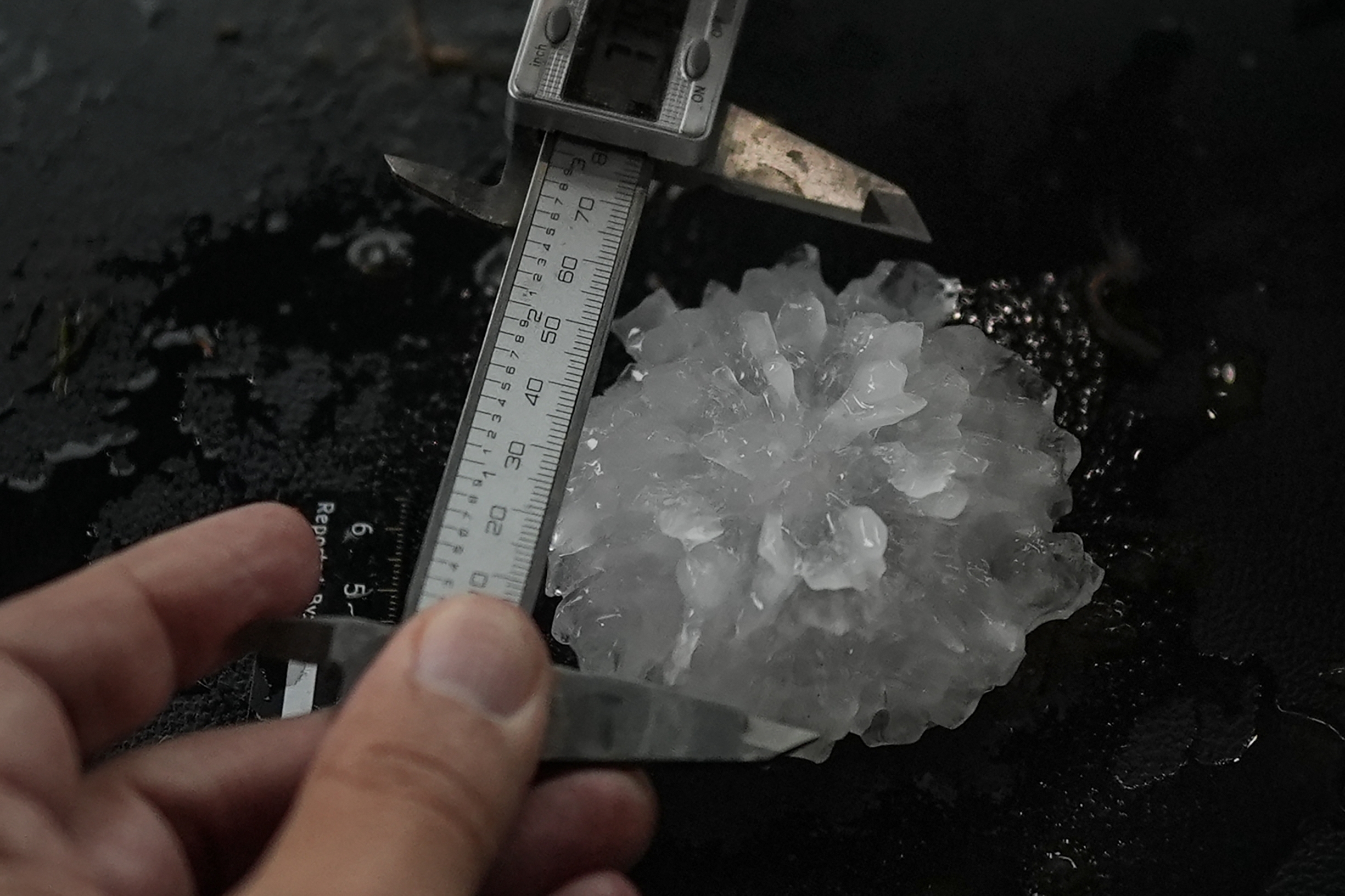
State Farm Hail Claims Hit $5.6 Billion in 2025 as Weather Volatility Persists

State Farm reported $5.6 billion in national hail-related claims for 2025, with $1.4 billion originating in Texas, highlighting the rising financial impact of severe weather on the insurance industry.
Alpha Score of 45 reflects weak overall profile with strong momentum, poor value, poor quality, weak sentiment.
Alpha Score of 47 reflects weak overall profile with moderate momentum, poor value, moderate quality. Based on 3 of 4 signals — score is capped at 90 until remaining data ingests.
Alpha Score of 55 reflects moderate overall profile with moderate momentum, moderate value, moderate quality. Based on 3 of 4 signals — score is capped at 90 until remaining data ingests.
Alpha Score of 59 reflects moderate overall profile with strong momentum, moderate value, moderate quality. Based on 3 of 4 signals — score is capped at 90 until remaining data ingests.
State Farm paid out $5.6 billion in national hail-related insurance claims during 2025. This figure underscores the escalating financial burden of severe convective storms on the property and casualty insurance sector. The data highlights a concentrated impact in specific regions, with Texas alone accounting for $1.4 billion of the total national payout.
Regional Concentration and Financial Exposure
The $1.4 billion figure for Texas represents a significant portion of the company's total national hail liability. This geographic concentration reflects the high frequency of severe weather events in the central United States, where atmospheric conditions frequently produce large-scale hail events. For insurers, these claims are not merely operational costs but represent a recurring challenge to underwriting profitability in high-risk zones.
Managing these claims requires substantial liquidity and robust reinsurance arrangements to mitigate the impact of sudden, high-severity weather events. The scale of these payouts often influences future premium pricing strategies and coverage adjustments for homeowners in affected corridors. As weather patterns shift, the ability of major carriers to absorb these losses without destabilizing their broader balance sheets remains a primary concern for the insurance industry.
Operational Impact on Insurance Markets
The cumulative nature of these claims suggests that hail is no longer a secondary risk factor but a primary driver of loss ratios. The following breakdown illustrates the scale of the financial impact reported by the firm:
- Total national hail claims paid: $5.6 billion
- Texas-specific hail claims paid: $1.4 billion
These figures provide a clear signal regarding the cost of climate-related property damage. While individual events are often categorized as isolated, the aggregate annual total indicates a systemic trend of rising costs. For stakeholders in the stock market analysis sector, these payouts serve as a proxy for the broader pressures facing the insurance industry as it navigates a period of increased environmental volatility.
Broader Market Context
Insurance providers are currently balancing the need to remain competitive with the necessity of maintaining adequate reserves against unpredictable weather events. When carriers face sustained high payouts, the resulting pressure often leads to tightened underwriting standards and increased premiums for policyholders. This cycle of rising costs and subsequent price adjustments is a critical component of the current economic landscape for property owners.
Investors monitoring the insurance space often look to these annual reports to gauge the potential for margin compression. While State Farm operates as a mutual company, the trends it reports are mirrored across publicly traded peers. As the industry prepares for the next cycle of renewals, the focus will shift toward how these firms adjust their risk models to account for the increased frequency of high-cost weather events. The next concrete marker for this sector will be the release of quarterly earnings reports from publicly traded insurers, which will detail how these specific hail losses have been integrated into their broader financial performance and reserve allocations.
AI-drafted from named sources and checked against AlphaScala publishing rules before release. Direct quotes must match source text, low-information tables are removed, and thinner or higher-risk stories can be held for manual review.