Trian’s Financing Exploration
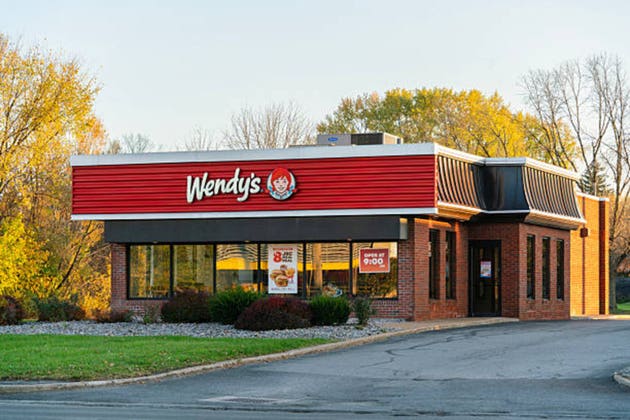
Nelson Peltz’s Trian Fund Management is exploring financing to take Wendy’s private, the Financial Times reported. The news immediately recasts the investment case for the fast-food chain, where Trian has been a significant and vocal shareholder for years. A take-private would remove Wendy’s from public markets, likely at a premium to the prevailing share price. The report does not indicate a formal offer is imminent. Trian is sounding out lenders and partners to gauge feasibility. For a stock that has traded largely sideways while management executed a multi-year turnaround, the exploration alone is enough to shift the risk-reward calculus.
The simple read is straightforward: a buyout premium could lift WEN shares from their recent range. Event-driven funds and arbitrageurs will now model a deal probability and a terminal value. The better read requires separating the signal from the noise. Trian’s move may be less about a near-term transaction and more about surfacing Wendy’s intrinsic value to a board that has been slow to unlock it. Peltz has a long history of using the threat of a take-private to force operational changes, asset sales, or capital returns. The financing exploration could be a negotiating tactic as much as a genuine bid.
Why a Take-Private Fits Wendy’s
Wendy’s operates in a mature, capital-intensive industry where public market scrutiny often penalizes the heavy investment needed to refresh stores and digital infrastructure. Wendy’s has been spending aggressively on its “Image Activation” remodel program and on technology to support delivery and mobile ordering. Those outlays compress near-term margins even as they build long-term competitive positioning. A private ownership structure would allow management to execute that playbook without the quarterly earnings treadmill.
The broader financing environment, however, is not accommodating. High interest rates make leveraged buyouts more expensive, and banks have been cautious on large deal commitments. Trian would need to assemble a consortium of co-investors and lenders willing to underwrite a transaction in a sector with thin margins and rising labor costs. The fact that Trian is exploring financing now suggests it sees a window where Wendy’s valuation is low enough to make the math work even with elevated borrowing costs. That valuation signal is what the market is likely to price first.
The report will prompt the market to price in a probability-weighted takeover premium. Buyout premiums in the restaurant sector have historically ranged from 20% to 30% above the undisturbed price, though every deal is fact-specific. The stock’s move will depend on how credible the market judges the exploration to be. A report that Trian is merely testing the waters may produce a smaller, more fade-prone pop than a report that financing discussions are advanced.
The more nuanced trade involves the downside if no deal materializes. Trian’s exploration could flush out other potential bidders, or it could force Wendy’s board to accelerate share buybacks, spin off real estate, or pursue a more aggressive refranchising strategy. Any of those outcomes would support the stock even without a take-private. The risk is that the exploration becomes public, the stock rises, and then the process stalls, leaving shareholders with a higher entry price and no catalyst. That pattern has played out before in activist situations, and it is the scenario that disciplined traders will hedge against.
The Next Marker: Filing or Formal Offer
The immediate catalyst is any follow-up reporting or regulatory filing that clarifies Trian’s intentions. A 13D amendment disclosing a formal proposal or a change in Trian’s stake would be the clearest signal. Wendy’s next earnings report also becomes a critical event. Management will face questions about the report, and any comment–or refusal to comment–will be parsed for clues. The board’s posture toward a potential take-private will shape the stock’s trajectory from there.
Separating the deal probability from the fundamental value is the key. Even if a take-private does not happen, the exploration validates that a sophisticated, long-term shareholder sees Wendy’s as undervalued. That alone can act as a floor for the stock, provided the broader market does not deteriorate. The next decision point is whether Trian converts exploration into a formal offer, and how quickly.
Event-driven situations like this often produce sharp initial moves followed by a drift while the market waits for confirmation. Traders who position for the catalyst need a clear exit plan if the deal premium evaporates. The best stock brokers offer tools for managing risk around binary events like a potential buyout. stock market analysis suggests that separating deal probability from fundamental value is essential in these scenarios.