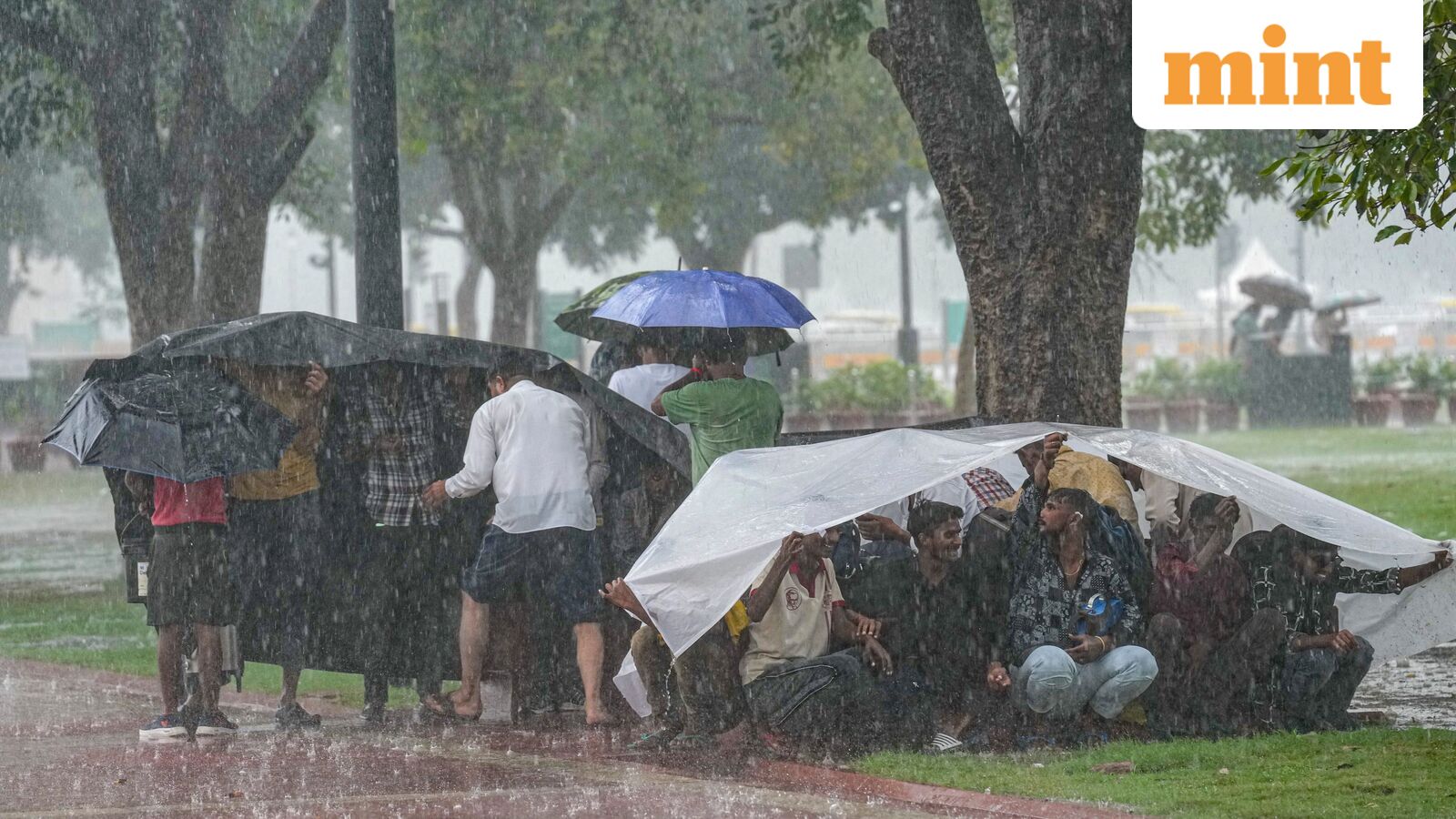
A dust storm and thunderstorm swept across Delhi on Tuesday, triggering a yellow alert from the India Meteorological Department for the entire National Capital Region. The system brought light rain, gusty winds reaching 60 kmph at isolated spots, and a temporary break from above-normal temperatures that had pushed the minimum at Safdarjung to 27.6 degrees Celsius, 2.2 degrees above the seasonal average. For most global investors, a routine weather advisory in northern India registers as noise. That instinct is the blind spot.
Weather events that disrupt one of the world’s largest metropolitan areas are not local curiosities. They are operating-cost shocks that travel through supply chains, logistics networks, and asset valuations in ways that standard equity screens rarely capture. The Delhi storm is a live case study in a risk category that portfolio managers systematically underweight: physical climate exposure that hits earnings before any regulatory or transition risk does.
The Delhi Event and What It Actually Disrupted
The IMD issued the yellow alert for all nine Delhi districts, warning of thunderstorms with lightning and wind speeds of 30-40 kmph, with isolated gusts up to 60 kmph. Dust storms preceded the rain, reducing visibility and affecting traffic movement. The Central Pollution Control Board recorded an Air Quality Index of 157 at 9 am, placing conditions in the “moderate” category. While light rain can temporarily suppress particulate matter, the combination of dust, wind, and lightning creates a multi-hour window where outdoor work stops, deliveries stall, and power fluctuations damage equipment.
Delhi’s minimum temperatures had been running 1.8 to 2.4 degrees Celsius above normal at several stations, with only Ridge and Palam recording slightly below-normal readings. The heat, followed by the sudden storm, stresses infrastructure that is already operating near capacity. For companies with manufacturing, warehousing, or last-mile delivery exposure in the region, the event is a reminder that a single afternoon of severe weather can compress a quarter’s margin by disrupting just-in-time schedules.
Weather as an Operating Risk, Not a Macro Aside
Equity analysts treat weather as a footnote unless it is a hurricane making landfall on a Gulf Coast refinery complex. The Delhi storm will not appear in any earnings transcript. That absence is precisely why it matters. Operating risks that do not get discussed are the ones that surprise.
A dust storm with 60 kmph gusts does three things simultaneously. It halts outdoor construction and logistics activity, which hits industrial distributors and project-based businesses. It damages inventory that is not properly sealed against fine particulate ingress, a problem for electronics, pharmaceuticals, and food supply chains. It forces temporary shutdowns of solar generation and can trip grid substations, raising energy costs for any facility that must switch to backup power. None of these effects are large enough to make headlines. Together they create a frictional cost that compounds across hundreds of thousands of small and medium enterprises that feed into larger listed supply chains.
For a company like Fastenal, which supplies fasteners, tools, and maintenance products to industrial customers, a weather disruption in a major consumption hub is not theoretical. If construction sites in Delhi-NCR shut down for even half a day, the downstream effect on consumable sales is immediate. Fastenal’s Alpha Score of 49, a mixed reading, suggests the stock is not currently pricing in any significant operating disruption premium, nor is it discounting one. That is not a forecast. It is a gap between what the market is watching and what is actually happening on the ground.
The Mistake of Discounting Non-Financial Data
The common mistake is to assume that because an event does not move an exchange-listed stock in the same session, it has no investment relevance. This confuses price reaction with risk accumulation. A dust storm does not change a company’s fair value in a DCF model. It changes the probability distribution around next quarter’s revenue per available square foot, same-store sales, or daily throughput. Those small probability shifts are invisible in a price chart. They are visible in operational data that most investors never request.
Real estate provides an even sharper example. Welltower, the healthcare REIT with an Alpha Score of 50, owns senior housing and outpatient medical properties. None of those assets are in Delhi. The connection is not geographic. It is methodological. The same investor who ignores a yellow alert in Delhi will also ignore a heatwave in Phoenix that forces assisted-living facilities to run HVAC systems at emergency levels, eroding net operating income for a quarter. The risk is not the storm. The risk is the habit of treating physical weather as an externality rather than as a recurring operating line item.
A Framework for Weather Exposure That Actually Works
Instead of adding a generic “ESG weather risk” score to a dashboard, investors can ask three concrete questions that the Delhi event makes tangible.
First, what is the revenue concentration in cities where the IMD-equivalent agency issues yellow alerts more than 20 days per year? A facility in a zone with frequent thunderstorm warnings faces a different margin profile than one in a stable climate, even if the two look identical on a cap-rate spreadsheet.
Second, what is the inventory protection standard? Dust storms are a specific threat to any business that stores unpackaged goods, precision components, or pharmaceutical intermediates. A supplier that has invested in positive-pressure warehousing will lose less revenue per storm hour than one that has not. That capital expenditure difference is a competitive moat that never appears in a P/E ratio.
Third, what is the backup power redundancy? The IMD warning included lightning. Grid instability during thunderstorms forces facilities onto diesel generators, which cost three to five times more per kilowatt-hour than grid power. A company that has already co-located with a gas-fired microgrid or has battery storage will see a smaller margin hit. This is not a theoretical distinction. It is a measurable cost advantage that compounds across a fiscal year.
Applying this framework to the Delhi storm, an investor would note that the event affected all nine districts, that wind speeds reached levels capable of damaging temporary structures and scaffolding, and that the AQI remained moderate, meaning dust loading was high enough to affect air-handling systems. A company with significant Delhi-NCR exposure that has not disclosed its weather-resilience investments is carrying a risk that the market is not pricing. That is the actionable insight, not the storm itself.
What to Watch Next
The IMD expects the weather system to persist over the next 24 hours. The immediate watch item is whether the storm cycle repeats, turning a single-afternoon disruption into a multi-day operating halt. For investors monitoring industrial and real estate names with Indian subcontinent exposure, the next concrete data point is the Central Electricity Authority’s daily generation report, which will show whether any thermal or solar plants tripped offline during the storm. A spike in unscheduled outages is a leading indicator of supply-chain friction that will show up in purchasing managers’ index data with a six-week lag.
For US-listed names, the transmission channel is indirect but real. Multinational industrials that source components from northern India or operate captive back-office centers in Gurugram and Noida face the same power and logistics risks. The Delhi storm is a small-scale stress test. Investors who use it to pressure-test their own weather-exposure framework will be ahead of the next, larger event that the market cannot ignore.