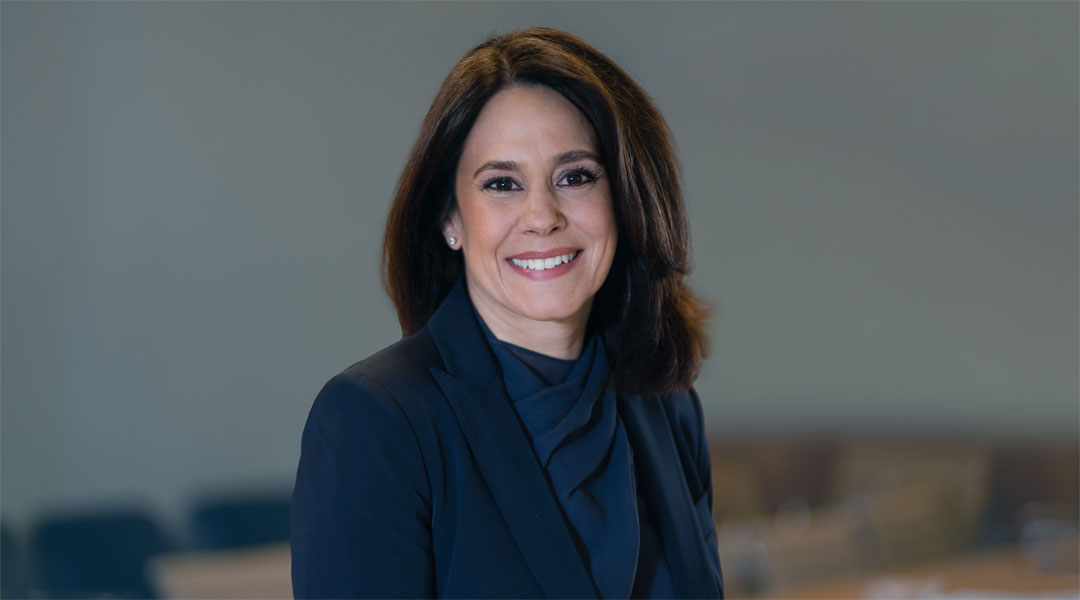
Dallas Fed's Logan warns central clearing may shift balance sheet incentives for Treasury dealers. The transition period carries risks traders should track.
Dallas Fed President Lorie Logan said the SEC's mandate for central clearing of Treasury cash and repo transactions will strengthen risk management. It also shifts the balance sheet math for the intermediaries who make the market work. The mandate, already rolling out in phases, changes how margin flows through the system during stress events.
Traders exposed to Treasury basis or repo spreads need to track that transition period. It carries its own risk.
Logan's speech, delivered at a conference on market liquidity and leverage, laid out the interaction between these two concepts. Market liquidity is normally deep in Treasuries. When leverage unwinds during a downturn, forced selling can overwhelm the market's capacity to intermediate. The March 2020 Treasury market seizure followed exactly this pattern.
The simple read on central clearing is positive. It establishes uniform risk management, reduces settlement risk, and frees balance sheet space through netting. Logan listed those benefits. The mandate, which applies to most Treasury cash and repo trades, should make the market more resilient.
The better read starts with what happens during a stress event. Central clearing requires margin. Initial margin goes up front. Variation margin gets paid daily as prices move. In normal markets, that margin is manageable. During a flight to quality, when Treasury volatility spikes, margin calls can accelerate faster than dealers can raise cash. Levered investors, facing margin calls, sell assets. Those sales push prices further, which triggers more margin calls. Logan called this dynamic the familiar one from 2020.
The clearing mandate makes this dynamic more uniform. It also makes it more concentrated. Every trade goes through a central counterparty. That CCP becomes the single point where margin calls propagate. If a large dealer fails to meet a margin call, the CCP can auction that dealer's positions, potentially at fire-sale prices, which would hit other members. That concentration of risk is new. The Treasury market has never had a single CCP clearing the majority of its cash and repo volume.
Logan pointed to the Knight Capital collapse in 2012 as a warning about technology risk. A runaway algorithm at the electronic market maker triggered dramatic volatility and Knight's failure. The lesson was that the official sector and market participants need a feedback loop to spot risks before they break something. The Treasury Market Practices Group, which the New York Fed helped create in 2007, has produced best-practice recommendations. The annual Treasury Markets Conference, now in its 12th year, is another forum.
"Plumbing matters," Logan said. "It matters in your house, and it matters in markets."
The transition to central clearing is a structural change that rewires how margin flows through the system. Until market participants have real experience with how the CCP handles a stress event – a large dealer default or a cyber attack – the uncertainty around that transition will remain. The SEC's mandate has multiple compliance dates. The first major phase took effect in early 2024. Others roll out through 2026. Each phase changes the margin and settlement dynamics for a different slice of the market.
Logan also raised blockchain as a potential improvement for collateral movement and market integration. That is further out. More immediately, she identified cyber risk as the way digital technology is changing the shocks that hit markets. A cyber event at a CCP or a major dealer could freeze the Treasury clearing system, at least temporarily. The official sector's playbook for that scenario is not public.
The Treasury Markets Conference is scheduled for this fall. It is the best forum to gauge how dealers and regulators assess the early implementation.
Prepared with AlphaScala research tooling and grounded in primary market data: live prices, fundamentals, SEC filings, hedge-fund holdings, and insider activity. Each story is checked against AlphaScala publishing rules before release. Educational coverage, not personalized advice.