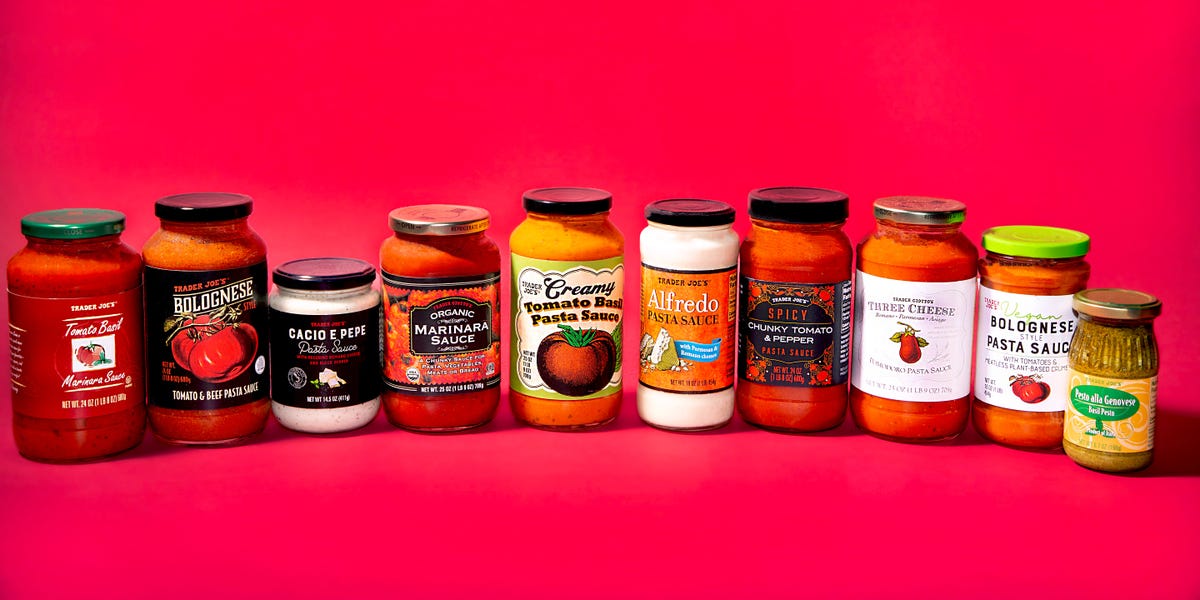
The ranking of Trader Joe's jarred pasta sauces – from worst to best – is more than a grocery blog post. It offers a real-time read on consumer preferences in a $12 billion shelf-stable pasta sauce market. The two sauces named in the ranking, organic marinara and cacio e pepe, represent opposite ends of the trend spectrum.
The Organic Marinara Standout
The organic marinara's top ranking tracks with a multi-year shift toward clean-label ingredients. Trader Joe's version undercuts most national organic brands by $1–$2 per jar, making it a price anchor that pressures competitors like Rao's and Classico. For investors in packaged food companies, this signals that private label organic options are gaining share at the expense of legacy brands with higher marketing spend. The ranking suggests that flavor and price – not just brand loyalty – drive the purchase.
The Cacio e Pepe Misstep
Cacio e pepe finished near the bottom. That is a caution for companies rushing to launch trendy Italian variants without nailing the execution. The sauce likely failed on creaminess or seasoning balance, two attributes that matter more than novelty. This is a direct read for Kraft Heinz (KHC) or Conagra (CAG), which have both introduced flavored sauces recently. A misstep at Trader Joe's – a chain known for rigorous taste testing – suggests a higher bar for new entries.
What This Ranking Signals for Investors
The ranking creates a clear decision point for consumer staples watchers. The first read: private-label organic sauces are eating into premium brand volume. The better read: Trader Joe's is using trend-driven SKUs (like cacio e pepe) to test demand, and failure tells the broader market the trend may be overhyped. If Walmart (WMT) or Costco (COST) follow with their own organic marinara at similar price points, the pressure on national brands will intensify. The next catalyst is the upcoming quarterly volume data from Campbell's (CPB) and General Mills (GIS), which will show whether private label penetration is accelerating.
The Decision Point
For a trader scanning the shelf, the takeaway is not about which sauce tastes best. It is about which companies have pricing power in a category where Trader Joe's is setting the value anchor. The organic marinara's victory confirms that clean-label price compression is real. The cacio e pepe failure warns that novelty alone does not protect margins. Watch the May retail scanner data for branded sauce dollar sales – a decline would validate the ranking's market signal.