Stocks● Neutral
Toshiba's 80V eFuse IC Shrinks 48V Protection Circuits
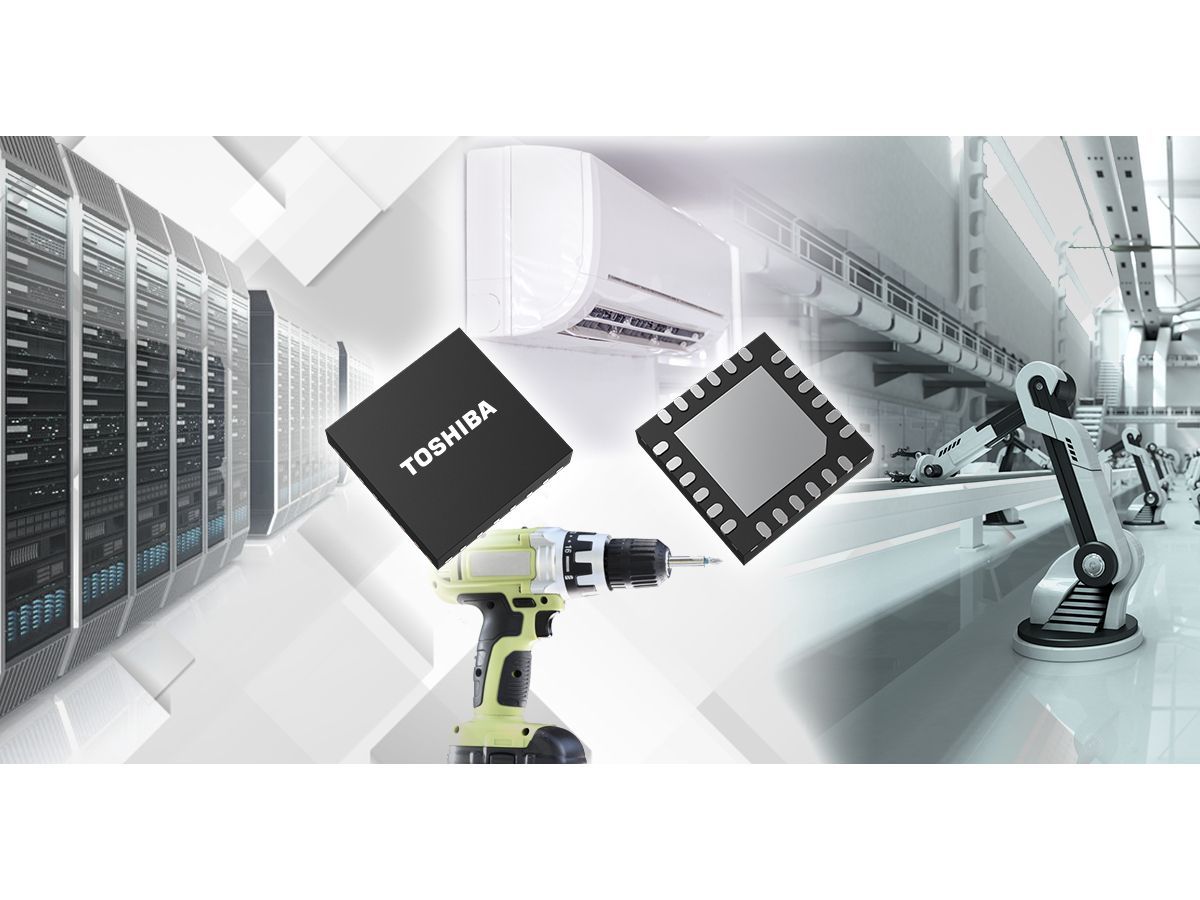
Smallest 80V eFuse package per Toshiba's 2026 survey; 4.0mm chip, 44.5 milliohm on-resistance. Toshiba plans more eFuse parts for industrial power rails.
Continue with
Toshiba Electronic Devices & Storage Corp. said it began shipping the TCKE1401NM, an 80V electronic fuse IC for power line protection circuits in industrial equipment. The chip comes in a VQFN24D package that Toshiba calls the industry's smallest for an 80V-rated eFuse, according to its August 2026 survey.
The part targets equipment moving to 48V power systems: servers, network equipment, factory automation, robots. Adoption of 48V is advancing, pushed by demand for higher output power and improved efficiency, Toshiba said. Those systems need protection circuits that tolerate higher voltages and carry several protection functions in a small space.
An eFuse is a semiconductor fuse that protects downstream circuits from abnormal current and voltage. A conventional fuse, a glass tube type or a chip current fuse, stops a short circuit once and has to be replaced. Overvoltage and a reversed input are outside its reach, and once it blows, the rest of the system gets no signal. The TCKE1401NM integrates overcurrent protection, overvoltage shutdown, input reverse polarity protection, and thermal shutdown in a single chip, replacing what would otherwise be a stack of discrete protection parts.
The chip runs from 4.7V to 75V, spanning 24V through 54V rails. Some telecom and networking platforms run 54V buses, which sit at the top of that range. On-resistance of 44.5 milliohms typical keeps the voltage drop across the fuse low while current flows. Operating temperature spans -40°C to 125°C.
The VQFN24D body measures 4.0mm by 4.0mm. The footprint, combined with integrated protections, reduces the board area dedicated to the fuse stage, Toshiba said.