Crypto● Neutral
Tokenized stock delay reveals SEC split on synthetic exposure
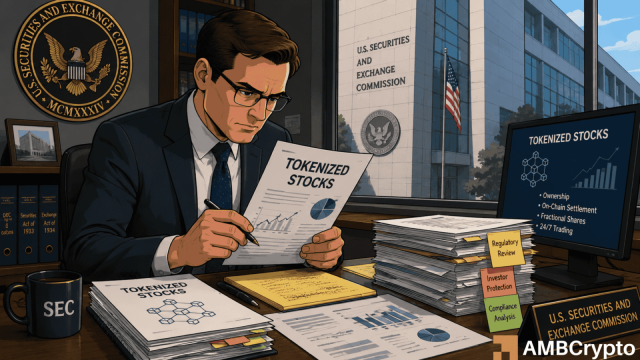
SEC Commissioner Peirce limited the innovation exemption to direct equity tokens, excluding synthetic products. The delay puts tokenization platforms and exchanges on watch for a narrower path to on-chain stocks.
Continue with
The SEC has delayed plans to allow trading of tokenized versions of US stocks, according to a Bloomberg report on 22 May. The delay follows internal concerns and industry pushback. Recent guidance from Commissioner Hester Peirce and a January SEC staff statement suggest the real sticking point is not tokenized equities themselves – it is synthetic exposure products built on crypto rails.
The Distinction That Matters
The simple read: many expected the SEC to open a pathway for tokenized stocks under an innovation exemption. The agency hit pause instead.
The better market read: the January staff statement from the SEC’s Division of Corporation Finance, Division of Investment Management, and Division of Trading and Markets separates tokenized securities into three categories:
- Issuer-backed tokenized securities: digital representations directly tied to underlying shares and shareholder records.
- Custodial tokenized securities: tokens held by a custodian with direct backing from the issuer.
- Synthetic tokenized securities: products that provide exposure through linked instruments or security-based swaps.
Peirce pushed back against what she called “hyperbole” surrounding the contemplated exemption. She wrote on X that the framework was always expected to remain “limited in scope” and apply only to “digital representations of the same underlying equity security.” Synthetic products offering indirect stock exposure were not covered.
Issuer-backed and custodial tokens may still get a green light
The January statement describes these categories as directly linked to the issuer’s share register or a custodian’s holdings. That structure mirrors existing equity settlement infrastructure, just on a blockchain. Regulators have shown more tolerance for such models in earlier no-action letters and staff guidance.
Synthetic tokenized stocks face higher hurdles
Synthetic products resemble security-based swaps or total return swaps. They do not represent direct ownership of the underlying equity. The SEC’s skepticism toward that category aligns with its broader scrutiny of derivative-like crypto products, including certain stablecoins and yield-bearing tokens.
Exposure for Crypto Exchanges and Tokenization Platforms
Crypto exchanges exploring on-chain stock trading face a narrower set of viable product structures. Platforms such as Binance, OKX, or tZERO offer crypto market analysis – have all tested tokenized equities. If the SEC excludes synthetic products, any model that relies on derivatives or swap-like exposure must be restructured or abandoned.
Key insight: The regulatory path for tokenized stocks is narrowing, not widening. Issuer-backed or custodial tokens may proceed. Synthetic versions will require separate registration as security-based swaps.