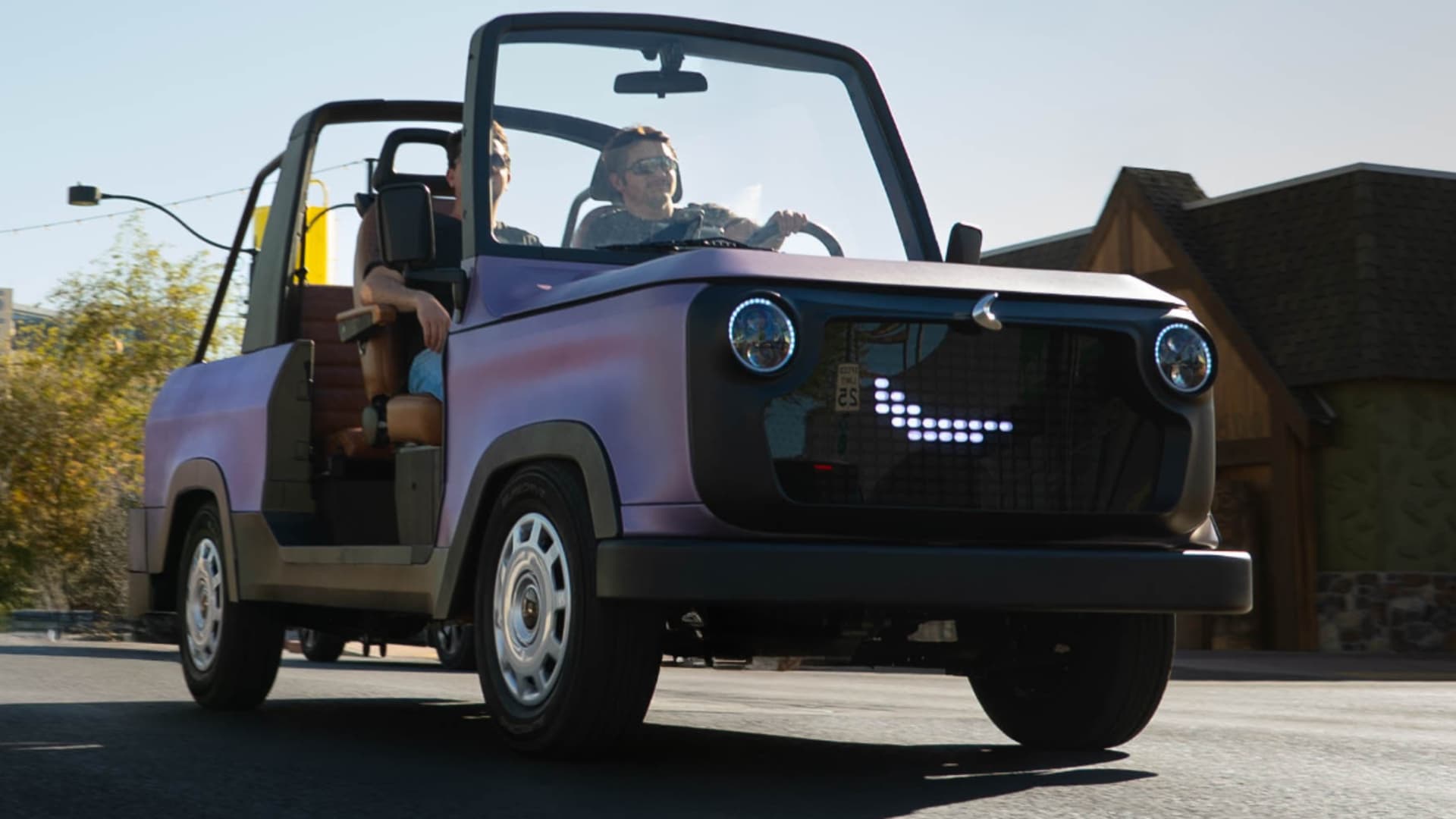
A growing list of companies, including Stellantis, is betting Americans are ready to embrace smaller, cheaper electric vehicles known as low-speed vehicles, or LSVs. These are not traditional cars. They are street-legal electric vehicles that top out at 25 mph and cost roughly $15,000, a fraction of the nearly $50,000 average price for a new car or truck. The bet is that years of affordability concerns will push consumers toward a vehicle that can be charged overnight from a household outlet and requires no special charger.
The global micromobility market, which includes LSVs, was worth about $160 billion in 2022 and could reach $340 billion by 2030, McKinsey & Company estimates. The North American portion alone is expected to grow from $20 billion in 2022 to $35 billion by 2030.
Stellantis is the largest incumbent testing the waters. Its Fiat brand is introducing the Topolino, a quadricycle that starts around $15,000, in Miami. Fiat CEO Olivier Francois said he wants to make Fiat “the brand of micromobility within Stellantis,” using the U.S. as a test market. “The fun thing with Topolino is we double down on small,” he told CNBC. Fiat’s U.S. sales have dwindled from 43,772 vehicles in 2012 to roughly 1,300 last year, with only the all-electric Fiat 500 on offer. The Topolino represents a strategic pivot, not a volume play, Francois said.
Startups are also entering the space. Waev, which owns the GEM brand, has seen demand grow, CEO Keith Simon said. “We have seen the popularity of many different form factors of electric, small low-speed vehicles continuing to grow.” Chip Motors, a Florida-based startup, plans to deliver a four-passenger LSV, also priced at $15,000, with a digital interactive face and optional remote-driving assist. CEO Jameson Detweiler said the company sees “incredible latent demand” and expects the market to move from “hundreds of thousands” of annual units toward 500,000.
Not everyone is convinced the segment will replace the daily commute. Stephanie Brinley, principal automotive analyst at Mobility Global, said LSVs are “less expensive than a normal car, but they’re not expected to be a normal car.” She called them recreational vehicles, not part of the day-to-day work commute for most people.
President Donald Trump has amplified attention on the category, saying he wants U.S. regulations to allow smaller Japanese Kei cars and European-style LSVs. “I go over to Europe and I see these little cars all over the place and I say, ‘Why aren’t we making them?’” Trump said at a speech at General Motors’ Milford Proving Grounds. GM itself was named in the speech but has not announced any LSV strategy.
The market remains loosely regulated. LSVs must not exceed 25 mph, carry headlamps, turn signals, mirrors and a windshield, but do not require airbags. They are allowed on roads with speed limits up to 35 mph.
AlphaScala’s proprietary scoring system gives Stellantis a 46 out of 100, labeled Mixed, in the Consumer Cyclical sector. The stock page is STLA stock page. General Motors scores 59, labeled Moderate, in Consumer Discretionary, with a stock page at GM stock page. Neither company has a dedicated LSV division, but Stellantis’ Fiat brand is the most direct exposure among large automakers.
For now, the LSV market is a niche. Detweiler estimated current annual sales below 500,000 units. The growth depends on consumer acceptance, regulation, and the ability of companies to build awareness. “The use case for these kind of vehicles has become more interesting as people have evolved their lifestyles,” Simon said. The next milestone is the start of Chip Motors’ production early next year, followed by Stellantis’ full Topolino rollout in Miami.