Carvana's New-Car Push Reshapes the Dealer Model
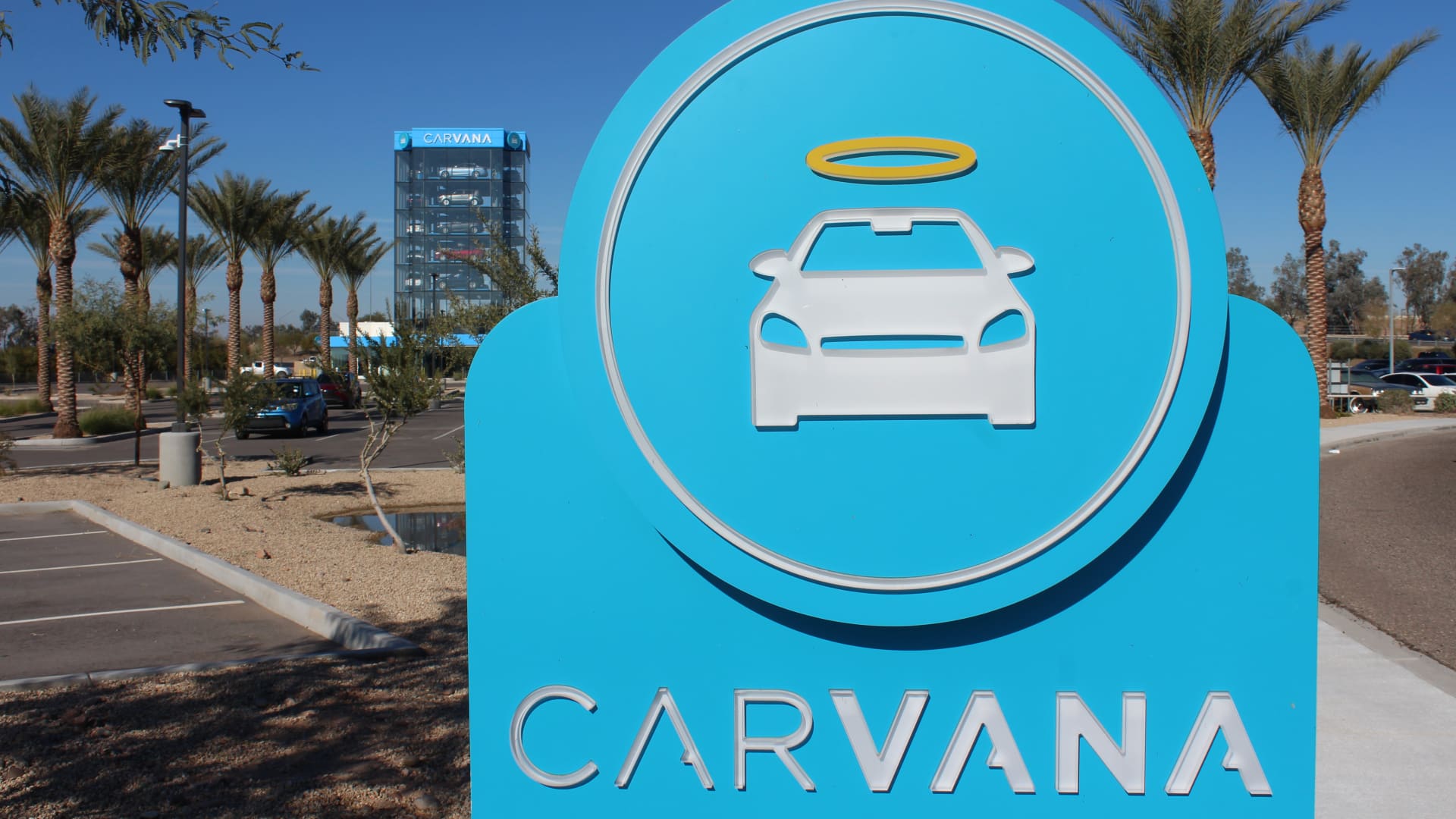
Carvana bought seven Stellantis franchises since last year. One store sold 700+ new vehicles in a month. The move opens dealer-only auctions and service revenue.
Carvana has quietly bought seven new-vehicle franchises since last year, all selling Stellantis brands. One store in Casa Grande, Arizona, sold more than 700 new vehicles last month, making it Stellantis' highest-volume U.S. location. The company's market cap now exceeds $70 billion, higher than Stellantis itself.
For a company built on selling used cars online through its signature vending machines, the move into franchised new-car retail is a structural shift. It opens revenue streams Carvana's original model never touched: new-vehicle sales, parts and service, and access to exclusive dealer-only auctions for used-car inventory.
"After stabilizing their core business, I think they realized, by looking at the franchise model, that there was a significant amount of revenue and gross profit opportunity that their business model didn't even contemplate," said Brian Gordon, president of dealer advisor Dave Cantin Group.
The mechanism
The U.S. franchised dealer system includes 16,990 retailers that generated over $1.3 trillion in sales last year, per the National Automobile Dealers Association. New-vehicle sales are regulated state-by-state. In Michigan, the only legal way to buy a new car is through a franchised dealer. Tesla and Rivian have fought those rules with mixed results.
Carvana is operating differently than most dealers. Stellantis has approved it as a certified website provider, meaning Carvana does not need to go through an approved third-party company, according to four people familiar with the decision who requested anonymity.
"It's bred out of desperation," said a Stellantis dealer who asked for anonymity to speak freely. Stellantis has lost significant U.S. market share in recent years. "It's given Carvana an opportunity to come into the new car space."
Stellantis said in a statement that Carvana operates as a "corporate owner" of its brands, similar to Lithia and AutoNation. "We apply the same consistent standards and criteria to all dealer partners," the company said.
The infrastructure advantage
Carvana has built a nationwide logistics and processing network. It can recondition roughly 1.5 million vehicles per year, compared to sales of less than 600,000 vehicles last year. That spare capacity could support a service business.
"They have a pre-built out infrastructure, digitally, physically, logistically, that probably gives them an advantage over those big, multibranded public companies," said Larry Dominique, a longtime automotive executive turned consultant.
John Murphy, a Wall Street analyst and automotive consultant, said Carvana may use locations of ADESA, an auction company it purchased in 2022, to service vehicles. "They do have tremendous capacity to recondition, potentially significantly ramp up their service capability in a way that is not present in other large consolidators," he said.
The open questions
Carvana's traditional locations lack parts and service departments, which represent significant profits and customer touch points for franchised dealers. Whether Carvana will expand into service or leave that to existing dealers is unresolved.
"If they're going to just be an outlet for new cars, then does that change the dynamic of the dealership model? Who's going to be responsible for taking care of the customer after the sale?" said Sean Hogan, chairman of the Stellantis National Dealer Council and vice president of Sierra Auto Group.
Hogan said competition is good for consumers but there are many outstanding questions about Carvana's strategy. "If they're doing something better than we are, then we will need to adapt, or we're going to be irrelevant."
Carvana and CEO Ernie Garcia have declined to comment ahead of a media event this week where the company is expected to disclose its plans. The other new Stellantis franchises are in Sacramento, San Diego, Dallas, Atlanta, Cleveland, and Boston.
The Stellantis connection
Stellantis' main brands – Chrysler, Dodge, and Ram – all scored below the industry average in JD Power's annual U.S. Sales Satisfaction Index for franchised dealers. The automaker has lost ground to competitors, creating an opening for Carvana.
Murphy called Carvana's entry "one of the most disruptive forces that auto retailing has seen in the U.S. market in decades." The private auctions available only to franchised dealers are a particular advantage. "If that expands to other brands, that is going to be an advantage," he said.
Carvana's stock market analysis page tracks the company's Alpha Score at 32/100, labeled Weak, in the Consumer Discretionary sector. The STLA stock page shows Stellantis at 46/100, labeled Mixed, in Consumer Cyclical. Ally Financial, which partners with Carvana on auto loan origination, is listed as Unscored.
Carvana has shown the franchise dealer community how digital tools can reshape retail, Dominique said. "There's nothing stopping any dealer in the United States from doing that today."
Drafted by a large language model from the source reporting linked above, then screened by automated publishing checks. It is not read by a journalist before publication. Some articles cite our Alpha Score. Verify prices and figures against the original source. Educational coverage, not personalized advice.