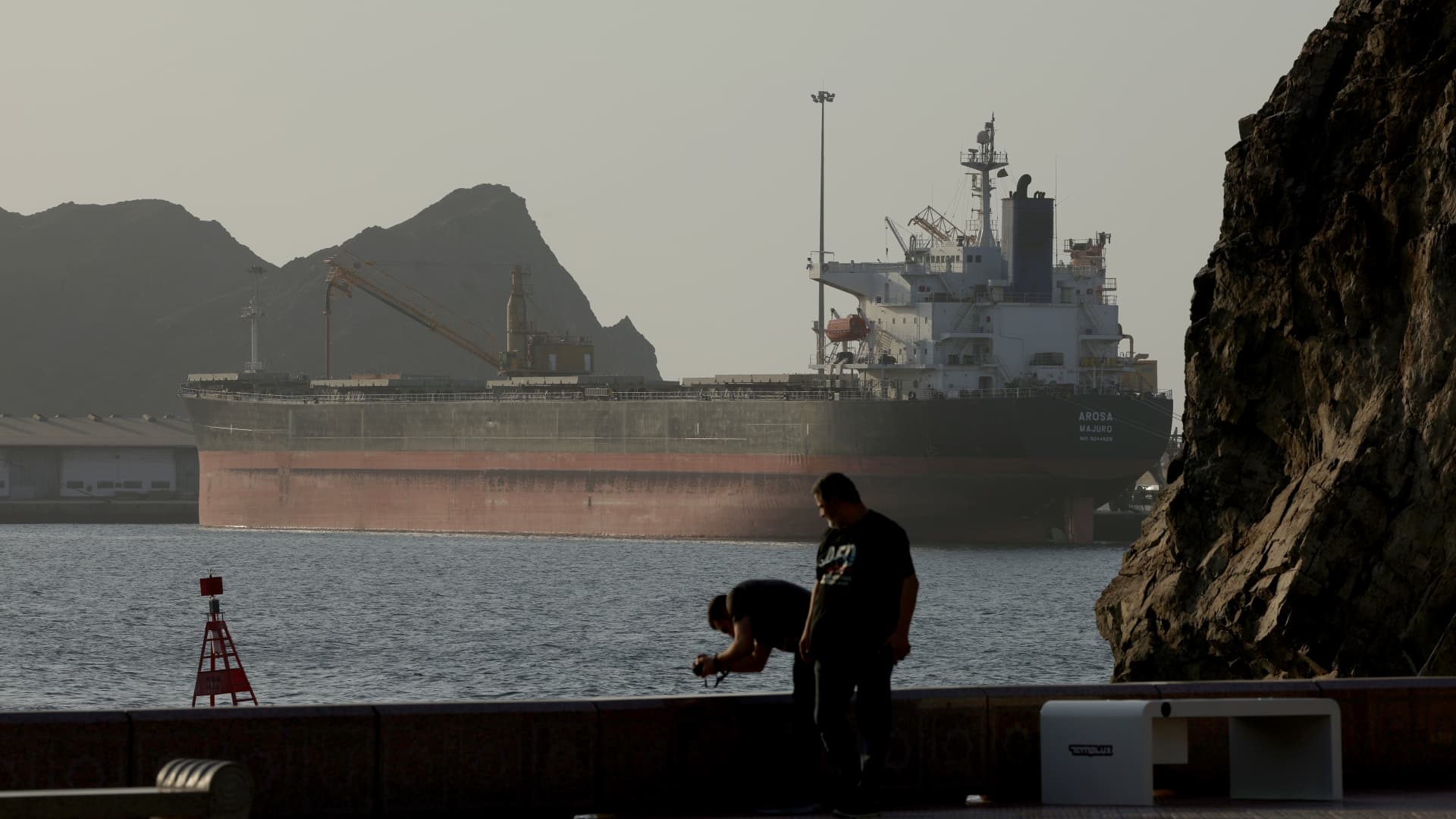
Three supertankers from Saudi Arabia carrying 6 million barrels of oil have crossed the Strait of Hormuz, according to data from Kpler. The vessels turned their transponders back on Thursday in the Gulf of Oman after hiding their location for more than two months.
The crossings come a day after President Donald Trump and Iranian President Masoud Pezeshkian signed a deal meant to reopen the waterway. Ship traffic through Hormuz has not increased significantly since the deal, Kpler data show. Before the Iran conflict, more than 100 ships including dozens of tankers transited the strait daily.
“The floodgates haven’t opened, there is no mass exodus as yet,” said Matt Smith, director of commodity research at Kpler. Shippers still appear hesitant to cross, he said.
The Saudi tankers are very large crude carriers, each capable of carrying about 2 million barrels. The Shaden is sailing to Kiire, Japan, and the Awtad is bound for Ulsan, South Korea. The Jaham’s destination is not yet clear, Kpler said.
For commodity traders, the slow restart keeps a lid on immediate supply relief. Goldman Sachs warned that Hormuz oil flows may never hit pre-war levels.
At least five Iranian vessels have crossed the U.S. blockade line since June 16, according to Lloyd’s List Intelligence. Three of those were state-owned oil tankers that exited the Gulf of Oman.