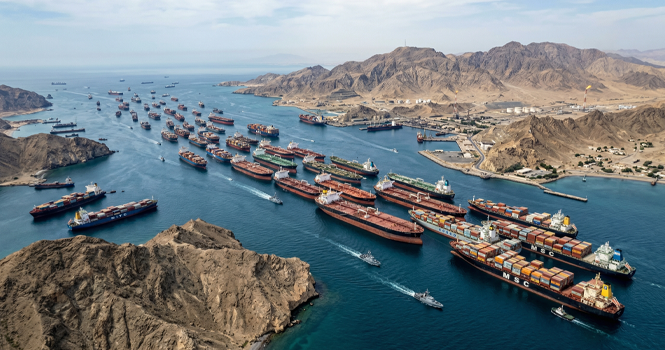
Goldman Sachs analysts warned that tanker traffic through the Strait of Hormuz may never recover to pre-war levels, as alternative export routes opened during the crisis remain in use. The bank's June 17 note, titled "70% of Pre-War Hormuz Flows Might Become the New 100%," argued that a full normalization would require a 13-million-barrel-a-day increase from current flows.
Before the conflict, roughly 17 million barrels a day moved through the chokepoint. Middle Eastern producers responded to the disruption by activating pipelines that bypass Hormuz. Iraq routed more crude via its link to Turkey's Ceyhan port. Saudi Arabia increased shipments through the East-West pipeline to the Red Sea. The United Arab Emirates relied on the Habshan-Fujairah pipeline, which empties directly into the Gulf of Oman.
Goldman's analysts said those routes will stay active even after tensions ease, because producers invested in the infrastructure and have little reason to idle it. The result is a permanent shift in the geography of Gulf oil exports. The strait's throughput is capped at a lower level than the market assumed before the war, they wrote.
For crude oil prices, the implication is nuanced. A lower ceiling on Hormuz flows means less supply flexibility from the Gulf, which in theory supports a price floor. Traders said the alternative routes are already priced into the current forward curve. The real question is whether the 70% figure becomes a binding constraint during a demand recovery.
For tanker owners, the shift is more direct. Fewer barrels through Hormuz means fewer very large crude carriers loading at Gulf terminals. The longer-haul routes from Iraq's Ceyhan or Saudi Arabia's Red Sea ports are shorter than the typical Gulf-to-Asia voyage, reducing ton-mile demand. That dynamic weighed on spot rates even as the war premium faded. Goldman's note suggests the drag is structural, not temporary.
Goldman Sachs carries an Alpha Score of 55 out of 100, a Mixed rating from AlphaScala, reflecting its diversified revenue streams and exposure to volatile trading conditions. The bank's commodities research desk has been among the most closely watched during the conflict.
The 13 million bpd figure in the note is the threshold to track. If actual flows through Hormuz approach that level and stall, the market will have to accept that the old normal is gone. If flows push past it, the thesis weakens. Goldman's note argues that the strait's throughput has a new ceiling. The bank's analysts set that ceiling at 13 million barrels a day above current flows.