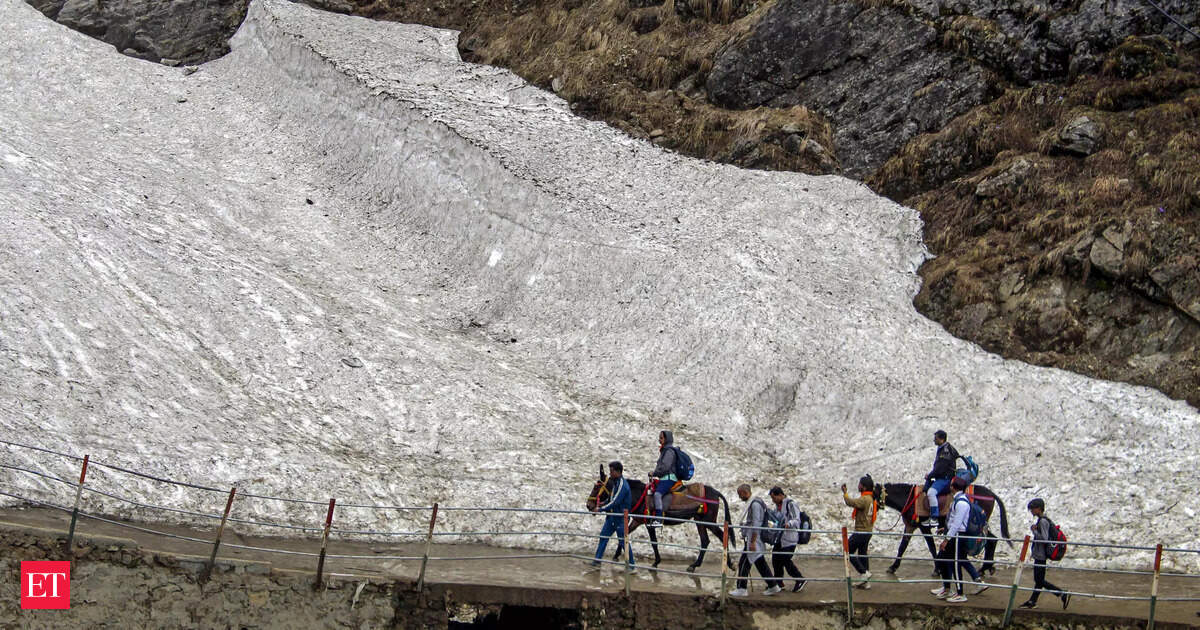
The High-Altitude Balancing Act
As the Char Dham Yatra officially reopens, the corridors of Uttarakhand have become a microcosm of a global struggle: the tension between aggressive infrastructure development and the increasing volatility of a warming climate. For traders and investors monitoring the intersection of sustainable development and regional economic stability, the Himalayan landscape currently serves as a critical indicator of environmental risk.
Traditionally, the Char Dham pilgrimage was defined by its slow, deliberate pace—a spiritual discipline characterized by sparse foot traffic and profound isolation. Today, that narrative has been rewritten by a massive, infrastructure-driven push to modernize the region. The proliferation of sprawling highway networks and the commercialization of helicopter services have democratized mass access, ballooning the number of pilgrims and transforming the economic profile of these once-remote mountain towns.
The Climate-Economy Nexus
While the influx of tourists provides a seasonal boost to the local economy, the environmental cost is becoming impossible to ignore. Locals report a dramatic shift in weather patterns, describing an unusual, persistent heat that feels anomalous to the region’s historical norms. This anecdotal evidence from the ground is increasingly being mirrored by macro-level environmental data, which suggests that the Himalayan ecosystem is under unprecedented stress.
For the markets, this situation represents a classic 'externalities' problem. The expansion of infrastructure to accommodate millions of travelers—while essential for modernizing the regional economy—is occurring in a high-risk seismic and climatic zone. When environmental stress exceeds the capacity of local infrastructure, the resulting disruptions (such as landslides, road closures, or heat-induced logistical failures) can lead to significant localized economic volatility.
Implications for Long-Term Regional Stability
The transformation of the Yatra from a sparse, traditional pilgrimage to a high-volume, industrialized movement has permanent implications for the region’s long-term viability. As infrastructure projects push deeper into the mountains, the physical stability of the terrain becomes a recurring variable that investors must account for.
'Unusual heat, felt by locals as something new to their land, reflects broader environmental stress even before data confirms it,' observers noted, highlighting the disconnect between rapid development and the reality of a warming Himalayan belt. This 'karma'—interpreted here in its oldest sense of cause and effect—suggests that the consequences of aggressive expansion in a fragile ecosystem will inevitably manifest in the form of maintenance costs, supply chain bottlenecks, and the potential for stranded assets.
Looking Ahead: What to Watch
For those tracking the macro-economic landscape of the Himalayan region, the coming months will be telling. Traders should monitor the following key indicators:
- Logistical Efficiency: Any sustained disruption in the newly built highway networks will serve as a barometer for how well infrastructure is holding up against climate-induced degradation.
- Regulatory Responses: Watch for shifts in government policy regarding tourism caps or environmental impact assessments, as these could signal a pivot toward prioritizing long-term regional stability over short-term growth.
- Utility Performance: The pressure on local resources—water, power, and waste management—during peak pilgrimage periods will continue to strain the regional infrastructure, potentially leading to increased public spending on remedial environmental projects.
As the Char Dham Yatra continues to evolve, the Himalayan region remains a vital case study in the risks of accelerating human activity in historically slow-moving, high-altitude ecosystems. The interplay between climate reality and infrastructure ambition will remain a key theme to watch for those assessing regional risk in the years to come.