A New Era of Economic Engagement
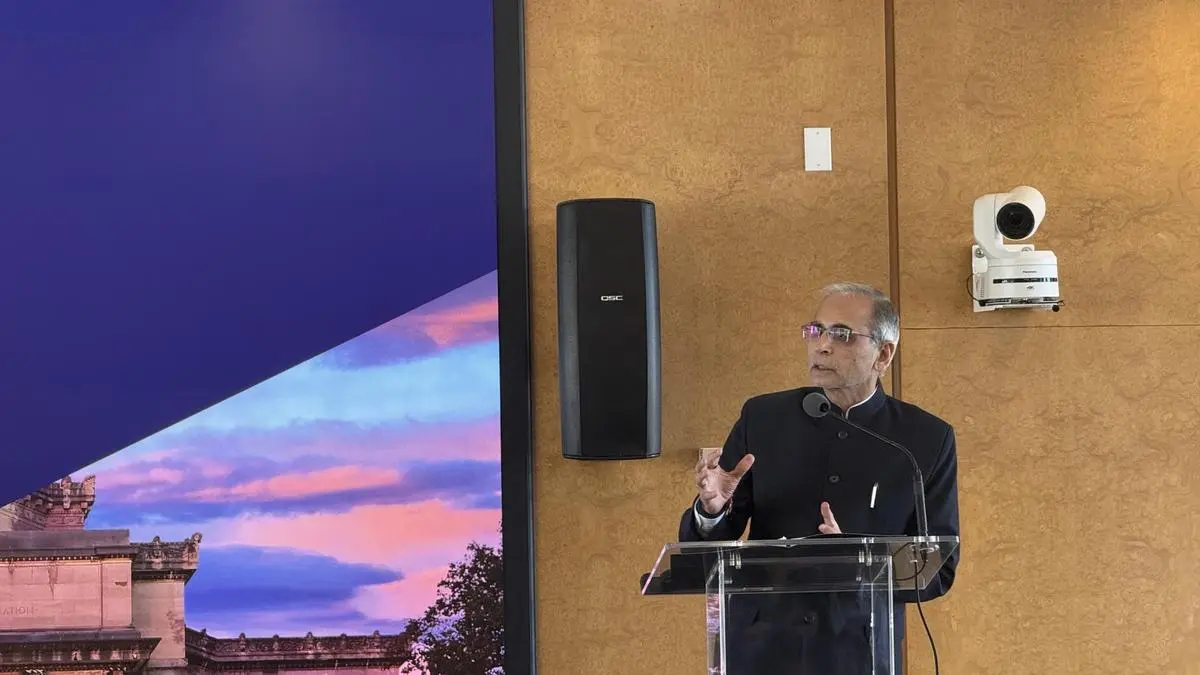
India’s accelerating economic trajectory is rapidly transforming the nation into a cornerstone of global stability and a primary engine for international investment. Speaking in Washington, India’s Ambassador to the United States, Vinay Mohan Kwatra, underscored that the country’s ongoing development journey serves as a significant, multi-faceted opportunity for its international partners. As New Delhi continues to scale its GDP and industrial capacity, the focus has shifted toward deepening ties with key global players, with the United States firmly positioned at the center of this strategic evolution.
The U.S.-India Nexus: A Consequential Partnership
Ambassador Kwatra’s remarks emphasize that the U.S.-India relationship is no longer merely a diplomatic formality; it is one of New Delhi’s most consequential partnerships. By placing the United States “front and center,” the envoy signaled that the current administration in New Delhi views American capital, technology, and strategic cooperation as essential catalysts for India's domestic growth agenda.
For investors and market participants, this alignment is critical. The integration of Indian manufacturing into global supply chains—often referred to as the 'China Plus One' strategy—has gained significant momentum. As India modernizes its infrastructure and digitizes its economy, the reliance on U.S. technology sectors, particularly in semiconductors, defense, and green energy, creates a feedback loop that benefits both economies.
Macroeconomic Context: Growth Amid Global Uncertainty
India currently stands as one of the fastest-growing major economies globally. This economic performance comes at a time when many developed nations are grappling with stagnant growth and inflationary pressures. By positioning itself as a reliable partner, India is actively courting foreign direct investment (FDI) to support its ambitious infrastructure projects and digital transformation initiatives.
Historical context suggests that India’s growth is not merely a short-term trend but a long-term structural shift. The transition from a services-heavy economy to one that embraces large-scale manufacturing and high-tech exports is designed to absorb the nation’s massive demographic dividend. Ambassador Kwatra’s emphasis on international partnership highlights the government's recognition that sustaining this 6-7% annual growth rate requires seamless integration into the global financial architecture.
Market Implications for Traders
What does this mean for the professional trading community? For those tracking emerging markets, the deepening of U.S.-India ties acts as a bullish signal for several sectors:
- Technology and Semiconductors: As India pushes for self-reliance in chip manufacturing, joint ventures with U.S. firms are likely to increase, providing tailwinds for both domestic Indian tech stocks and U.S. equipment providers.
- Infrastructure and Logistics: Government-led capital expenditure is a primary driver of India’s current growth; firms involved in construction, logistics, and rail infrastructure are direct beneficiaries.
- Currency Stability: Enhanced bilateral trade and cooperation often lead to more predictable currency dynamics. Traders should monitor the USD/INR pair, as closer strategic ties typically facilitate better central bank coordination and investment flows.
Looking Ahead: A Strategic Roadmap
The road ahead for India involves navigating complex geopolitical waters while maintaining its domestic growth momentum. Ambassador Kwatra’s articulation of the U.S.-India relationship suggests that both nations are committed to a long-term roadmap that prioritizes trade, defense, and energy security.
Investors should keep a close watch on upcoming bilateral trade dialogues and policy announcements from New Delhi. As India continues to pitch itself as a 'huge opportunity,' the test will be the pace at which the country can further streamline its regulatory environment to accommodate international capital. For market participants, the message is clear: India’s economic story is one of the most significant macro trends of the decade, and the U.S. remains the primary bridge through which this growth is being accessed.