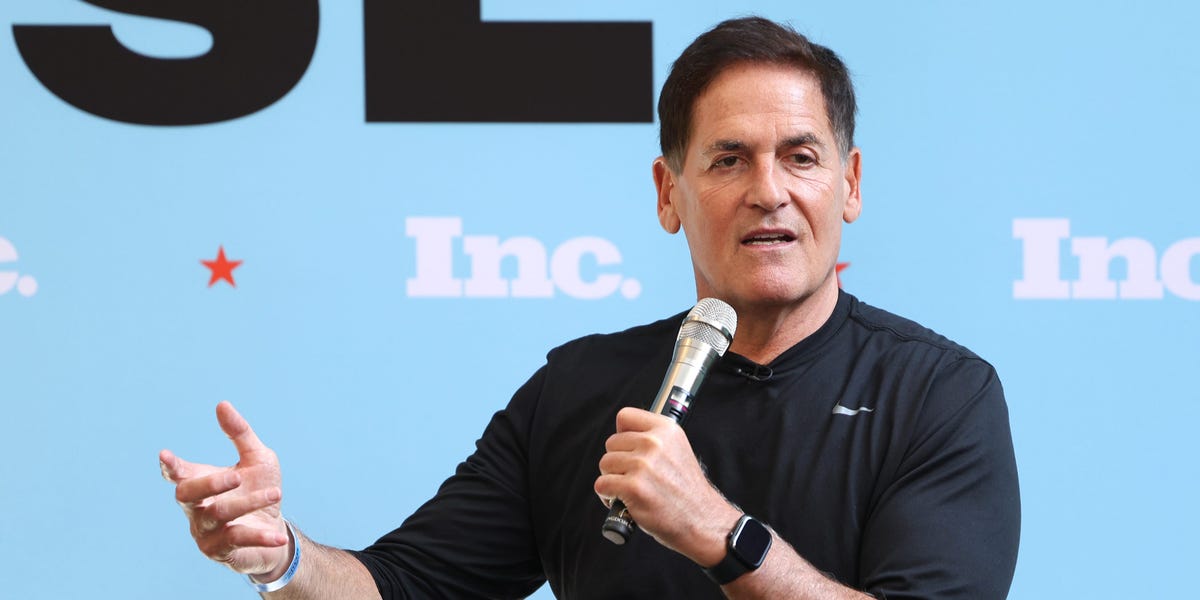
Mark Cuban recently identified a critical shift in the professional landscape, noting that the primary risk for workers today is the tendency to offload critical thinking to artificial intelligence. While AI tools have become standard for drafting, coding, and data summarization, the reliance on these systems to perform high-level synthesis is creating a divide between those who use technology as a force multiplier and those who use it as a replacement for foundational expertise.
The Erosion of Foundational Competency
The core of the issue lies in the distinction between automation and delegation. When professionals use AI to handle routine tasks, they gain efficiency. When they use AI to formulate strategy or make final judgments, they lose the ability to pressure-test their own logic. This creates a feedback loop where the user becomes increasingly dependent on the model, eventually losing the capacity to identify errors or innovate beyond the training data provided by the software.
This trend is particularly relevant for sectors undergoing rapid digital transformation, such as the technology industry. As firms integrate generative models into their core workflows, the value of the human worker shifts from execution to oversight and original synthesis. If the workforce loses the ability to perform the underlying tasks, the ability to oversee the AI effectively disappears. This creates a vulnerability where the quality of output becomes tethered to the limitations of the model rather than the expertise of the professional.
Strategic Integration vs. Cognitive Dependency
For companies like ServiceNow, which are deeply embedded in the enterprise AI ecosystem, the challenge is ensuring that their tools augment rather than replace the cognitive load of their users. ServiceNow currently holds an Alpha Score of 51 out of 100, reflecting a mixed outlook as the market evaluates how enterprise software providers balance automation with human-centric design. You can track the latest performance metrics for the company on the NOW stock page.
Effective integration of these technologies requires a disciplined approach to workflow management. Professionals who maintain their edge are those who treat AI as a junior assistant rather than a senior strategist. This involves:
- Verifying all AI-generated logic against primary data sources.
- Using AI to identify patterns rather than to draw conclusions.
- Maintaining a personal knowledge base that exists independently of current software tools.
The Path Toward Human-AI Equilibrium
The next phase of market evolution will likely be defined by how organizations measure the productivity of their employees. If firms prioritize speed over accuracy, they may see short-term gains at the expense of long-term institutional knowledge. Conversely, companies that incentivize deep work and critical analysis will likely build more resilient operational structures. Investors should monitor upcoming corporate guidance updates for mentions of human-in-the-loop requirements, as these will serve as a primary indicator of how firms are managing the risks of cognitive outsourcing. This shift in operational philosophy will be a key marker for long-term stock market analysis as companies attempt to scale their AI capabilities without hollowing out their internal talent base.