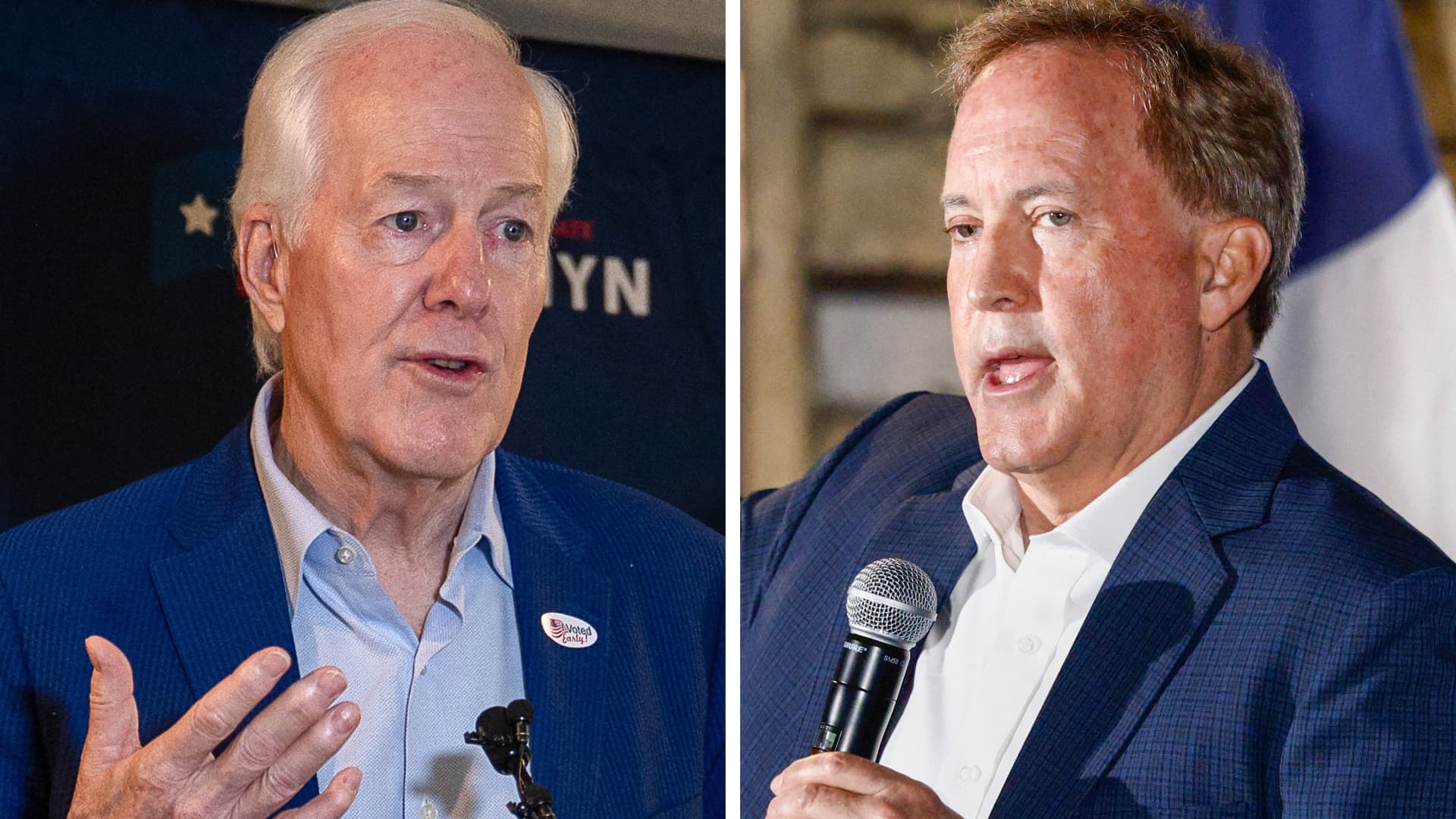
Polls are open in the Texas Republican Senate primary runoff between incumbent Sen. John Cornyn and state Attorney General Ken Paxton. President Donald Trump endorsed Paxton on Truth Social last week, calling Cornyn "a good man" who was "not supportive of me when times were tough." The winner faces Democratic state legislator James Talarico in November, a general election that could decide Senate control.
For markets, the immediate question is not about November. It is about what a Paxton victory signals for the regulatory posture of Texas's energy and technology sectors – and whether Trump's endorsement power now extends into the Senate caucus.
Trump's Endorsement of Paxton Changed the Race's Trajectory
Trump wrote that Paxton "has gone through a lot, in many cases, very unfairly," and described him as a "Fighter" who "knows how to WIN." The endorsement followed a pattern Trump has used in other primaries this cycle. Sen. Bill Cassidy of Louisiana failed to qualify for a runoff after Trump backed his opponent. Rep. Thomas Massie of Kentucky lost to Trump-endorsed challenger Ed Gallrein.
Cornyn had led Paxton in the March primary but fell short of the 50% threshold required to avoid a runoff. A Quantus Insights poll released on Monday showed Paxton ahead by 9.3 percentage points heading into Election Day.
The Runoff Math and Turnout Risk
Runoff elections produce lower and less predictable turnout than primary elections. Cornyn's campaign has framed him as the institutional candidate with four terms and the ability to hold the seat against Talarico. Paxton's campaign has painted Cornyn as a Washington establishment figure. The 9.3-point polling lead is substantial, runoffs often hinge on ground game and last-minute turnout rather than broad name recognition.
Key insight: A Paxton win by more than five points would confirm that Trump's endorsement power remains decisive in intraparty contests. A win by less than three points would suggest Paxton enters the general election as a weaker candidate.
What Cornyn's Record Shows
Cornyn served as Senate Republican Whip from 2013 to 2019, the No. 2 position in the chamber. He lost a 2024 bid to lead Senate Republicans to John Thune, is still popular with his colleagues. Senate Republicans believe Cornyn would be a more formidable and less expensive opponent for Talarico. Paxton carries legal and ethical baggage: he was impeached by the Texas House, acquitted by the state Senate, indicted for securities fraud, and recently divorced on what his wife described as "biblical grounds."
What a Paxton Victory Means for Texas-Exposed Energy Stocks
Texas dominates U.S. energy production. The Permian Basin alone accounts for more than 40% of domestic oil output. The state's Senate delegation shapes federal permitting for LNG export terminals, drilling on federal land, and the pace of environmental litigation.
Paxton has built his brand on aggressive litigation against federal environmental rules. He sued the Biden administration over methane rules, challenged the SEC climate disclosure mandate, and fought the EPA power plant emissions standards. A Senator Paxton would likely push for faster federal permitting for energy infrastructure and oppose any new federal constraints on Texas production.
Cornyn supports energy development but has taken a more measured approach. He worked with Democrats on infrastructure legislation and has not centered his tenure on anti-regulatory litigation.
Permian Basin and Midstream Exposure
If Paxton wins, the market will price in a lower probability of new federal constraints on Texas energy. Upstream operators with significant Permian exposure would benefit. Midstream companies that transport oil and gas out of the basin would also gain from a policy environment that encourages production growth.
Risk to watch: A Paxton win in the primary does not guarantee a Republican hold in November. If his legal baggage energizes Democratic turnout, the general election becomes more competitive. That outcome would add uncertainty for energy stocks that depend on a predictable federal relationship.
The General Election Risk for Senate Control
Analysts expect the general election to be one of the most expensive in the country. Democratic control of the Senate would affect tax policy, antitrust enforcement, and financial regulation. Texas has not elected a Democrat statewide since 1994, the state's growing suburban and Hispanic populations have shifted the electoral math.
Cornyn, with four terms and a track record of broad coalition building, is seen as the safer bet for holding the seat. Paxton's legal vulnerabilities could improve Democratic turnout in a state that is becoming more competitive at the margins.
Comparing the Candidates on General Election Viability
| Candidate | March Primary Position | Current Polling vs. Paxton | Trump Endorsement | General Election Risk for GOP Hold |
|---|
| Ken Paxton | 2nd place, forced runoff | Leads Cornyn by 9.3 points | Yes – from Trump | Higher – legal baggage energizes Democratic base |
| John Cornyn | 1st place, under 50% | Trails Paxton by 9.3 points | No – Trump endorsed opponent | Lower – proven statewide vote-getter with four terms |
Bottom line for traders: The primary is a two-stage catalyst. A Paxton win today would lift Texas energy stocks and midstream names on expectation of a more favorable federal policy environment. It would also increase the probability of a Democratic pickup in November, a negative for financials and defense stocks. A Cornyn win would keep general election risk more contained and leave the regulatory path near the status quo.
Confirming or Weakening the Setup
The first hard data arrives after polls close at 8 PM local time. Markets may not fully react until the next session unless the race is called early with a clear margin.
A Paxton win by more than five points confirms that Trump's endorsement reshapes Senate primaries and signals a shift in federal energy policy expectations. A Paxton win by less than three points suggests a weaker general election candidate and introduces uncertainty for Texas-exposed equities. A Cornyn win rejects the Trump endorsement effect in a major state and keeps the Senate control calculus closer to current odds.
The runoff turnout model is the largest source of execution risk. Early vote data from Texas counties was not available at press time. Weather or last-minute attacks could swing the margin in either direction. Traders watching Texas-exposed sectors should treat the 9.3-point polling lead as a directional signal, not a lock.
The Texas primary runoff is a direct test of two forces: Trump's ability to reshape the Senate caucus and the institutional party's ability to hold a critical seat. For energy, tech manufacturing, and defense companies anchored in Texas, the outcome provides a roadmap for the policy environment over the next six years.