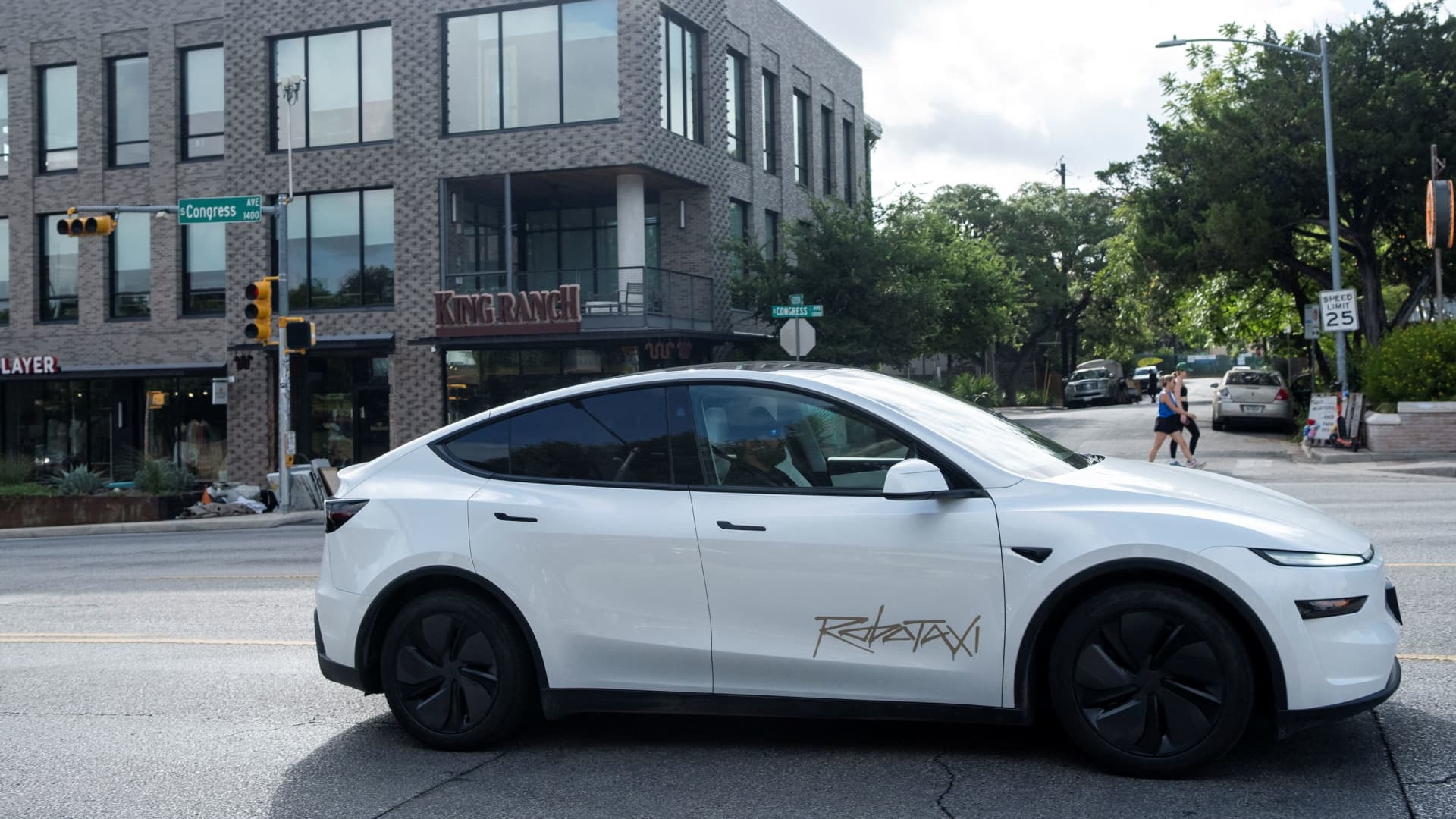
New Texas Department of Motor Vehicles records show Tesla has exactly 42 autonomous vehicles authorized for driverless ridehailing in the state. Waymo, Alphabet's self-driving unit, has 577. The data, published on May 28 under a new state law requiring commercial driverless operators to self-certify Level 4 capability, punctures the narrative that Tesla's Robotaxi service is scaling toward meaningful competition.
The simple read is that Tesla trails every major competitor. The better market read is that the gap exposes a deeper problem: certification. Waymo has long classified its fleet as Level 4 – capable of operating without a human driver on normal roads and weather. Tesla has historically labeled most of its vehicles Level 2 driver-assist systems. Self-certifying 42 vehicles as Level 4 does not make a business; it makes a test program.
Robotaxi Fleet Data Punctures the Narrative
Tesla's stock carries a valuation premium rooted in CEO Elon Musk's promise that driverless cars will fuel future growth. The Texas data introduces a concrete, regulator-verified snapshot that challenges that thesis.
The Fleet Numbers
The Texas DMV database shows:
| Operator | Authorized Vehicles in Texas |
|---|
| Waymo (GOOGL) | 577 |
| AV Ride | 317 |
| Zoox (Amazon) | 35 |
| Tesla (TSLA) | 42 |
Tesla's fleet in Texas is smaller than all three listed competitors. It is less than one-tenth the size of Waymo's Texas operation. Nationally, Waymo operates close to 4,000 vehicles across the U.S. and runs a paid service in multiple cities. Tesla's paid robotaxi service in Austin has been running since June 2025, yet the DMV data suggests that service relies on a tiny pool of cars.
Safety Record Adds Scrutiny
Between July 2025 and April 2026, Tesla's Austin fleet experienced 17 incidents reported to the National Highway Traffic Safety Administration. Two of those incidents involved minor injuries, one requiring hospitalization. All incidents occurred while human safety supervisors were on board. The combination of a small fleet and a non-zero injury rate raises questions about how Tesla will handle scaling without a safety driver – a requirement for Level 4 operation without a supervisor.
Why the Level 4 Certification Gap Matters
Texas law previously allowed autonomous vehicle testing and operations on roadways, “as long as they meet the same safety and insurance requirements as every other vehicle on the road.” The new law, which took effect May 28, requires operators to self-certify that their AVs meet SAE Level 4 standards – an AV that can operate in normal weather and on typical roads without a human driver.
What the Law Changed
- Operators must now certify Level 4 capability to the DMV
- The DMV publishes authorized vehicle counts in a searchable online database
- Companies that previously disclosed nothing now have to put a number on the record
Tesla told regulators that most of its cars feature Level 2 driver assistance systems. The company has not disclosed how it came to self-certify any of its 42 vehicles as Level 4. Waymo has long counted its robotaxis as Level 4. Zoox builds purpose-built Level 4 vehicles. The gap in certification philosophy mirrors the gap in fleet scale.
Filing Status in Other States
Tesla has filed for driverless testing permits in Arizona, Nevada, and Florida but has not begun paid driverless rides in any of those states. The Texas disclosure may speed up similar regulatory demands in other jurisdictions. If Arizona or Nevada require comparable public reporting, the picture of Tesla's autonomous footprint could look equally thin.
Exposure Chain: TSLA, GOOGL, and the Market's Robotaxi Bet
The primary direct exposure is TSLA. The stock's valuation assumes that autonomy will eventually generate high-margin recurring revenue from a large fleet. The Texas data undercuts that assumption for the near term. It introduces execution risk that was previously opaque.
Second-Order Effects
- Waymo (GOOGL) gains credibility as the market leader with a real fleet and real revenue. The valuation gap between Waymo and Tesla's autonomy division may narrow.
- Amazon (AMZN) via Zoox has a small fleet but a different strategy – purpose-built vehicles rather than retrofitting consumer cars. The Texas data does not change Zoox's timeline but shows it is at least in the game with a comparable fleet size.
- AV Ride, a lesser-known operator, has 317 vehicles in Texas alone, more than seven times Tesla's count. This highlights that the robotaxi market already has multiple players with operational scale.
The broader stock market analysis had priced a Tesla autonomy premium into the stock. The Texas filings may force a repricing, especially if analysts adjust revenue models that assumed rapid fleet expansion in 2026.
What Confirms or Weakens the Robotaxi Thesis
What Would Worsen the Risk
- Tesla files for driverless testing in another state and the fleet count there is similarly small
- Additional NHTSA incidents involving the Austin fleet, particularly without a safety driver
- Texas DMV requests more data on the 42 vehicles' safety records, slowing operations
- Competitor fleet counts in Texas double or triple while Tesla's remains flat
What Would Reduce the Risk
- Tesla obtains permits in Arizona, Nevada, or Florida and quickly scales local fleets to hundreds of vehicles
- The company reduces incident rates in its Austin fleet and removes safety supervisors
- Musk provides a credible timeline for moving from 42 vehicles to a commercially viable fleet size, backed by concrete manufacturing and software milestones
- Waymo's own incident data shows the fleet was not significantly safer, narrowing the qualitative gap
For now, the Texas DMV database is the most concrete, regulator-verified dataset on Tesla's actual autonomy deployment. It shows 42 cars, 17 incidents, and no paid service outside Austin. That is not a growth story. It is a test program with a long way to go.
The next catalyst is Tesla's filing in other states. If the numbers look similar, the autonomy premium in TSLA will face sustained pressure. If Tesla surprises with rapid fleet expansion in a new market, the narrative could shift. Until then, the Texas data stands as the best available reality check on the robotaxi timeline.