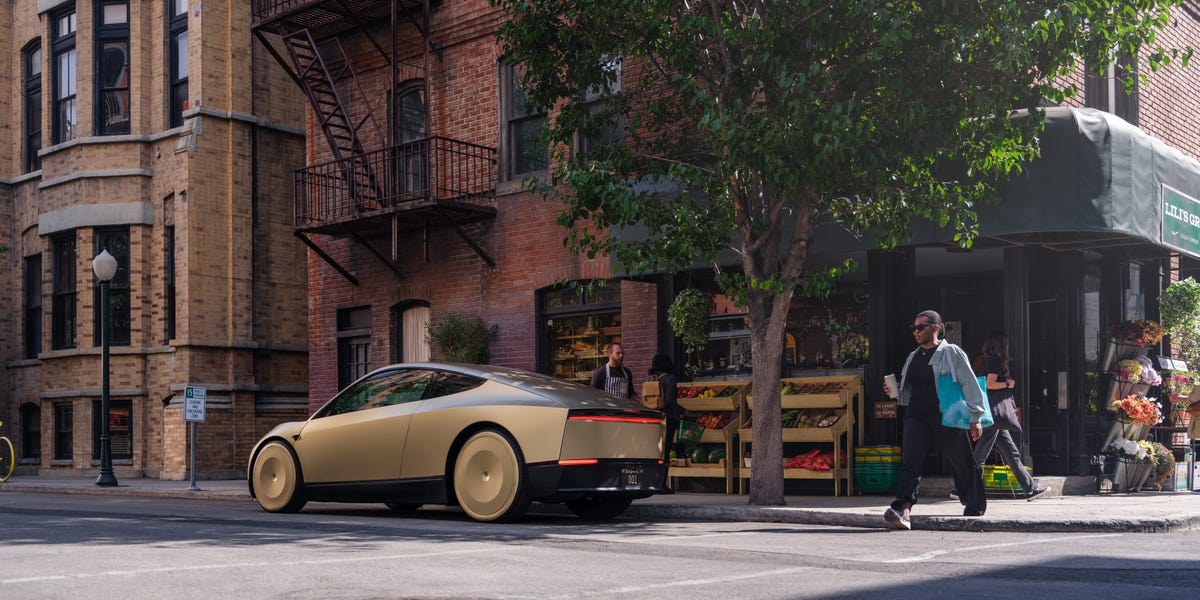
Tesla pulled hardware from another Elon Musk company to fix a problem with its driverless car plans.
On Monday the EV maker posted photos on X of what it called the "First Cybercab with Starlink integration." The images show a square cutout in the roofline where the satellite internet equipment sits flush with the body. Musk added in a follow-up post that riders inside the two-seat autonomous car can "watch live sports in 4k or movies or games or productivity."
The integration addresses a gap Musk flagged on Tesla's second-quarter earnings call. Cellular networks have dead zones, and a robotaxi that loses its data link mid-trip is a liability. "We can't have robotaxis getting stuck in these Bermuda Triangles of lack of cellular connectivity," Musk said. "Starlink, with its ability to do connectivity anywhere, is actually quite important, so we don't have robotaxis missing in action."
The Cybercab is Tesla's dedicated autonomous vehicle, designed without a steering wheel or pedals. Keeping it online everywhere – not just in cities with dense cell coverage – is a prerequisite for the service Musk has promised. Starlink's low-earth-orbit satellites beam data to ground terminals, meaning a Cybercab could stay connected on rural highways, parking garages, or remote pickup points where a phone signal drops.
Monday's reveal is the latest example of how Musk's companies feed each other. Tesla already uses SpaceX's Grok AI as a voice assistant in its vehicles. SpaceX buys hundreds of millions of dollars' worth of Tesla Megapacks and cars. The two companies have a joint chip factory project called Terafab. Those collaborations have fueled speculation about a potential merger between the two, though neither side has confirmed talks.
Tesla has not said when the Cybercab enters production or how much the Starlink option will cost. The Cybercab was unveiled in October 2024, with Musk targeting a 2026 start for production.