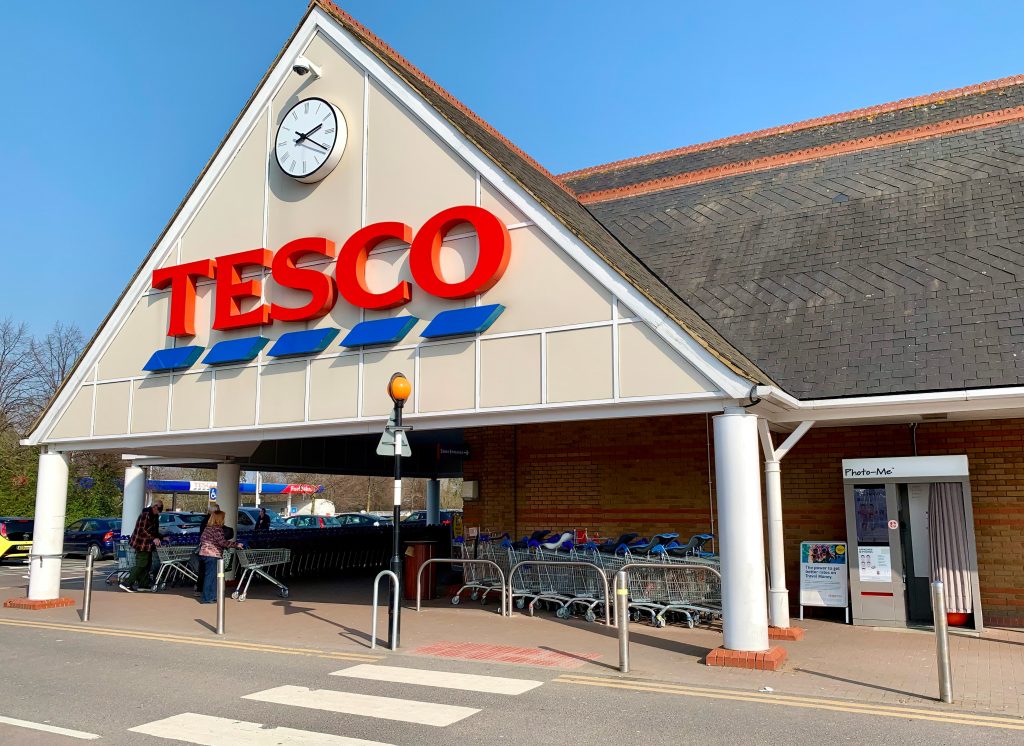
Tesco (LSE: TSCO) lost its Court of Appeal challenge on 12 May 2026, eliminating a key procedural defense in the equal pay litigation that pits shop-floor workers against warehouse operatives. The ruling allows the Employment Tribunal to continue evaluating claims using a comparison framework Tesco had sought to overturn. A bench of three appellate judges dismissed the supermarket’s argument that the original tribunal misapplied the statutory test for evaluating whether shop-floor and distribution-centre jobs are of equal value.
The immediate market read frames this as a legal setback for Tesco, the UK’s largest private-sector employer. A better read locates the ruling at the centre of a wage transmission channel that runs from a single supermarket through the entire retail sector and into the Bank of England’s inflation calculus. If tens of thousands of store workers succeed in obtaining back pay and higher forward-going wages, the cost base of a sector that employs roughly three million people shifts upward. That shift is not a one-time accounting item; it is a recurring labour-cost increase that can feed into service-sector inflation and complicate rate policy.
The Ruling: Procedural Barrier Removed
The appeal turned on the methodology tribunals use to establish the facts of the jobs being compared. Store assistants, who are mostly women, argue they perform work of equal value to distribution-centre workers, who are mostly men and historically paid more. Tesco’s legal team contested how the tribunal approached that factual assessment, a procedural argument that had the effect of delaying the substantive equal-value determination. The Court of Appeal’s rejection of that argument means the tribunal can now proceed with its job-fact findings without the constraint Tesco sought to impose.
No liability has been established. The judgment is procedural, not a ruling on equal value. The practical consequence, however, is that hundreds of claims–and potentially thousands of outstanding claims against Tesco and other large retailers–advance to a stage where back pay awards and pay-structure adjustments become concrete possibilities.
From Legal Case to Wage Inflation Channel
Equal pay litigation in UK retail has been running for years. Tesco, Asda, Sainsbury’s, and Morrisons all face claims. The aggregate exposure is not yet determined, because tribunals must first confirm that the comparator roles pass the equal-value test. The Court of Appeal ruling removes a generic defense that would have been usable across multiple cases, raising the probability that the sector as a whole will absorb material labour-cost increases.
Higher shop-floor wages, if mandated by tribunals or adopted via settlement, tighten an already strained labour market. Retail pay is a significant component of the Services Producer Price Index and flows directly into non-housing service inflation, a metric the Bank of England monitors closely. A step-change in retail wages–even if phased over multiple years–would add a domestic cost-push element to inflation just as the Monetary Policy Committee weighs whether imported goods disinflation is durable enough to resume rate cuts.
Retail Margins and the BoE Policy Path
For equity investors, the transmission runs through a margin squeeze that arrives at an inopportune moment. UK supermarkets are navigating food input inflation, elevated energy costs, and a consumer trading down. Tesco’s operating margin for the last full year was about 4 percent. A material increase in the wage bill could erode that margin unless management offsets it through productivity gains, automation, or selective price increases. Price increases would feed directly into the CPI basket, reinforcing the wage-inflation loop the Bank of England is trying to break.
The Bank of England’s next scheduled policy decision will need to incorporate any updated assessment of service-sector wage pressures. Retail-sector equal pay adjustments, even if they do not result in an immediate blockbuster back pay award, signal a labour-cost trajectory that leans inflationary. Gilt yields and sterling relative to the euro will absorb that signal alongside the official labour-market data.
Employment tribunal proceedings now resume with the procedural path cleared. The next factual findings will set the framework for the equal-value comparison. Any settlement offer by Tesco or its peers would provide a hard number the market can use to price the total sector liability. Until that happens, the macro transmission from a single Court of Appeal judgment will be priced probabilistically–through sterling, through gilt breakevens, and through the relative valuation of UK retail equities versus defensive names. For broader market analysis, see market analysis.